Cool it … plants and animals in the hot, hot summer
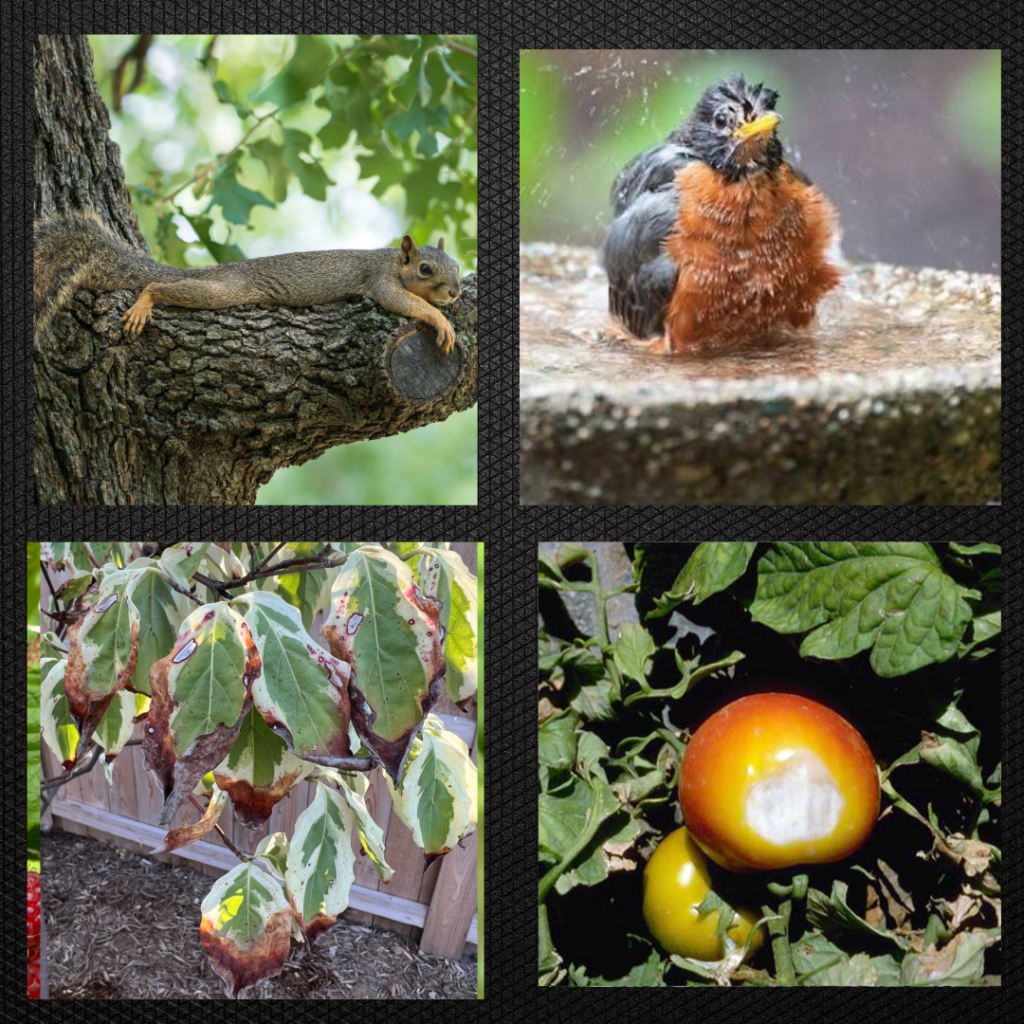
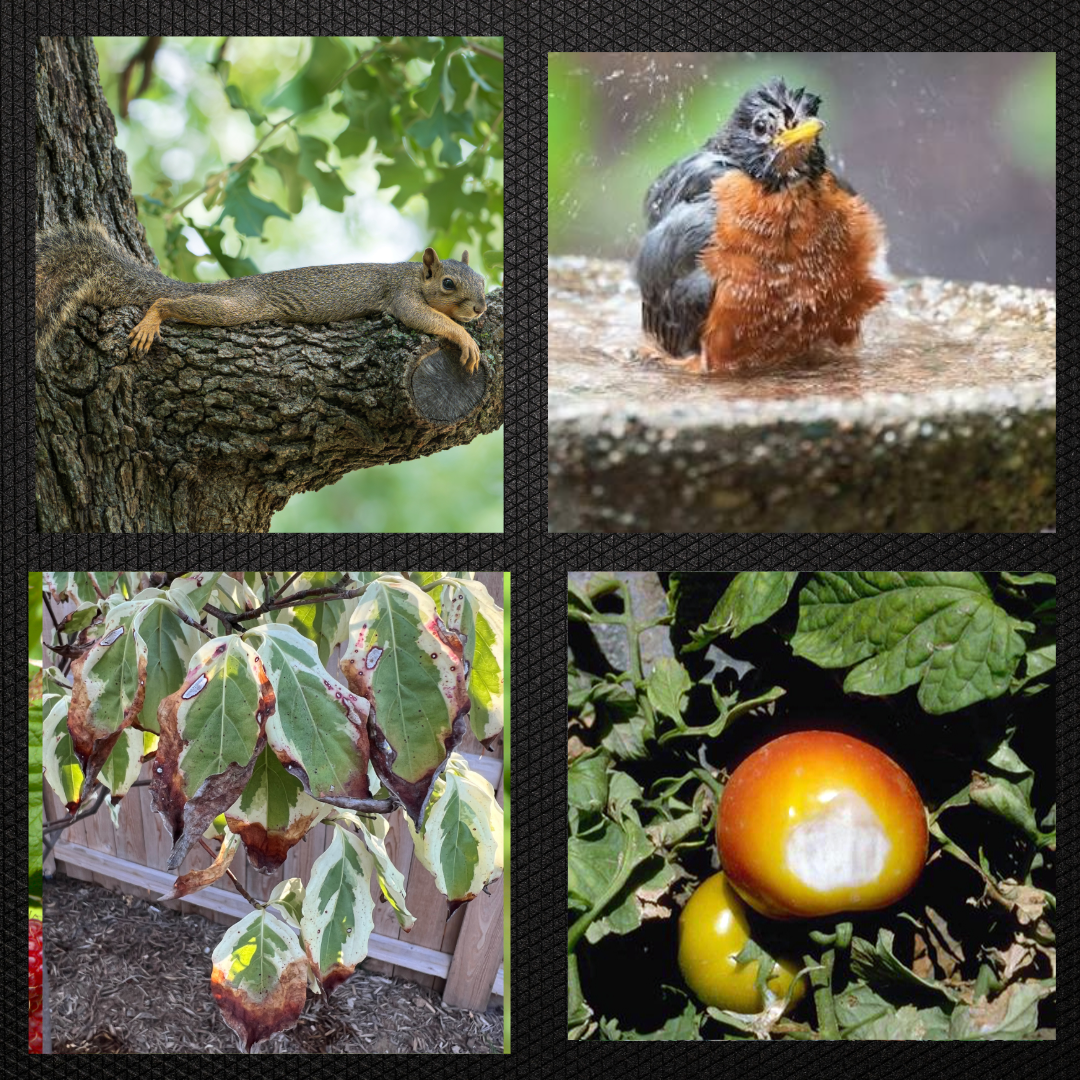
Are you splooting? I sure would like to. Or maybe fold myself in half to get out of the sun? I would go for that, too, right now with this unrelenting, unforgiving lava hot days we have had several bouts of.
But what about nature?
Many people reach out to me in the winter about how we can help wildlife make it through the weather lingo of “storms of the century’ or ‘snowmageddon,” but what about now? The only call I get in the heat is, “What is wrong with this squirrel?”
Or I think it is so hot, my squirrels are melting … and yes, in a way, they are! Not melting per se, but splooting. Splooting is what you observe when you see a squirrel splayed all the way out. Arms outstretched, legs splayed out behind, and they appear really thinned out mid-body.
This behavior can be seen sometimes in other mammals, too, like bears and marmots, as well as our domesticated pet dogs (especially corgis and bulldogs) and cats. This adaptive behavior is done to help cool our fur covered friends to help lower their body temperature when there is little other respite.
Splooting allows the maximum contact of the least furry side of the animal, the belly, to get in contact with a cooler surface like a shaded tree branch, or stone walkway. This highly effective way to lower body temperature, is called heat dumping.
Remember, humans sweat, but not most animals. Well, at least not all over like you can — these days you can often find me “glistening.”
With the exceptions of horses and camels, primates like apes and monkeys, and hippos who have whole body sweat similar to us, the rest of the animal kingdom has to find other ways to thermoregulate.
Horse sweat (and horse saliva) is where the phrase “work yourself up into a lather” came from. Horse sweat and saliva contain a protein called latherin. Research indicates that this latherin helps to break surface tension of water which acts like a wetting agent that aids in evaporative cooling. (https://pmc.ncbi.nlm.nih.gov/articles/PMC2684629/)
Cats and dogs sweat, but only through their paws and noses. Then there is panting. Panting causes evaporative cooling of internal organs through the exchange of hot and cooler air. Pigs pant, too. So do birds.
Birds have no sweat glands at all so they pant similar to a dog by breathing rapidly with open beaks to promote evaporative cooling. Many birds (like herons and pelicans) also vibrate the skin in their throats in a process called gular fluttering to release heat without expending too much energy.
Birds also control temperature with their feather positioning. In the winter, they puff up like cotton balls to trap warm air between their feathers (kind of like a parka). In extreme heat, birds can compress their feathers tightly against their bodies to expel trapped heat, or they might fluff them up and droop their wings to allow a breeze to circulate across their warm skin and unfeathered areas. (Cornell Lab of Ornithology)
Birds’ unfeathered areas like beaks and legs can allow heat to radiate out directly. And when a bird stands in water the cooling effect is even more effective.
Animals with large ears like donkeys, mules, jackrabbits and elephants use their large ears as radiators. Excess body heat travels to a network of blood vessels near the skin of the ears. As air flows over this large surface area, it cools the blood before it circulates back to the body. (National Geographic Education)
But what about plants? In a graduate plant biochemistry class, the professor once asked us, if plants could do one thing that they can’t do right now for better success, what would it be? All of us plant nerd types came up with all sorts of complicated answers, but that wasn’t what he was looking for. The answer was simple and elegant — plants would move if they could.
Not move leaves or branches, like we see when we leave a houseplant facing the window from one side so it starts to stretch its branches towards that light source. What our professor meant was the power for plants to pick themselves up, roots and all and move to a more hospitable environment. That, they can’t do.
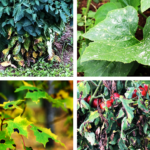
So what can our plants do in response to heat. To start with, they do move … but just a little. And just their arms – aka, leaves. Plants will do a physiological leaf roll or fold when they get too hot, like folding in on themselves.
This helps to greatly reduce their surface area. Because plants are constantly losing moisture in the form of transpiration. Water that is absorbed through the roots, travels up through the plants and then through leaf “mouths,” openings called stomata, the water is pulled right out of the leaves.
Scientific research showed that a mature maple tree can loose 50 to 100 gallons of water in transpiration on a hot day. And that is just the half of it. Water via watering or rain starts to evaporate on extremely hot days from the soil right away. That is why I am such an advocate of mulching. Mulching whether in the vegetable garden, flower, shrubs, or trees, can help to retain that water and can also cut down in your watering needs by 50 percent.
More than just affecting leaves, this hot, hot sun can also cause damage to ripening fruit. That is why I included the photo of tomatoes with sunscald. Do not remove leaves to think you will help tomatoes turn red. It doesn’t. The chemical lycopene does that, and it shuts down with temperatures above 82. Just be patient.
What can you do to help animals and plants in this hot, hot weather? Water, water, water.
Provide clean, fresh, water-for animals, shallow bowls, and shallow birdbaths, for insects, a dish or very shallow bowl filled with sand or rocks to the top and then add water just till you start to see it come through the sand or rocks.
For plants, mulch, mulch, mulch, and water deeply, so between rain and water, your plants are getting 1 inch of water per week.
As for me … counting the days till fall!