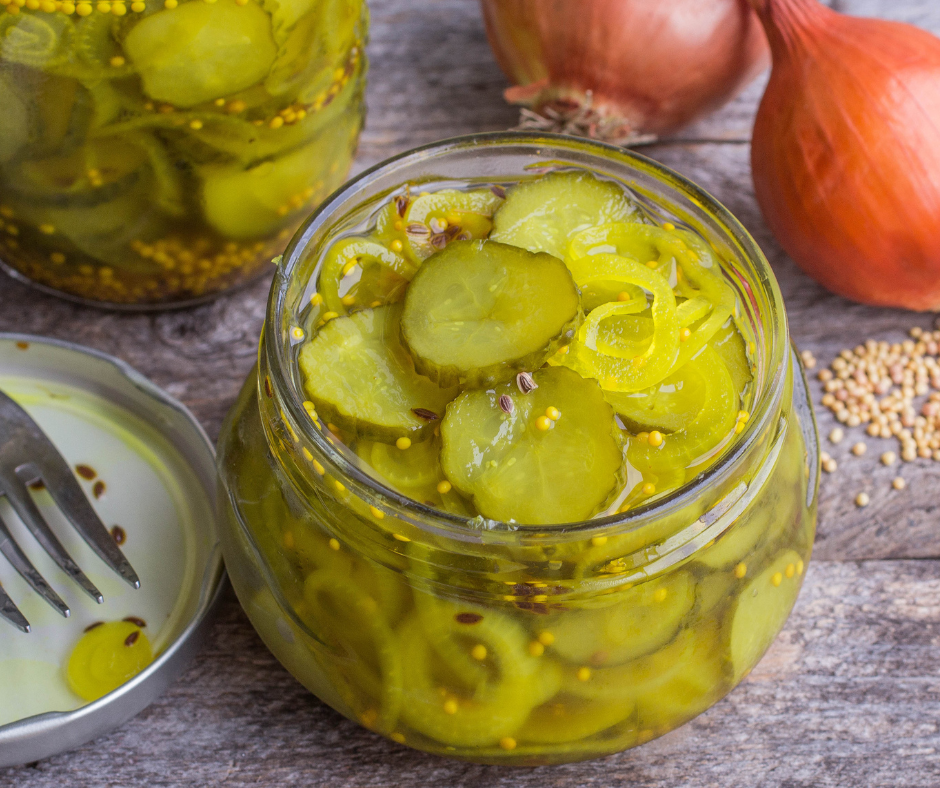
A really big ‘dill’ … Refrigerator pickles all summer long
The smell of a fresh cucumber is the essence of the summer garden. The sad thing is that it is one of the few vegetables that doesn’t do well being frozen for use later.
Tomatoes-freeze, peppers-freeze. Cucumbers, no freeze … mush and flavorless. And although food preservation is having its own renaissance, pickling and fermenting is a lot of work.
Well worth the time involved, but not everyone wants to, or even needs to put up 40 quarts of pickles. I was fortunate enough to coordinate and participate in the Illinois Extension Master Food Preserver Program during its heyday. That program has since been discontinued. I am working to get it back.
Food preservation is a great way to put up the harvest to use all year long. But it is an exact science. No one wants to give food poisoning, especially botulism, which can be deadly. All University Extensions (and you) should use the most current food preservation recipes to assure safe processing. The University of Georgia’s “So Easy to Preserve (Sixth edition)” is the current food preservation “bible.”
Sure, it is great to have ol’ Aunt Mary Ellen’s recipe for canned tomato soup, but many things have changed, including fruits, vegetables, and bacteria and fungi. Nature, it is always evolving, so scientific research is always checking … and rechecking.
Take tomatoes for example. They are acidy, right? So assuming that, you can just boiling-water-bath-can them, right? Well, actually, no. With the trend of creating tomatoes that are sweeter and sweeter, they are no longer acidic enough to be boiling-water-bath canned without the addition of 2 tablespoons per quart of lemon juice or vinegar. Science studied the acidity levels of tomatoes all across the country and learned this important fact.
That is why it is good to use “So Easy to Preserve,” and make sure it is the 6th edition. This publication also makes a great gift.
I have pickled, fermented, preserved, and boiling-water and pressure-canner canned many foods. But my favorite cucumber preservation (as well as for many other vegetables) is in the half-preserved — the refrigerator pickle.
I find these pickles give the best of all worlds, some preservation (up to two weeks), a quick activity, a zingy customizable flavor, incredible crunch, and they can be used with many different vegetables. All up to the person making them, as long as you keep the brine portions correct.
What they don’t give you is long-term, shelf-stable preserved foods. But that is an OK tradeoff for me. I am all about the texture, and it is hard to get a really crisp pickle through traditional canning. And who doesn’t have room for six or seven jars in the fridge, especially when they contain these fresh, crisp morsels.
Refrigerator pickles (with recipe included) is a great summer gift to share or bring to that family reunion picnic.
Even better, you can “pickle” lots of vegetables with this brine. Besides the traditional cucumber, pickling or slicing, mini, or cocktail-sized cukes work. I have also used this brine for cauliflower, sweet and hot peppers, broccoli, cabbage, radishes, carrots and more.
As with all preservation — not just canning — but freezing and drying, too, you must start with the best. There is a misconception that the “also-ran” vegetables — you know, the dinged-up cuke that has a soft section, or a carrot with a rot spot — are OK for food preservation.
That isn’t true. The food you preserve needs to be the highest quality. Because it is around longer than the pick at four o’clock, eat at five o’clock vegetables.
But food preservation is good for the “ugly ducklings” of our harvest. The carrots that look like they are walking away (because our soil is to heavy with clay) or the potato that looks more like a snowman. Misshapen produce are perfect for preservation!
But before you get to making this recipe, a few cucumber gardening and kitchen tips: When it comes to cucumbers, be sure to slice off the ends. This prevents the bitterness some people complain about with cucumbers in general. Did you know that is caused by a plant defense compound?
There is actually a chemical compound called cucurbitacin that exists in the leaves, stems and the ends of cucumbers. It is a bitter compound thought to act as a defense mechanism in plants to deter pests.
Although most of the modern “burpless” cucumbers have a reduced amount of cucurbitacin, cutting off the ends of the cukes, where this chemical is concentrated in the fruit, promotes bitter-free cucumbers.
Complaints about bitterness in cucumbers increases in years with drought stress. Low water and searingly high temperatures increases the presence of cucurbitacin in cucumbers.
As I write this, we are under a three-day heat warning, so I think it is perfect time to discuss how to prevent increased cucurbitacin. Mulch your cucumbers. No more than 2 or 3 inches of mulch (your choice of material — wood chips [my favorite], straw, carpet squares, newspaper/cardboard) it is your call.
Not only does mulching the vegetable garden mimic nature’s natural process (where leaves and plants die off at the end of the growing season and create mulch and eventually that precious self-made fertilizer, organic material), but mulch also helps with moisture, temperature and soil splash.
I have long preached the value of mulch (I am contemplating putting mulch in my casket someday. Mulching prevents the drowning into drought and back again. Mulch prevents transpiration/evaporation from being so rapid.
That is the process of part of the water cycle that sun heats the earth and the plants “breathe out” water and oxygen (which by the way is also the cause of corn sweat, an increased high humidity phenomenon associated with large areas of crops).
Mulch keeps the water in through a breathable layer. This is great for the garden and even more so for the gardener — mulch can cut the need to water in half or more. Also, as an insulator, mulch helps keep soil temperatures even, prevents soil splash (which can promote disease) and stops weeds.
And that gives you more time to make refrigerator pickles!