Leaves of three … not always need to let it be … Poison ivy lookalikes
If you read last week’s column, I hope you took a look around your landscape. I had several callers who said the found poison ivy they didn’t even know they had until they saw the pictures in that column.
This week, we are doing a 180 — talking about the plants that aren’t poison ivy, but easily can make you take a doubletake.
So you might be thinking why learn these plants, too? Why not eradicate it them just in case they are poison ivy? Because these plants have value in horticulture, but some are also prized food plants for our wildlife … and even us.
Does that mean I suggest you keep them all? Heavens, no. As I always say, it is your own personal Eden. Do as you wish, but I also am always saying knowledge is power. So why not learn, then decide?
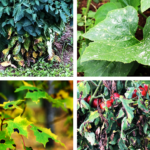
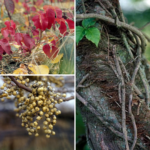
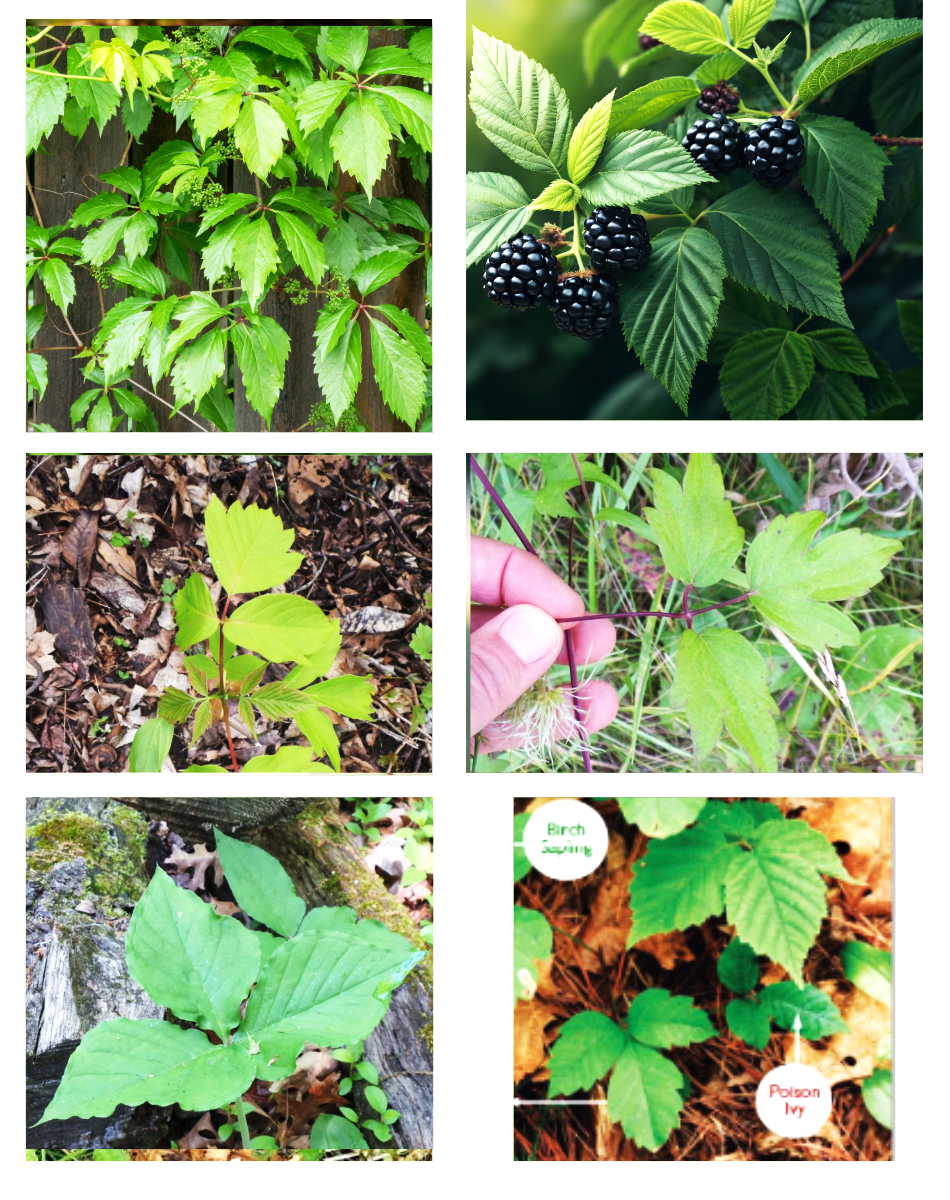
First up, and one most commonly confused poison ivy lookalikes, particularly in a natural setting, is Virginia creeper (Parthenocissus quinquefolia). Even though its “ideal” leaf formation doesn’t follow the “leaves of three name.” You have to realize, just like us, nature has tons of variation. Nature likes to keep us guessing.
If you look up any plant/or animal — whether on the web, or old style, using a book or field guide — that image is the perfect specimen example. The photos you see are the best representation of the “breed,” just like an animal competition. The winner is the best in breed, or the best example of the standard of that living thing. So be sure you look at several examples of the plant you are trying to identify.
As is the case with Virgina Creeper. This native vine actually has 5 leaflets arranged palmately. This botanical terms explains the arrangement like your hand, leaves are like fingers arranged next to each other from a main base, like our palm.
Virginia Creeper has growing and botanical characteristics very similar to poison ivy; that is why it is so easy to confuse. It is a woody vine, it climbs trees, it makes berries (that wildlife loves), it can cause irritation in sensitive individuals, and it turns the most brilliant beautiful red in the fall.
If that wasn’t enough to confuse you, it also commonly will throw out a leaves of three instead of five.
I have this vine in my landscape. Totally by accidental hitchhiker mode. Just like with my Virginia bluebells, I got those when purchasing a small serviceberry, there must have been part of a root or seeds, in a pot of something I purchased. And I love it. The birds cherish the beautiful berries, and there is a magnificent Virginia Creeper sphinx moth that uses this vine for a larval food source.
As far as causing a skin irritation, I obviously am not sensitive to it dermatologically. But it is interesting to know that this irritation is different from poison ivy. With poison ivy, the allergic reaction is caused by urushiol, the oily allergen.
Virgina Creeper’s irritations caused by microscopic, needle-like calcium oxalate crystals called raphides that cause a physical irritant, similar to if you have ever gotten into fiberglass insulation that is not sealed in plastic.
The berries also contain these raphides, which makes them toxic to ingest for humans, but the birds cherish them as a fall and winter food source.
Landscape design-wise, Virgina Creeper can cover an unattractive fence or shed, or you can train it to grow around your plants on the ground acting as a living mulch. I use it as both.
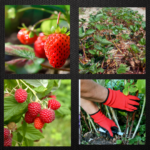
Although the Virgina Creeper vine’s berries are toxic to humans, two of the other poison ivy look-alikes, are delicious for us — raspberries and blackberries. They both can have leaves of three, but the telltale differences are fairly easy to observe.
These berries usually have thorns or bristles, often quite a few along their stems. Poison ivy never does. Also the leaf edges on these berries are serrate, a botanical term meaning sharp, evenly cut edges, like a steak knife. Poison ivy’s leaf edges can be very variable.
There are a few trees that also can be confused as poison ivy — box elder (Acer negudo) and birch (Betula, spp.) The key to identifying the differences is a lesson in leaf arrangement/attachment. Maple leaves grow directly across from each other; poison ivy leaf arrangement is alternate, not across but staggered.
For birch, the identifying feature is a botanical lesson in simple versus compound leaves. To see the difference, look for the leaf stem. Simple leaves, like birch are a single green leaf attached to a stem (petiole). Poison ivy is a compound leaf, made up of three leaflets, that are attached to one stem.
The remaining poison ivy look alike plants are both native. Clematis is a woody vine, and Trillium is a woodland flower. In the case of the latter, Trillium, pay attention to the “tri,” meaning three. All of this native spring beauty is about threes — three leaves, three petals, the sepals and the stigma are all sets of three.
This is a prized wildflower, and it would be unfortunate if people started pulling it out, thinking it was poison ivy.
Finally, Virgin’s Bower, also known as Clematis virginiana, also has leaves of three, but the leaf shape and size and arrangement on the non-hairy woody stem would be clues that they are not poison ivy.
Still need more clarity or want to test your poison ivy identification skills? You might want to try Jonathan Sak’s website, http://www.poison-ivy.org. He has great resources, quizzes, and so much more to help people understand poison ivy.
I have his poison ivy poster that we bring out to info table events and gets a lot of attention. The United States Forest Service, USFS, and many other nature related organizations use his materials to help identify poison ivy.