Leaves of three, or ‘tree’ … and so much more
I don’t know about kids today, but growing up back in the day, if you were going camping, fishing or just out and about in the local woods, someone would start the ol’ reminder “Leaves of three …” and the rest of the group would respond in singsong rhyme “let it be.”
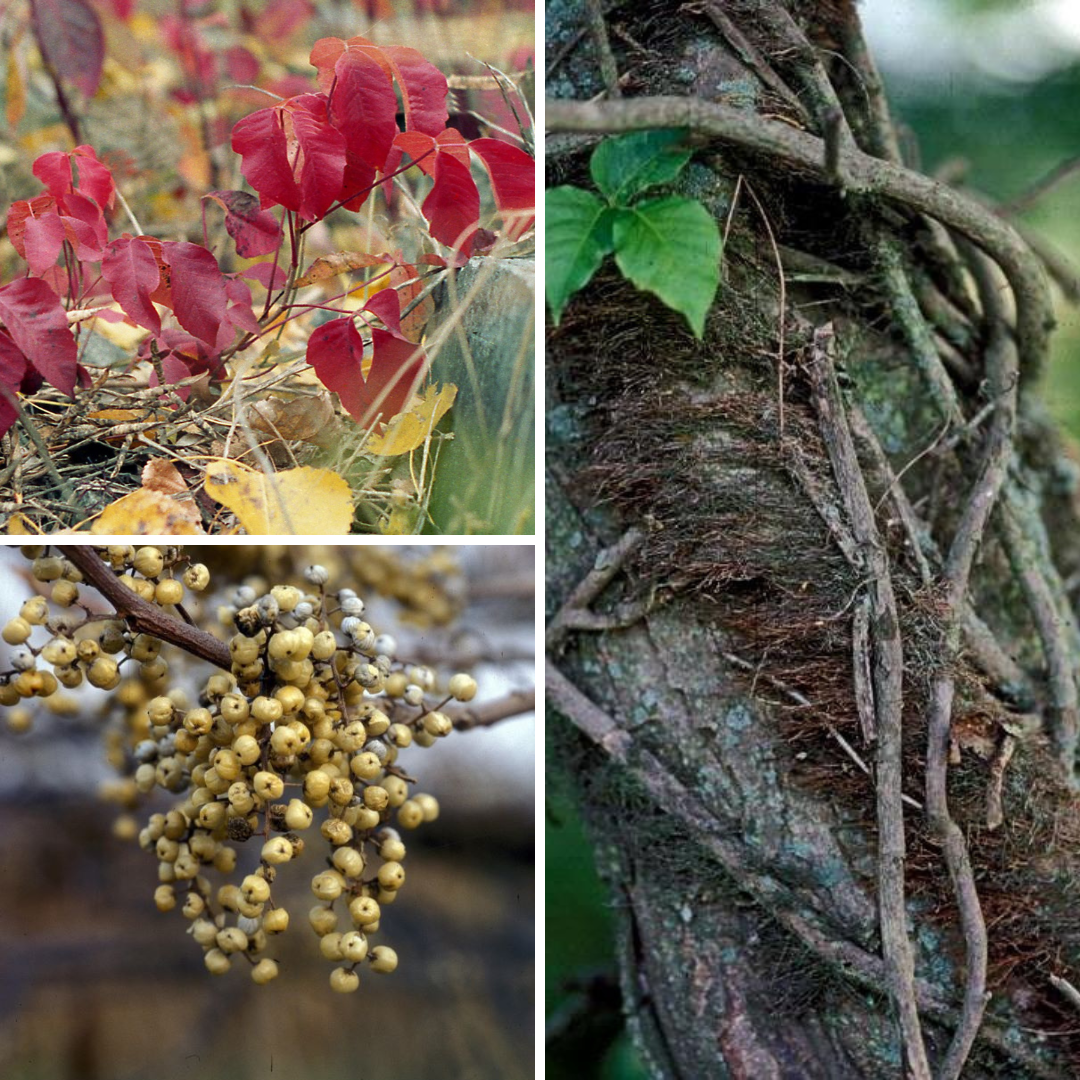
I added two additional stanzas of this important reminder — “Berries of white, run in fright and vines with hair, don’t you dare!” Because poison ivy (Toxicodendron radicans), like any other plant, has a complete life cycle — seed, seedling, plant, flowers, seeds (berries). And it is a perennial plant that comes with two ways to spread, seed and underground stems. And in all stages of life, poison ivy is, well, poisonous.
The cause of the uncomfortable, itching, burning, blistering rash is the resinous oil, urushiol. If you bruise or break the leaves, stems, roots, or berries, the oil is released. And when it contacts skin of sensitive individuals, it is time to get out the anti-itch creams. And for some with stronger reactions, can send them to the quick care. Or if in the eyes, to the emergency room.
The number one question I get about this irritating plant is always about identification – “Is this poison ivy?” You may think. “How hard could it be to identify? The rhyme says it right there … ‘leaves of three.’”
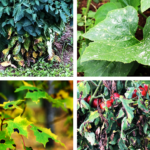
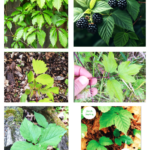
But there are two problems with this: As you can imagine, there are several plants that might have leaves of three. And poison ivy has many different “outfits” of leaves (known as polymorphic leaves (many shapes) botanically) — some are large, some small, serrated edges, or smooth. So it is not as easy as it seems when it comes to identification.
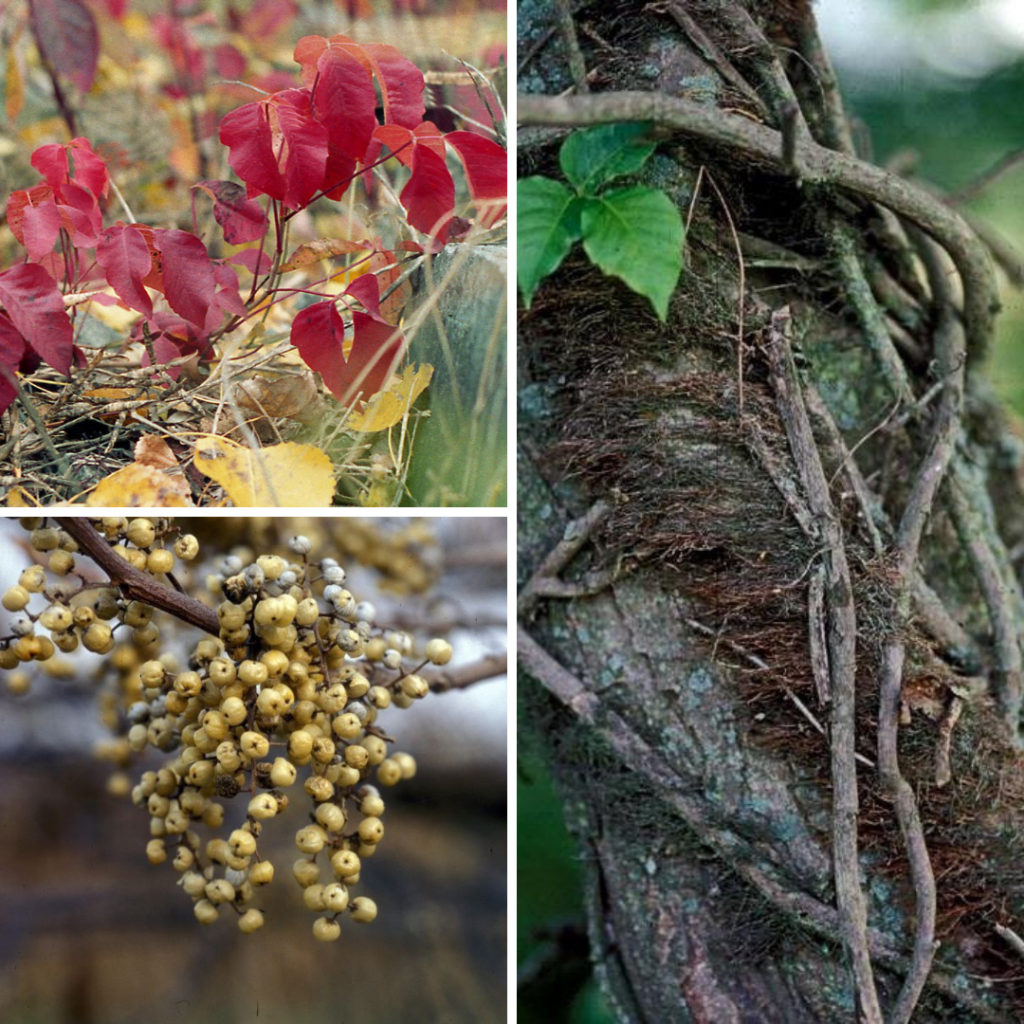
Also the way it grows is variable. In its early growth, the version many people are most familiar with, it is a soft stem, with those three leaves. But have you ever heard of a poison ivy tree? Yes — and no. Poison ivy plants as they grow on and mature can become shrub-like or a long hair-covered vine.
Poison ivy doesn’t become a tree itself, but rather, uses its strong woody vine with those clinging hairs to climb trees. Usually in forested areas, but I have also identified, poison ivy vines in a few home landscapes, that have become a “tree,” because they either grew up a dead tree or grew into a live tree and started to take over the canopy.
Poison ivy is native to much of the United States, lucky us. Curiously, there is no poison ivy in Europe, and the only other place it occurs is in East Asia.
The berries are food for wildlife and also the way much of poison ivy is dispersed. I have had a few people who want to accuse their unliked neighbor or ex-spouse of actually planting poison ivy in their landscapes because the plants seem to have come up in a planted straight line.
I told them before the go accusing a person, “look up,” and it was true in all these cases, there was a power line above where birds perched and so generously pooped out the poison ivy seeds with a little bonus natural fertilizer, hence, poison ivy in a straight line.
About 85 percent of Americans are allergic to poison ivy. I have been one of the very lucky 15 percent so far that doesn’t get it, at least for now. The American Dermatological Association indicates at any time a person can become allergic, to anything, including poison ivy. So I still am cautious.
Can your pet get poison ivy? Yes, and no. Your pet dog or cat has fur, so thick per square skin inch, that those areas are not affected. But areas not covered by fur or hair, or in breeds with thin coats, can get poison ivy.
More importantly, any animal, including chickens and horses who are immune to urushiol oil, can give you poison ivy. If they come into contact with the urushiol oil, and then they rub up against you, they can transfer the poisonous residue to unsuspecting humans.
Three important questions remain: How to eradicate poison ivy when you find it in your landscape; how to prevent yourself from getting poison ivy; and what are the look-alike plants.
Before addressing eradication, it is important to prepare yourself for not getting poison ivy while you are doing the eradication. These recommendations also apply to how to prepare for being out in nature where poison ivy may be present.
Covering your skin creates an adequate barrier for the urushiol to get on clothing and gloves. Soap easily washes urushiol out of clothes, garden tools, even golf clubs. But remember the sticky, resinous oil is present before washing. So if you put them in a clothes basket or workspace in the laundry room, you have to clean that, too.
Eliminating poison ivy in the home landscape falls into two categories related to how old the poison ivy plant is. When you find small seeding poison ivy starts, you can pull them out with a gloved hand. Or my preference here is to take one of those newspaper bags or a small plastic bag and invert it over my hand, then grab the poison ivy with the bagged hand and slip the bag over the whole plant and tie it up.
Never ever put poison ivy in landscape waste, and even more so, never ever burn it. The poisonous oil will volatilize (going from liquid to gas) and can potentially get in lungs causing a life-threatening emergency.
For poison ivy that is woody, whether in vine or shrub form, products containing triclopyr 8.2 percent work excellently. Always read and follow labelled instructions, but typically this is not a spray application, but a cut and brush to the open stump.
These products are sold under names like brush-b-gon, fence cleaner, etc. The University doesn’t recommend one brand over another, that is why we give you the active ingredient.
Next week’s column will be dedicated to the poison ivy look-alikes.