Tick, tock … it is tick time already, here’s what you can do
Spring brings nature lovers, gardeners and farmers many things: the promise of a new growing season; the first robin of spring; the excitement of new plants, tools and implements; and, of course, that first butterfly of spring.
But it isn’t all sunshine and rainbows … spring, especially this year, has brought on an early (unwanted) crop of ticks.
There have always been ticks, but until just a couple years ago, we didn’t really know their statewide distributions. That was until the University of Illinois Extension scientists created the I-Tick program. This community science program open to the public involved submitting ticks to the program with information about where they were found.
They analyzed the distribution of three potentially harmful tick species in Illinois, identifying regions of the state with higher numbers of these ticks and, therefore, at greater risk of infection with multiple tick-borne diseases.
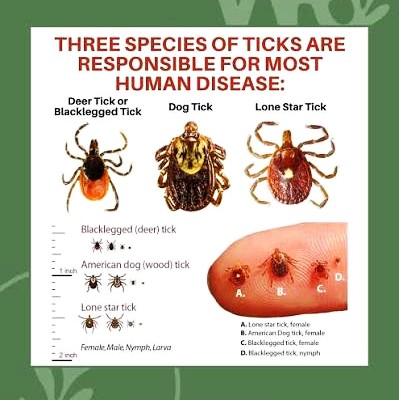
The study found that of the three species tracked: Lone star tick, Amblyomma americanum, is most prevalent in southern Illinois; Black-legged tick, or deer tick, Ixodes scapularis, is more common in northern and central Illinois; Dog tick, Dermacentor variabilis, dominates the central and southern parts of the state. This study was published in 2025.
Here in Will County, we have all of these ticks, and I actually am identifying them for people, year-round. It is untrue that ticks are “killed in winter.” Ticks don’t live in the outdoors. They live on warm-blooded animals. And being warm-blooded, these animals maintain their toasty warm body temperature all the time.
Sure there are no ticks hanging out outside on plants in the cold months. That is what they are doing now that spring is here. And that is where the big news is.
This year, wherever you get your news from, ticks are a lead story. As of April 2026, tick-related emergency room visits have reached their highest level in nearly a decade, with a significant, early-season surge in incidents.
The primary reasons for this rise are increased tick populations, warmer weather — allowing for earlier activity — and rising rates of tick-borne diseases, particularly in the Northeast and Midwest. And that literally bites us where we live.
So, a bug bite, we all get lots of them. Why is a tick bite more important? Because they are vectors (transmitters) of disease, and some of those can have significant effects long-term. One of which is a newer disease — alpha gal– with bizarre symptoms. A tick bite that can cause sensitive humans (approximately 15%) to become allergic to red meat for over a year. This allergic reaction can cause anaphylaxis (serious difficulty breathing which requires emergency treatment). All this because you had a hamburger at a cookout.
What makes alpha gal even more difficult to recognize it can be 12 to 14 hours that it affects a person, so the cause is often unrecognized for a long time. Here is a great brochure from New Jersey on alpha gal. http://bit.ly/3QJrSvk.
And always remember, if you don’t have a computer, just call the Will County Office at 815-727-9296, and we can mail you a copy in the regular mail.
Alpha gal is new on the scene of tick diseases here. According to the Center for Disease Control (CDC), ticks carry various bacteria, viruses and parasites that can cause serious illnesses if transmitted through a bite. Major tick-borne diseases in the U.S. include Lyme disease, Rocky Mountain spotted fever, Ehrlichiosis, Anaplasmosis and Powassan virus. Symptoms often include fever, rash, fatigue, and muscle aches, with some infections leading to severe, long-term health issues or death.
Again, not every tick carries these diseases, and not everyone bitten gets these diseases, or even if they do, they do not all go to the most serious levels. But why wait to find out?
I do get questions like, “How can I be sure there are no ticks in my yard,” and “How do we make sure there are no ticks in an area?” the real answer is, you can’t. But you can arm yourself with the most important thing first: knowledge/understanding. Combine that with tick-smart strategies, some insect repellent, and proper clothing, and always the post outside tick check, and you will be good to go.
So first things first. Knowledge/understanding. That is where I come in. I love identifying anything nature related, especially bug/bug related things. If you get a tick, I can identify it. And there are places they can be sent to see what diseases they may harbor.
Ticks are not insects, they are more like spiders. They have two body regions, head and abdomen), whereas all insects have three: head, thorax and abdomen. And ticks have eight legs, insects have six.
Ticks are hitchhikers looking for their next blood meal. One of their favorite hangouts is tall grass. Ticks don’t have wings, nor the ability to hop like a flea, so their strategy to get on to their next warm meal — whether it is a squirrel, your dog, or you — is to hang out on tall blades of grass so as you brush by, they can hitch a ride.
So first thing, keep grass mowed (not too short though for turf), and keep tall weeds down, thereby eliminating some of their favorite habitats. And then modify your behavior: Avoid walking or hiking in areas with tall grasses.
As far as anti-tick wear, the goal is to cover as much of your skin as possible, especially the lower half that can brush up against foliage more readily. Starting at shoe level, wear closed-toed shoes, socks, and here is the hard part for many: Tuck your long pants into your socks (yes it looks nerdy), but by doing so you create a gauntlet of tick prevention.
Long-sleeved shirts and a hat (ticks also can fall from trees). And then there is the insect repellent. Products containing DEET or picaridin are recommended. You can spray your skin and clothes. There are even clothes sold today for the outdoor person that have embedded insecticide.
And remember, if you get a tick. Tweezers to their head. Their jaws open like plyers. No matches, or Vaseline. That only makes them embed deeper.
And after any tick bite, be aware of any unusual symptoms that may occur even weeks later, then consult a medical professional.