The Wings of Spring … Early Spring Butterflies
Many of us track the “firsts” … It starts with us with children, first smile, first steps, first words.
Then for us garden folk, the firsts of nature … the first frost, the first snowfall, as the year winds down. Then the first harbingers of spring, the first robin or first red wing blackbirds trill song. But rarely do you ever hear about the first butterflies of spring. And they are here already.
These spring butterflies, like all butterflies, are sadly in decline. There are many reasons, fractionation of their habitats, including their overwintering sites among them. Many people confuse the life cycle of the different species of butterflies because so much attention is given to our most identifiable butterfly that is also our state insect—the monarch.
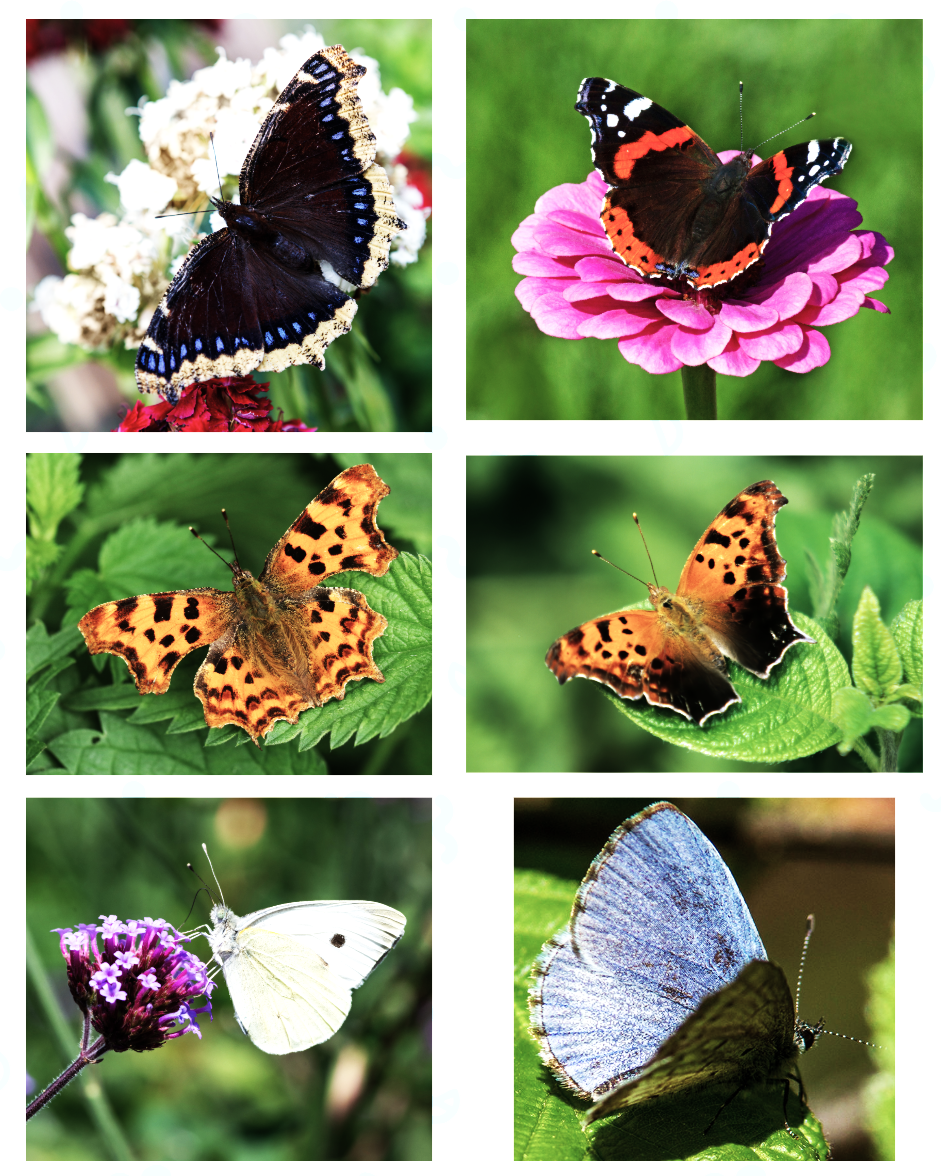
Many people assume all butterflies are migrating. Not these early butterflies. These six I am addressing in today’s column split between overwintering in their storm shelter — their chrysalises or amazingly as adults — hunkering down in cracks and crevices.
Those that overwinter as adults enter a hibernation-like state called diapause (literally meaning pausing day). The science and magic of nature allows the adult butterflies to use their “blood” (in insects it is called hemolymph) to use glycerol antifreeze to survive freezing temperatures. If you think you have heard of glycerol, or propylene glycol before you have — it is the antifreeze in your car’s engine that prevents freezing. I have to say it at least once a day … ain’t nature amazing?
The first butterflies that are reported being seen in our area every year are the ones that overwinter as adults. These include the Mourning Cloak (Nymphalis antiopa), the Question Mark (Polygonia interrogationis) and the Eastern Comma (Polygonia comma).
The Mourning Cloak — note it is spelled mourning, like sadness after death; not morning, like good morning, and its coloration goes with its name. The Mourning Cloak is very dark in color, with wings that are so dark purple they almost appear black. You might not even see them if it weren’t that their forewing edges are a line of bright yellow.
Mourning Cloaks are some of our longest-lived butterflies — up to 10 or 11 months. After their emergence as adults in the spring, they mate and lay clusters of pale yellow eggs (clusters can be up to 250) on the host plants of willow, elms and poplars.
Their caterpillars feed communally (together) on the leaves of the host plants. They are commonly called Spiny Elm Caterpillars and are a sumptuous, velvety black with white spots and a single row of reddish orange spots on their backs. They go through 5 larval stages over two weeks.
Their chrysalis looks like a dried leaf, and the butterfly emerges in 10 to 15 days.
Mourning Cloaks have a few curiosities: They emerge in early summer, then estivate (a kind of summer dormancy, like a summer vacation) and then become active in fall again. Curiously the adults Mourning Cloaks don’t look for nectar/pollen, but rather feed on rotting fruit and sap.
Then there are the two “punctuation” butterflies — the Eastern Comma and the Question Mark. With so many people not using punctuation anymore, it will be even harder to tell the difference. Both of these butterflies are similar in coloration, and the coloration can vary on individuals.
They are both large, orange-and-black butterflies that hibernate as adults over winter. The difficulty in ID, I feel, is mostly due to their names — the question mark should actually be more aptly named the “semicolon” butterfly, because the two white marks that defined its name are more like a dot and a hook, rather than a question mark shape.
The Eastern Comma, also on the outside of the wing (so the wings have to be closed for you to see the mark), have a simple crooked white mark, similar to a comma. On the inside of the forewing (the upper wing), the Question Mark has four dark spots, where the Eastern Comma has three.
These two butterflies have similar lifecycle traits. They have two generations per year, and their larvae feed on elms, nettles and hops. They create shelters by folding leaves, and like the Mourning Cloak, their adults aren’t found visiting flowers, but rather sap and rotting fruit.
If you think about it on an availability of food sources, it makes sense. Spring flowers are often fleeting, but springtime is a time of sap running and rotted old fruit that can be plentiful. That ol’ Mother Nature thinks of everything.
The most common early spring butterfly sighting in our area is the Red Admiral (Vanessa Atalanta). This butterfly has bright bands with dark wings and white spots. They complete their life cycle in about a month’s time, producing two to three generations per year, depending on the weather. Their caterpillars feed mostly on stinging nettle plants, where they construct leaf shelters.
Red Admirals are mostly a migratory species in Illinois, flying to Mexico to overwinter, although some have been found overwintering when our Illinois winters are mild. Although Red Admirals also follow the sap and rotting fruit diet, they can also be seen nectaring on bird droppings and visiting some flowers.
The last of the early spring butterflies we see occasionally are Spring Azures (Celastrina ladon). This butterfly is usually seen in woodland habitats, but I have had several in my own back yard. The adult butterfly is small, and don’t let the name azure (meaning blue) fool you … The outside of their wings when closed are a very pale blue, but when they open their wings, you can see where they get their name, they can be a somewhat bright blue.
Adults emerge from March to May. Females lay eggs on flower buds of dogwoods and virburnum. The caterpillars feed the flowers and fruits, and can often be seen being tended by ants. They overwinter in chrysalides.
The final spring butterfly, the Cabbage White, needs no introduction. It is the bane of the early vegetable grower of cabbage, broccoli, cauliflower and Brussel sprouts. They can take a State Fair quality cabbage, and those little caterpillars can eat it down to a cue ball overnight.
You can hand pick the caterpillars, if you can see them, cover these crops, or use a registered pesticide to control them.