SSShhh! Here’s the dirt on dirt!
It’s happening. Even at the grocery store … they are showing up everywhere … spring gardening supplies. And it is time to start spending.
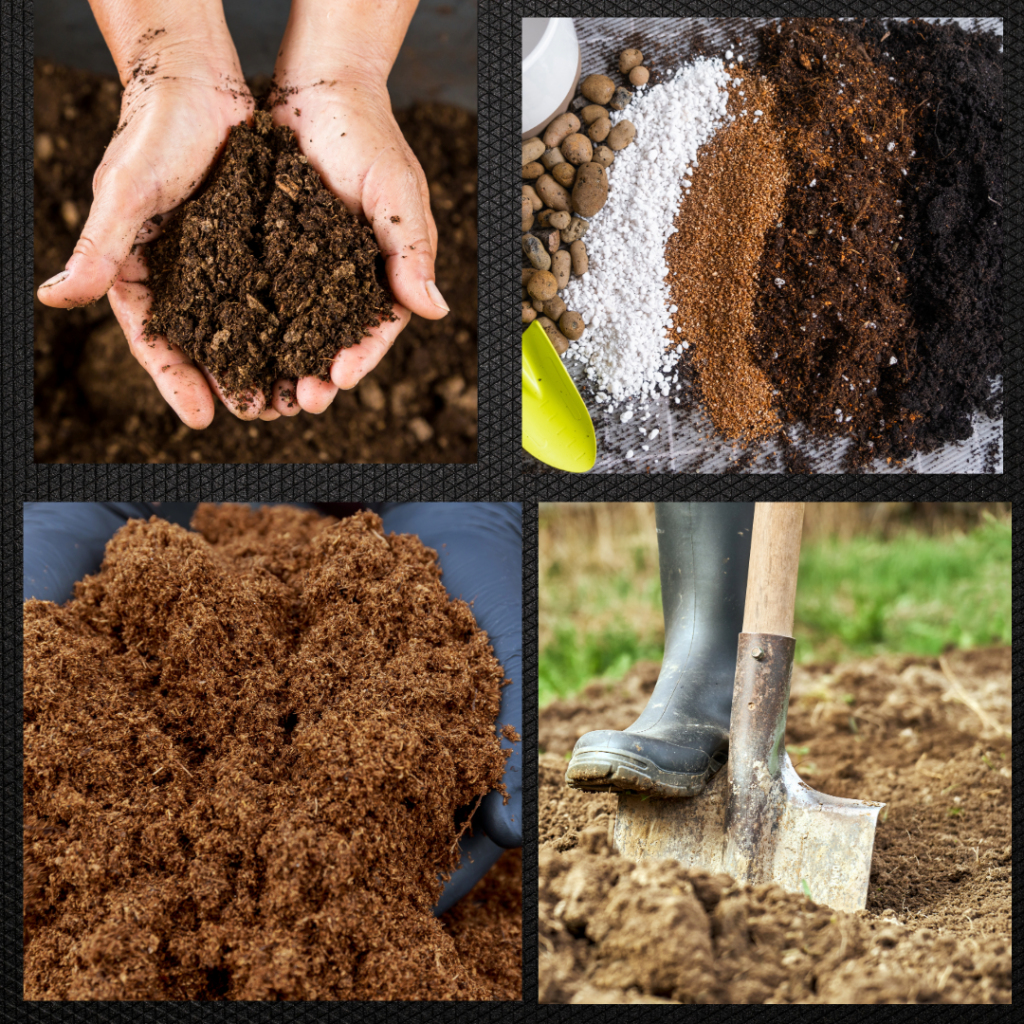
But before your eyes turn to those bright little pansies and violas, or your attention is grabbed by some new tomato variety, there is a common supply that is given little attention and is the most important — what you are planting all of these new seeds and plants in … the soil/planting mix.
And more than anything else, this will control the positive or negative outcome of your growing season.
So often I am in line at some store with a shopping cart full of some plants I just had to have, and I grimace when I see the shoppers ahead of me with a cart loaded with potting soil and/or sand.
I have to use all my gardener’s strength not to introduce myself and say something. (You will find me doing this if you are in the garden chemical aisle. I have saved many a gardener from buying the wrong product for the wrong problem. But I digress.)
How can potting soil be so bad? The name is literally for pots. And what is wrong with sand? Sand is 100% drainage; we have mostly clay. How can that be bad? They both are.
Let’s start with the basics of soil science. Soil is made up of three particles: clay, silt and sand, and that is in order of size. In person, I show a clear visual demonstration by taking a clear glass jar and put ping pong balls in it. Just a few fit, and there is a lot of space in between. This represents, sand and the reason it is so drainable. Sand is our largest soil particle, coming in at a whopping 0.05-2 millimeter in diameter.
Then I pour into jar with ping pong balls, some dried peas. As you can imagine, the peas slide in between the voids left by the ping pong balls. Silt are the medium-sized soil particles. In actual soil, silt feels like flour. I shake the jar with the ping pong balls and dried peas, and you can still see movement of the material in the jar.
But then comes the smallest particle of all … clay. For this, I add dry rice, shaking it into the ping pong ball/dried pea mix, and every little nook and cranny are filled by the rice.
Then I have students make various combos of the three particles, and that reveals the best and worst scenarios. A balance of excellent drainage, while still having soil structure to retain nutrients is the ideal.
The worst is almost all clay, mixed with a little sand. Homeowners often tell me they “fixed” their clay soil by adding a few bags of sand.
I sadly have to tell them the reason they can’t even dig up that area now is all about the proportions. If you have a lot of clay and a little sand, you have created drywall. Literally. And that proportion has to be by volume. We do not recommend the use of sand as a way to improve drainage in clay soils.
You would have to add twice the volume of sand to one portion of clay to get a drainable ratio. Not practical. To improve clay soil, it is better to add a mixture of peat moss and compost of your choice.
I call it the ideal fix for the clay soils around us. If you are lucky enough to have had a home and landscape built in the 1960s or earlier, like my house did, your builder did scrape off the top black soil, but they didn’t haul it away, only to sell what they say is 6 inches of topsoil back to you (when it usually ends up being 3 inches.)
Nope. Back then, they just pushed that rich, drainable, high-quality Midwest topsoil, chock full of organic matter, just to the side. When your house was complete, you actually had all that rich soil pushed right back for your landscape. It is a gardener’s dream soil.
So back to the fix for clay soils. Take equal parts of peat moss and mix it with your choice of compost. Once mixed, you can use this amendment to refresh your existing garden beds by adding 2 to 4 inches of the mix and dig/till it in.
I am not particular about the type of compost you use. Ideally you will be using your own free-for-the-making gardener’s gold compost you made by either using a formal composting system, or the Mother Nature’s simplified composter — where you just push your garden refuse (no oils or meats) into a pile and let the microorganisms do what they do by turning those sticks, leaves, potato peels and whatever else expired vegetable or fruit in your refrigerator, into organic matter.
It is said that it takes nature 100 years to make one inch of organic matter. Compost is the ideal amendment, whether you buy it or make your own. Common composts include mushroom compost and a variety of animal manures.
I already can hear you muttering as you read this column, “I’m not using any mushroom compost. What is she crazy? I don’t want mushrooms growing all over my yard.”
And believe me, I hear this at least 50 times a year. To which I respond, if you use horse manure in your vegetable garden, does a stallion spring up in your cucumber? Or if you use cow manure in your flowerbed, does a Holstein show up in your petunias?
Of course not, mushroom compost isn’t going to grow mushrooms, it is the substrate on which mushrooms are grown that is left over after mushroom harvest. It is rich in nutrients, and if you happen to follow vegetarianism or veganism, it is animal free.
Not to say there aren’t issue with animal manures, too. I often hear people say the freshest manure is the best. Nope. Not unless you want to grow a weed field. Animal manures come from animals that have very simple digestive systems. What goes in, pretty much comes out, including lots of undigested weed seeds.
You should always use manure that is well rotted over a year to be sure you are getting the benefits without the weeds.