Flowers invisible to us … but not to the bees!
We have finally made it. Officially springtime … maybe you have seen some signs of life in your home landscape.
There is nothing like that morning chorus of birds just before dawn. I am sure you have also been rooting around looking to see what is up and growing. I know the robin is the harbinger of spring. And they are everywhere right now. But for me, the eternal bug lover, the first fly and bee of spring are also indicators that winter is starting to wane.
But what are these spring-bringers to eat? You see the robins pulling fresh, juicy worms out of the wet soil, you probably don’t want to know what the fly is eating, but what about the bees?
Our queens of pollination — look out there in your yard: Just where are your nectar and pollen producing plants right now? Are there any?
Sure, you might have some Lenten roses (Helleborus, spp) and a few snowdrops (Galanthus, spp.), or maybe in late February you even boasted having the earliest-flowering plant of all, the shrub, witch hazel (Hamamelis).
But for foraging bees, just out of the long winter’s slumber, more food is needed.
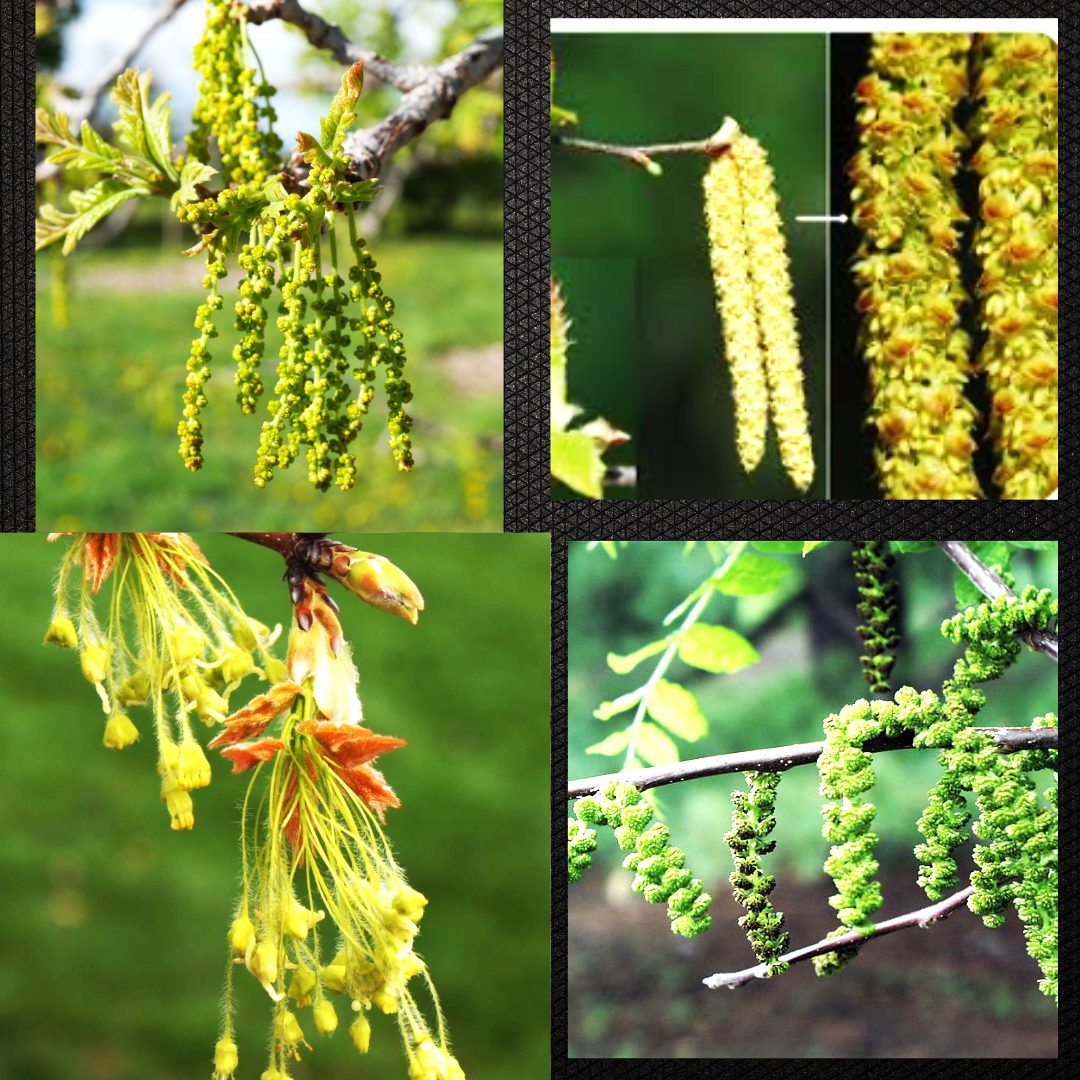
How is it that bees and other pollinators can survive with so little food in early spring? Well, it is there, always has been, you just don’t see it. Look up! See it now? Of course not. The flowers of which I speak are numerous and riotous this time of year … the flowers of trees.
But wait, you don’t see any flowers up there in your shade trees, do you? That is because they are considered inconspicuous. Not the showy Easter parade-like flowers of our ornamental trees, like the crabapples, redbuds and even the gentle beauty of the serviceberries.
I prefer the term, inconspicuous, the more common term you will see is insignificant. And that couldn’t be a bigger misnomer. They may be visually unimportant, meaning if you are buying trees for the aspect of floral display. But as far as nature significance is concerned, it couldn’t be more wrong.
Nectar and pollen produced by trees is very significant to bees. So, take a look — a closer look — all of our trees flower, and most of our plants do, except for the ancient plants, the spore producers like ferns.
When we think gardening, we often think vegetables and flowers. And also, the flowers on our vegetables. But regular shade trees flower, too. And they are of a huge value to the bees and other pollinators as they set up their new homes, preparing their nurseries for the next season of babies.
One woody plant that you may witness the need for bees on is if you have the good ol’ timey pussy willow in your yard. These floofy, pompom catkins erupt with a burst of brightly colored pollen. I am amazed at how many huge bumble bees can fit on one pussywillow catkins in search of nectar and pollen.
Maples (Sugar and Red) have tiny red or green flowers that are essential for honeybee early food sources. American Holly (Ilex opaca) has very small, almost invisible flowers that are highly attractive to honeybees for their nectar source.
Fruit trees (Prunus, spp.), which arguably can have some of the showiest blossoms, are highly attractive to bees — and we need them to be. No bees, no pollination, no fruit. But there are other native “fruit” trees that are extremely important to the early pollinator diner.
My favorite large (and I do mean large — 60 to 80 feet by 40 to 60 feet at maturity), is the native black cherry tree Prunus serotina. This tree supports over 75 species of our songbirds with their fruit. But the somewhat non-showy yellow cone-like racks of light-yellow flowers support so many insects as well.
Two other native woody plants whose early spring flowers support our pollinators, that are far more manageable in size — as they are either large shrubs or small trees depending on how you prune them — are my favorite small tree, the serviceberry (Amelanchier, spp.) and Cornelian Cherry (Cornus mas).
Both of these are nature winners, as they provide pollen and nectar for the insects, and then provide fruit for the birds (and us). The serviceberry fruit to me tastes like a cross between blueberry and cranberry. And the Cornelian cherry fruit looks like a tiny pear tomato, but has a delicious tart cherry flavor.
One tree that is a true winner with bees is the Linden/American Basswood (Tilia americana), also called the honey pot tree. The small flowers in June have high pollen and nectar value for bees. I often get calls about “something” that smells so good, but gardeners can’t find out where the fragrance is coming from. It is the Linden.
Even the boxwood (Buxus sempervirens) whose flowers you can’t really see are considered high value pollen and nectar plants.
These trees are ideal for supporting local bee populations, especially early in the season or when blooming to fill gaps in nectar flow.
But is all pollen and nectar equal? No. At Longwood Gardens in Pennsylvania, Dr. Peter Lindtner measured the amount of pollen and nectar that honeybees collected. Their team then ranked the quality of each plant’s pollen and nectar to the bees.
Garden Plants for bees is an interesting read, as he indexes the value of each plants pollen and nectar. This is very similar to the way Dr. Doug Tallamy set up a value system for each plant as to how much biodiversity it can support.
So, this week, when you are out looking at the newly emerging nature around you, remember to look up!