Can-na tropical flower be started in March?
We are finally on the brink of every gardener’s favorite season: Spring. But as I mentioned a few weeks ago in my column, don’t get too overly enthusiastic and start digging wet soil, uncovering protected plants, or planting yet.
But there is something that will scratch that gardening itch for you … giving your tropical plants a head start.
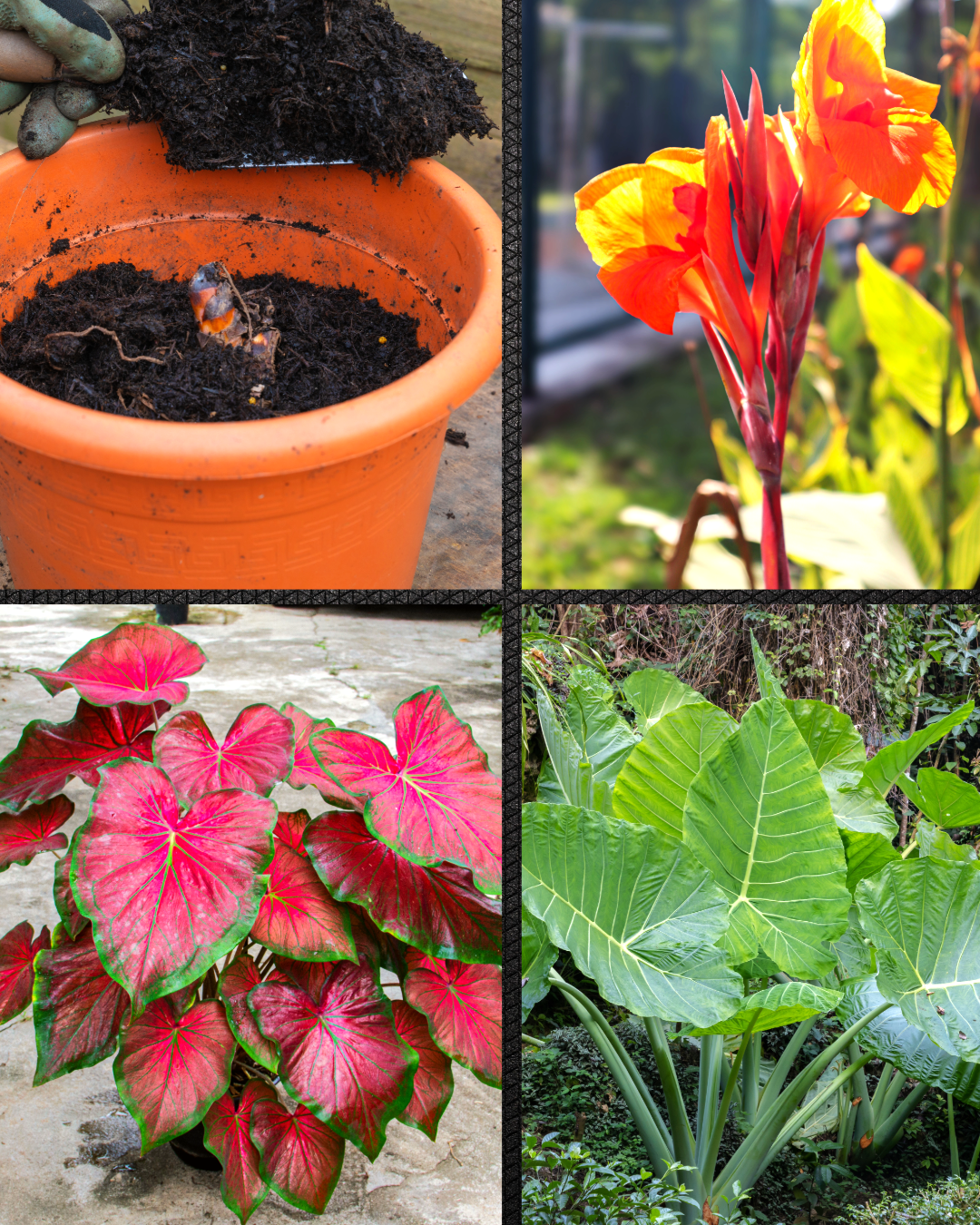
These amazing, tropical (or at least warm weather) plants — cannas, rex begonias, elephant ears and caladium — are wonderful garden additions offering some bold colors and textures. Pollinators are attracted to canna’s big, bright blossoms, and there is nothing as dramatic as the elephant ear leaves, literally as large as a real live elephant’s ear.
Rex begonias offer the most delicate and carnation-shaped blooms, and caladiums with their wildly brightly colored leaves, are the shade garden’s best friend.
Start them early inside to get more days of their glorious beauty. The basics of giving tropicals a head start begins the same for all — a container, some potting mix (not potting soil, ever), adequate moisture, warmth and light. You don’t need grow lights or a heating mat, because your home temperature is plenty warm for them, and each day we have a few more minutes of sunlight.
If you are purchasing new tropicals that are bare root — the colorful displays you see in most big box stores, with a beautiful flower pictured attached to what looks like a dried-up baggie of dust — the instructions on depth and spacing are right on the bag.
I know many gardeners take a pass on these sad looking baggies. But pricewise, you can’t go wrong. Buy three bare root cannas for $6, or buy one potted canna plant for $15.
That is the economy and beauty of gardening; with just a little know-how, you can turn a small, dried-up glob of something with roots into a beautiful expensive plant. You can buy these now. The things to feel around for in those baggies are firm bulbs and no smell or wetness. The other great thing is if they don’t grow, most places will let you return them.
For pot size, you have two choices: If you have the room and plan to keep these tropical bulbs in containers, then you can pot them up in whatever you plan to keep them in.
That said, cannas and elephant ears become large plants, even when planted in containers. I don’t want to have these big pots all over inside, so the other option is to start them in smaller starter pots. Then when it is warm enough, you can either upsize their pots or replant them in the ground.
If you keep your cannas, elephant ears, rex begonias from year to year, you have probably stored them in a cool (not freezing), dark place — you may notice they start sending out growth shoots even before they are planted.
If you kept them in the pot from last year, you don’t have to plant anything. You just move them to a sunny spot, water and nothing else except wait for warm weather to move them outside.
A word on in ground vs. container tropicals. These plants can be pricy, but they are economical if they are kept year to year. I have cannas that are at least 30 years old. But many people grow them as annuals, because for these to be perennial, you must bring them in for winter.
This means, if you have planted them in the ground, you will have to dig them out after the first frost. For me, keeping them in a container, except for the largest of elephant ears, is a better idea.
Right after the first killing frost, I cut down the foliage to the soil level. And tropicals, depending on where they are located, can be knocked down by the first frost. If they are in a protected area, like on your deck up close to the house, they could last awhile.
Then, pot and all, I drag them in the house, to overwinter in a cool room, giving them just a cup of water once a month to keep them hydrated. When they start to show life in March, I start watering them and move them to a sunny window until mid to late May, when night temperatures are approaching 55 at least.
Then it is back outside. When fall comes again, repeat the cycle. These plants, especially cannas, don’t mind being tight in a pot.
I keep caladiums — with their pink, red, or white speckled leaves that give such a great pop of color in the shade — in a pot. The difference here is, I actually bury the pots in the ground.
When fall comes, I unearth the whole pot. But before I take inside any plant that I buried the pot underground, I give it a few days on the outside deck to release any animals/insects/mice that might have been using these pots as their summer cottage. I give them a thorough watering, then let them dry for a few days before bringing them in.
If you are the gardener who digs out your tropical roots and keeps them overwinter in a bushel or bag, you plant them 2 to 4 inches horizontally with roots facing down. For rex begonias, the root is like a concave cup that you plant the cup part facing up just at the soil line. Elephant ears should be planted 6 to 8 inches deep; and caladiums 1/2 to 2 inches deep.