The first bug of spring … what to do and not
For the last month, I have been responding to client comments and questions about their observations of seeing “the first robin of spring.”
It has been a while, but I wrote a column and a Master Naturalist blog about the reality that repeated research studies have shown that our American Robins don’t migrate anymore. They only move as far away as their next meal and access to water.
But there are some “firsts” out there that we need to talk about — the first bugs of spring. I am sure you have seen one as you are poking around outside in your landscape on these warm February days. The first fly, the first bee and definitely the first ants. Lots of calls and emails about ants emerging.
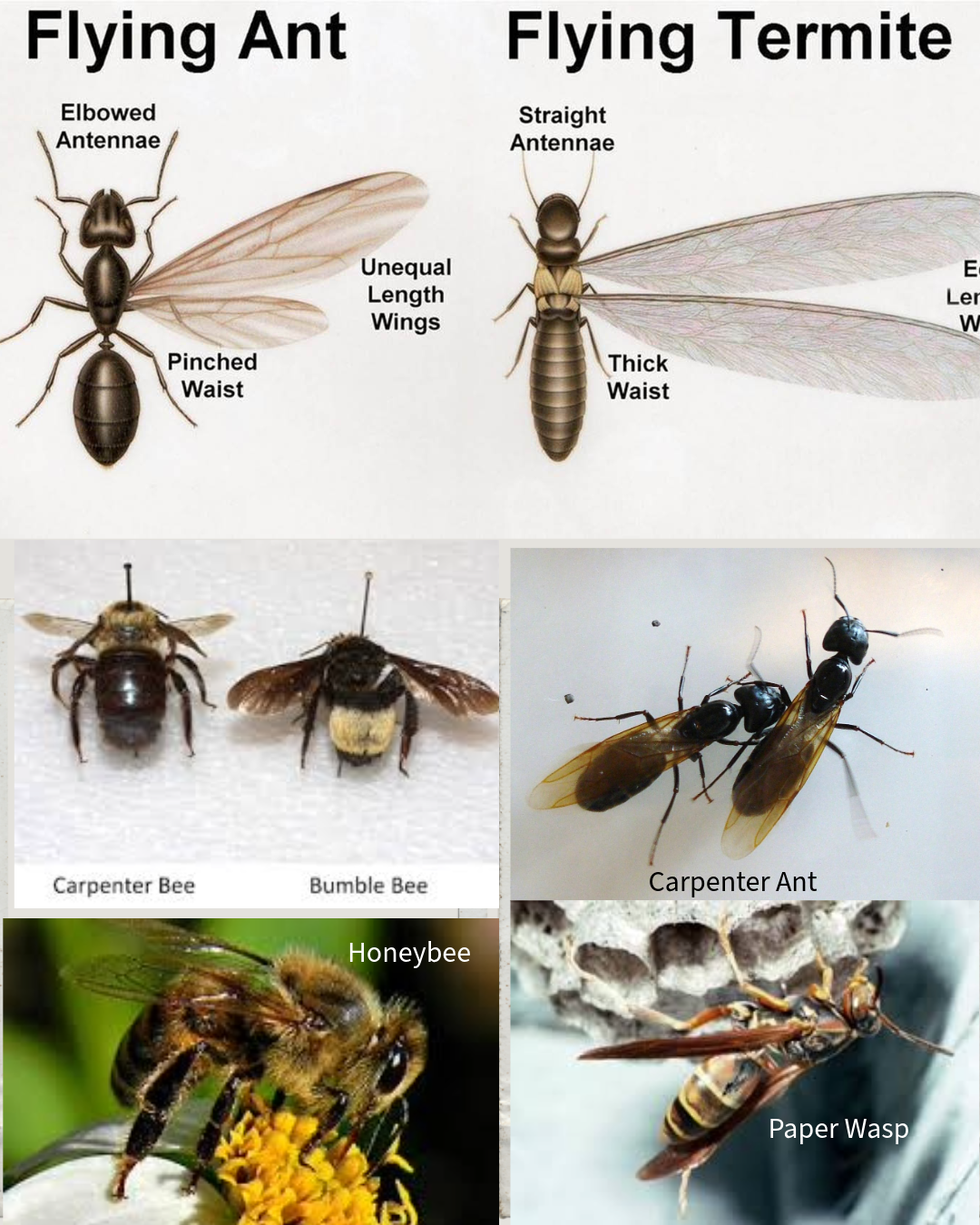
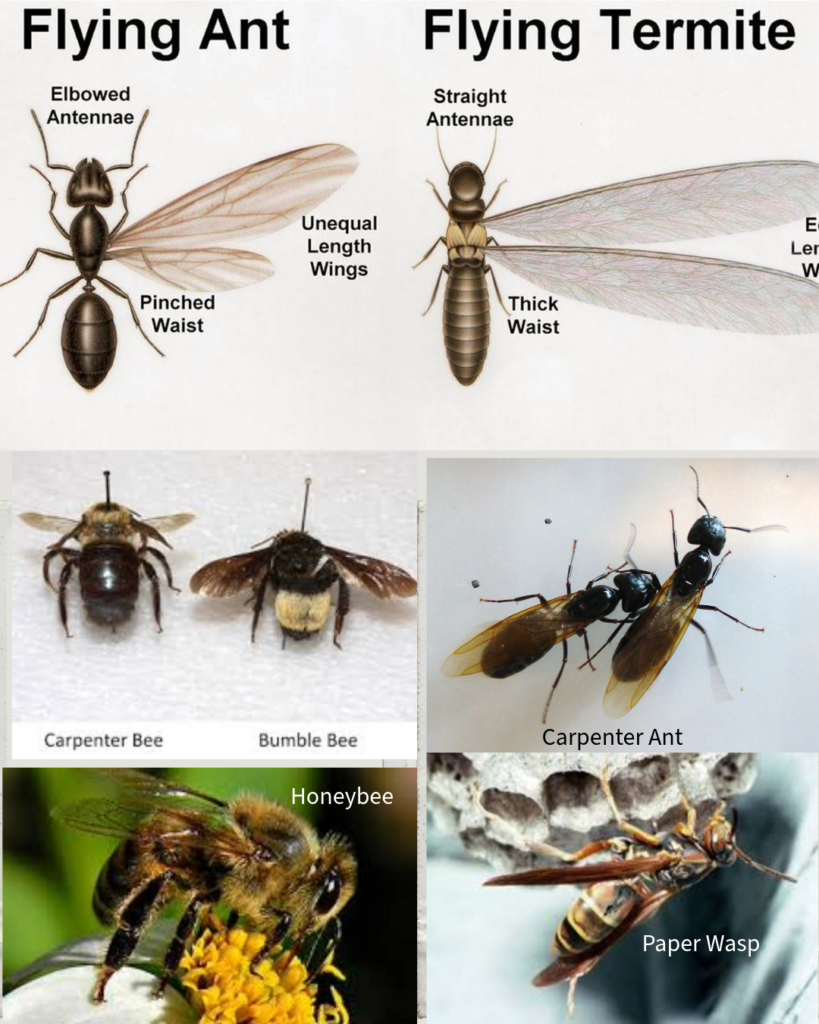
The most important issue is to properly identify any insect (or plant, or animal, really anything) before you decide to act. That is why I included these photos in today’s column. So many insects look similar. The number one comparison/fear is when small insects are found in spring particularly in masse and concerned homeowners want to know — termites or ants?
There are three easy identifiers to distinguish the two. The easiest is ant bodies are three balls hooked together: head, thorax (chest), abdomen. Termites are more head and pear-shaped body, no pinched-in waist. Ever.
The other two characteristics are antennae and wings (both ants and termites can have wings or not). The antennae of ants always have an elbow shape; termites’ antennae are straight without the angle. As for wings, both have two pairs of wings, but termites’ wings are all equally long; ants have two large and two small wings.
As far as treating them, for termites call a professional. The University of Illinois Extension suggests contacting three different pest control companies to compare price and evaluation. We never recommend one company over another.
For ants, the real question is do you need to treat them at all? There are several different species of ants. If they are outside, not usually a need to treat. They perform many beneficial nature tasks, from digging their tunnels and aerating the soil, to eating pest bugs and more.
I should mention one specific ant, the carpenter ant. Outside they, too, perform really important nature activities. They smell and eat rotting wood, never fresh, or healthy wood, and they make their homes (called galleries) in these chewed out areas.
People panic when they see round holes in trees with piles of sawdust below. That is actually a good thing, to a point, for trees. Carpenter ants were drawn to the tree by the smell of rotting wood, and they are excavating it out of your tree.
And the sawdust? They chew wood and spit it out. It is termites that actually eat wood. Carpenter ants aren’t destructive, per se. The tree will eventually rot on its own long enough that it could become a safety hazard. But carpenter ants can be in trees for years keeping the tree healthier. Always consult a certified arborist to take a core sample to see enough of the tree is still sound.
As far as the small ants, if you find you have ants building mounds where you don’t want them, no need to grab a pesticide here, just a slow trickle of the hose will get them to move on. But as with most insects, inside bugs are a pest problem. There are several over-the-counter controls for ants. Read and follow all labelled instructions.
Another insect you may see out early spring are bees and wasps/hornets. The most common site is the female bumblebee queen who woke up early from her winter nap and is searching for a place to build a home for her new 200-500 babies, and is on the move searching for any pollen source.
Bumblebees are native and are non-aggressive. Actually, bees in general are non-aggressive and rarely need to be controlled. But remember I said several insects look similar? Bumblebees are great friends, carpenter bees, uh, not so much when it comes to any unfinished wood you may have such as the underside railing of your wooden deck or your wooden fascia.
Carpenter bees look very similar to bumbles, with the exception that their abdomen is hard and shiny; where bumbles look like three pompons strung together. People call me saying it literally looks like someone used a drill press to make perfectly round holes in wood somewhere on their home or property.
Do you need to treat them? If the holes are in dead trees, great, no need to treat. Holes in your patio furniture: You can use a physical barrier such as window screen replacement to get them to go elsewhere, or use a pesticide dust, like Sevin to kill them.
Homeowners often prefer liquid pesticides, over a powder/dust. But it is important to recognize that unless you make direct contact with the insect with the liquid, once it dries on the surface, unless the insect eats it, it doesn’t continue to kill.
Powders/dusts, however, because insects have exoskeletons (on the outside of their bodies) which means they have lots of openings where insecticide powder/dust can adhere just if they walk through it so greater efficacy.
Bees are not as much of a concern as the other related groups are—wasps and hornets. Now is the time to do some preventative actions. Don’t wait until you have a large wasp or hornet nest to deal with.
In the spring, just like all wildlife, wasps and hornets are looking for property to set up their home and nurser–a safe, protected area for their home. So any corner, under an awning, at the apex of your roof, these are all great locations. Now through early June is a good time to monitor these areas and if a small nest is started, broom it out (always using safety first.)
And as always, if you have any questions or want me to look at a sample to identify, either drop it off at the Extension office, or email me a picture [email protected].