Late winter in the garden: Do’s and, more importantly, Don’ts
After this somewhat regular Midwest winter of longer periods of cold and at least a few inches of snow, all gardeners can’t wait to get back out there on the first day above 20. But don’t … for most garden tasks.
As I mentioned previously and repeatedly, everyone is in such a rush to get things checked off their list, but not so for the garden. That old biblical saying bears true, “To everything there is a season…a time to sow, a time to reap, etc.” I always say the bible is really just a big gardening manual. Reap, sow, chaff, seed, and most of all, faith.
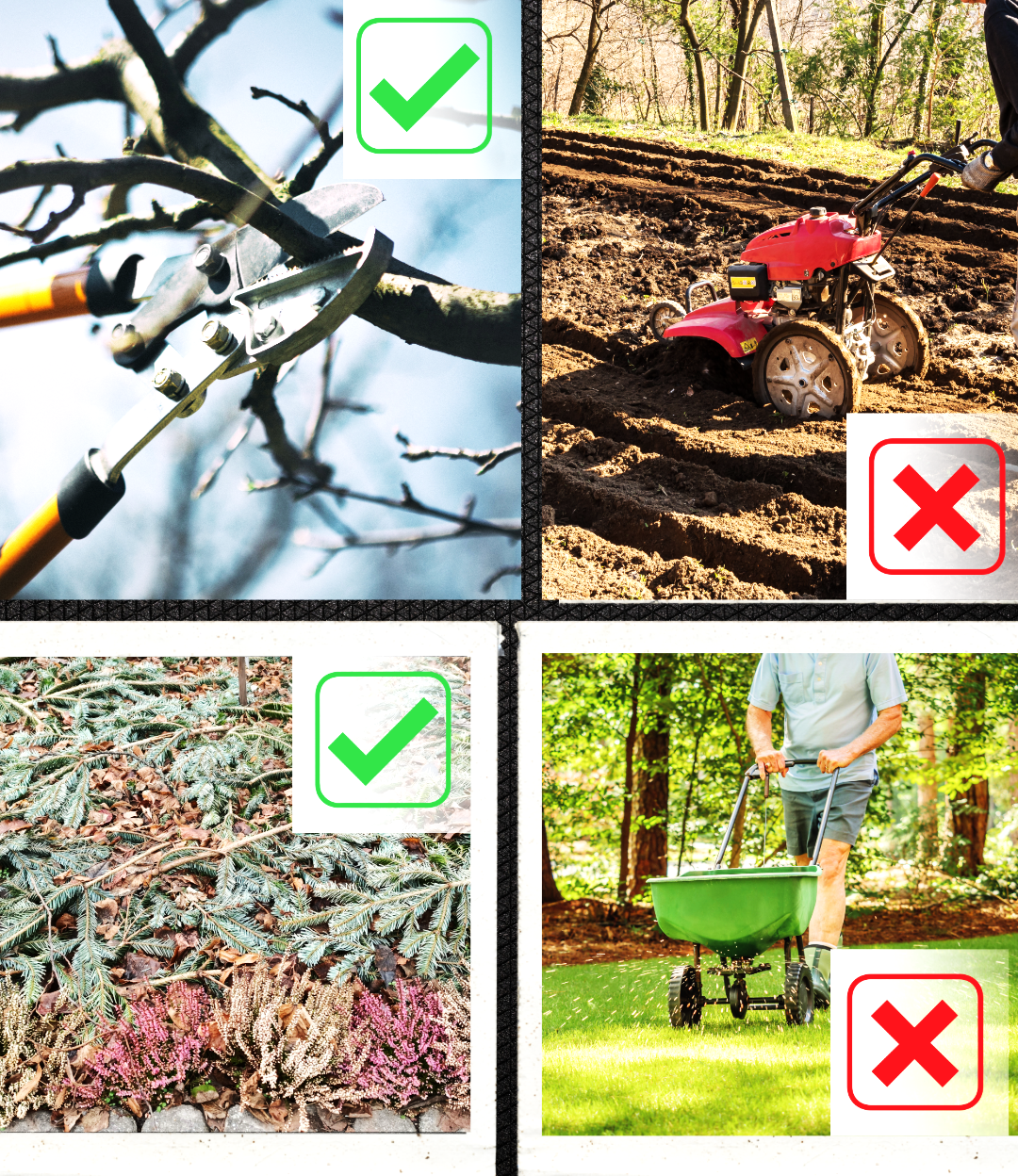
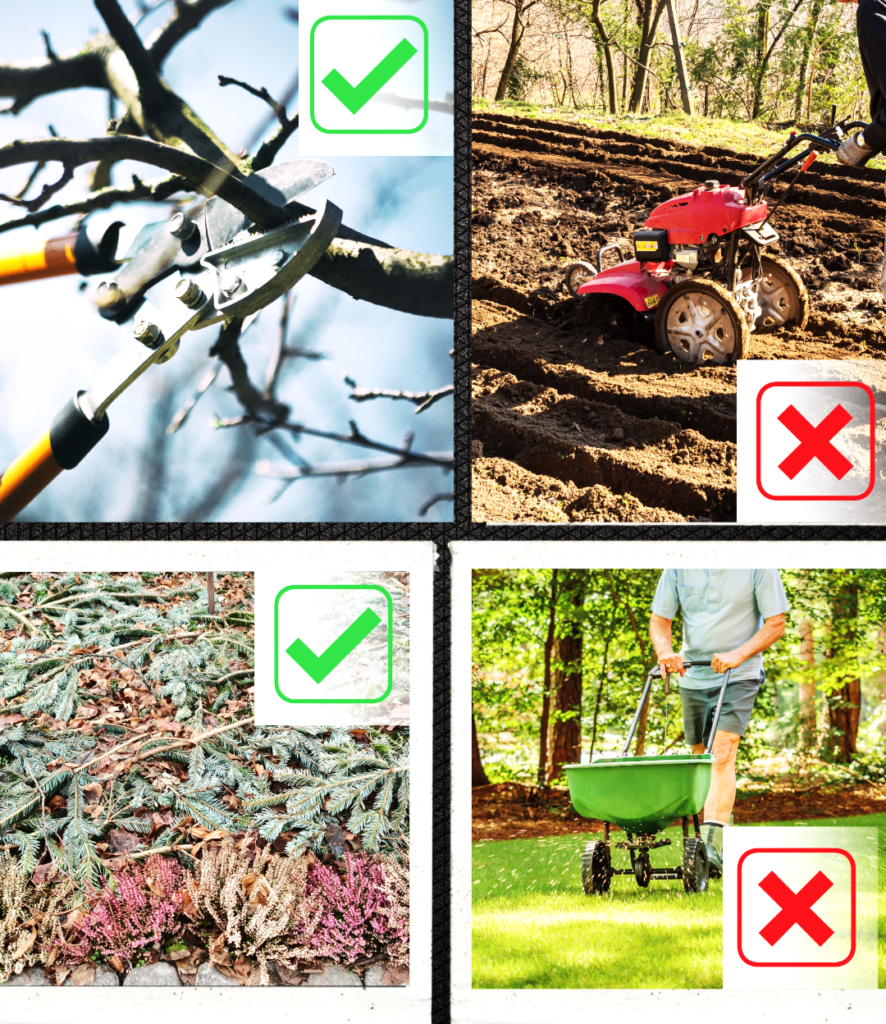
But if I were writing a modern day list of gardening commandments for late winter, it would start with, “Thou shall do winter pruning (but only on the right plants); thou shall keep winter mulches in place (even if thou thinketh it is warm enough to wear shorts outside).
And the even more important do not’s: Thou shall not covet thy fertilizer, grub control, or grass seed. And the biggest late winter gardening commandment of all, “Thou shall not rototill until the soil is dry and warmer.”
That pretty much covers it … but why? So many well-meaning gardeners think the earlier the better with these four tasks. Why not get some of these time-consuming tasks done now? Nature doesn’t want you to, that is why.
So, let’s start with the “to do” late winter tasks: The easiest one of all is the one most people don’t do and end of paying for it later — leaving the winter mulch on plants even if it is 70 degrees on Sunday.
You know that old joke, if you don’t like the weather in the Midwest, just wait an hour and it will be something different. Winter mulches are those you applied to plants in the late fall, not to keep them from freezing, but to keep them frozen. It is not the cold that kills most plants (unless they aren’t hardy to our zone), it is the roller coaster of temperatures, wind, sun and precipitation (or lack thereof).
Too often we start to see the first green leaves responding to a short spell of warm weather, and we excitedly pull away the mulch to give the plant more exposure to the springlike weather. Don’t be tricked, that is “Fool’s spring.” Because within a few hours or days, there will be a 30-degree temp drop with a hard freeze.
But will this kill your plants? Not if they are hardy, but does waste their energy budgets. The cycle of perennials is the same, whether a blade of grass or a 300-year-old oak. Plants respond to the natural cycle cues — increasing/decreasing sunlight and temperature (particularly soil temperature). Sap rises in the spring and drops into storage in fall.
When you remove the winter protection too soon, the plants “spend” some energy starting to green up, but then those new (and tender) leaves, are easily killed when the temp drops. Best to leave the mulch on or very nearby so it could easily be redistributed for plant protection.
And it doesn’t matter how long or how much experience you have; you can fall prey to this. Last year, I lost 20 of my very best strawberry plants because I just had to uncover them on a warm day.
The other late-winter activity that is perfect garden task is winter pruning of trees and shrubs. With deciduous trees (those that lose their leaves), now is the best time for pruning, because you can see the skeleton of the tree without leaves.
Three important issues here: If something flowers before June 15, do NOT prune it now, you will prune off all your flowers. Those flower buds were formed last growing season. Second, sharp cuts are the best cuts, they heal faster. And third, these are the simple rules of pruning:
Prune for safety first; then any dead/diseased branches; crossing branches/or those growing to the center of the plant; and finally, shaping. But the shaping should be related to the natural shape of each specific plant. You do not want your plants to look like that haircut your mom gave you when you were 6.
If you want more detailed information, I am hosting a pruning class here in Will County on March 3 from 5:30-6:30 p.m. For details and to register: https://go.illinois.edu/pruningclass.
The other big do-nots for this time of year are no rototilling until the soil has dried out enough. Now the two previous winters, we had winter droughts with very little to no precipitation of any kind, so rototilling earlier could have been OK. But this year, with the colder temps and the higher level of precipitation, it is going to take time for the soil to dry out.
What’s the big deal about this? Clods are. Large boulder-ish chunks of soil that can take years to break down. This one activity, if done to early, can take years to overcome. We have a larger percentage of clay in our local Will County soils. Clay is the smallest of all the three soil particles — clay, loam and sand.
Think of sand as a beach ball, loam as a softball, and clay as a grain of rice, comparatively. Rototilling wet soil can squeeze the air out of the soil. When those tiny clay particles fill in the open spots, you end up with these hard large clods that are impenetrable. It can take up to five years of the freeze/thaw cycle to break this back down to useable soil.
How you know when to till is an old farm test. Grab a handful of soil in your hand and squeeze. If the soil glues together and is slick, too wet to till. But if you squeeze it and it easily breaks down into smaller chunks when you poke it, it is ready to till.
The other late-winter garden commandment is do NOT apply crabgrass preventer, grub control or grass seed now. Just because your local big box has it on sale, that does not indicate application time.
And it is definitely not now. If you apply these products now, there will be little left when the issue itself appears.