GardeningGardening resolutions for the new year—or not
I don’t know about you, but long ago, I gave up that annual tradition of proclaiming one or two resolutions of big changes I was going to make in the new year starting on January first. I decided to take up my mom’s approach…every single day start fresh and try to be a little bit better than the day before.
I find that is it a much more realistic and practical approach. And I find it applies not only to my day-to-day personal life, but to my gardening practices too. January is a great time to start because that is when all those brightly colored seed and plant catalogs start filling the mail-box and email.
This is really the gardener’s winter holiday…getting those catalogs, starting to make lists and sketches of what the 2026 garden dream plan. And although they have gotten twice as expensive and contain half the number of seeds they had just a few years ago, the allure of buying seed packs is so enticing as we look outside at the bleak, sunless, frigid landscape.
But realistically, how many seeds of one variety can I really plant? I live alone, but even if I had a standard sized family (2 adults/2 kids) would I really need 50 California Wonder Bell Peppers? Uh, no.
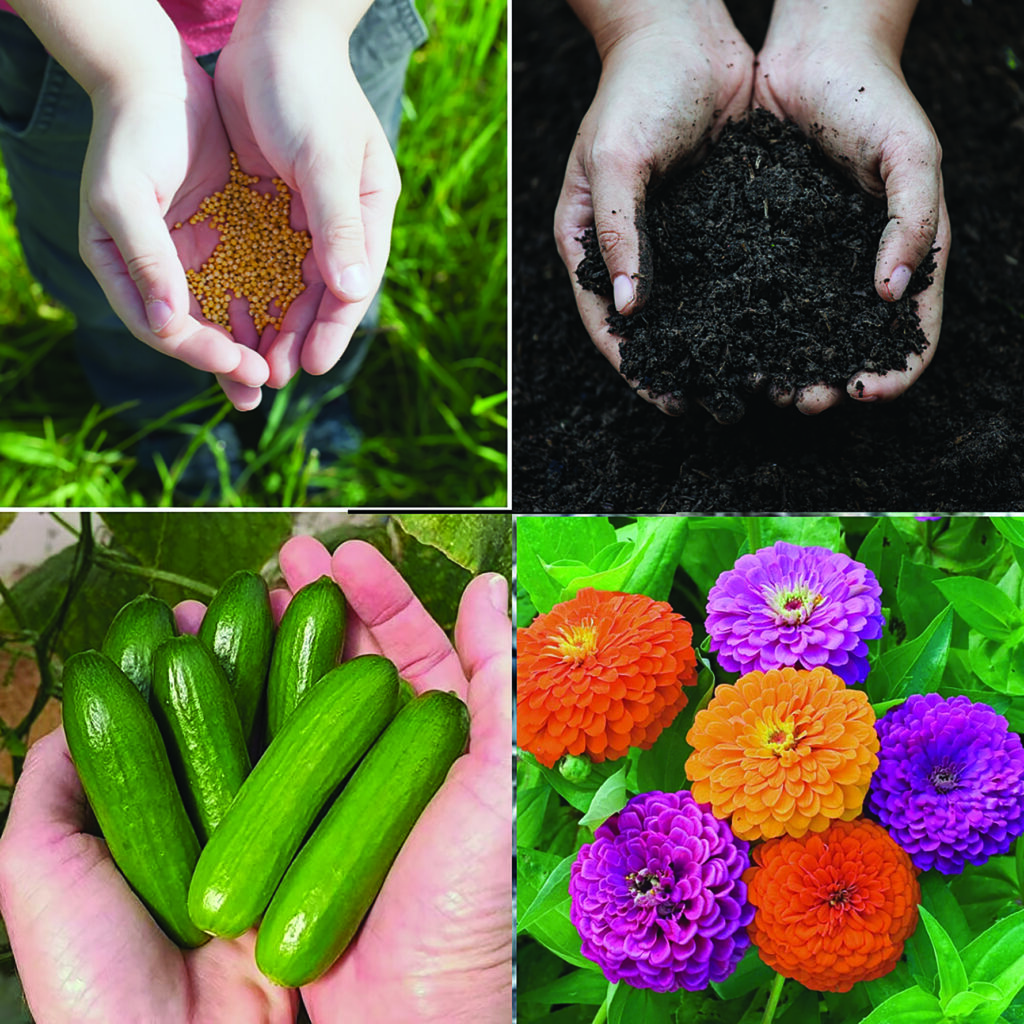
So, one of my garden changes was to compare seed packets…how many seeds per packet and I found a few seed catalogs that offered fewer seeds and comparatively, nice price. Let me warn you though, the inverse is true too. I found some of the most sought-after seeds, like the annual poppy, Amazing Grey, were amazingly well priced…or so I thought, until I no-ticed the number of seeds of those glorious grey poppies—was five seeds.
And having grown them before, I know the germination rate isn’t extremely high, so I moved on to search for them elsewhere. And January is a perfect down time to do a deep dive into the seed/plant catalogs.
Another improvement I try to focus on every year is my soil. I am very fortunate to have an old home with an old landscape. So old that when my parents built our family home, all that high quality topsoil wasn’t scraped and hauled away, only to pay for a dusting of two inches after the house was built.
Nope, that glorious, organic matter-filled soil, sat in a pile and was put right back after the house was built. If you dig in my yard, that high quality soil goes down at least twelve inches before you hit that subsoil clay. But I know my soil is the exception and typically heavy clay subsoil is one of our most challenging issues in gardening in Will County.
And we spend so little time addressing this most important issue that affects all of our gar-dening. Do you need a soil test every year? No, unless you are having problems (after you talk to me.)
So many people contact me for a soil test and I ask them to explain what their issues are first. Often, the issue is unrelated—a plant disease, a cultural condition, or even a tree that grew taller and is now shading the sun loving plants. But the old adage “feed the soil, not the plant” definitely has merit.
Soil physically supports plants, affects water and nutrient access amid a myriad of other functions. Soil science is still uncovering many nuances of how soil affects plants. As far as the home gardener’s needs are concerned. Getting a basic soil test every 3-5 years is a good baseline.
Do not buy one of those home test kits because accuracy is variable, instead contact our office and we have a list of labs that do a great analysis and give an easy-to-understand list of recommendations.
The more important issue is what not to do to soil. Do NOT add lime or other amendments unless called for. The average pH of Will County soil is on the high end to start with. We are built on limestone. The problem with tinkering with nutrients is you can’t get them out if you end up with too much. Our heavy soils retain nutrients.
What you can always add is organic matter (compost)—home grown from your compost bin or purchased. It takes nature 100 years to make one inch of organic matter. Adding this rich, high-quality amendment improves drainage, micronutrients and is all around great for your plants. It literally is nature’s way.
Speaking of nature’s way, I have more and more people reaching out to me asking if they should stop planting annuals all together with the strong native plant recommendations they hear and read about. And the answer is definitely not! Annuals are critical for pollina-tors.
Yes, native plants have a lot to offer since they evolved with our own geography, weather, diseases, and pests. Natives have few issues with pests and tend to be drought tolerant. But they are still perennials and the change in bloom time in the last few years related to persistently high temperatures have emphasized how important it is to plant annuals if you want to support pollinators.
Annuals, many of which are exotic, provide season long access to pollen and nectar. In 2024 and 2025, many of our late season native perennials that our pollinators count on for sources of pollen and nectar, responded to the hot dry weather by blooming several weeks earlier than usual. By the time, the super generation of monarchs were eclosing from their chrysalids, all of the goldenrod and asters were fried up and in seed already. Only the re-maining annuals were available for food sources for their long journey to Mexico.
In the vegetable garden, I know we all have our favorite varieties; for some it is a Big Boy to-mato, or a Marketmore cucumber, but I always try to add one new variety of at least one vege-table every year. Just as an experiment. In the last few years, I have discovered the snacking cucumbers and the personal sized melons.
Whatever you choose to grow this year, I wish everyone a bountiful garden in 2026 and re-member I am here for all your gardening questions [email protected] 815 690-9665.