Move over kale, there’s another superfood group in town!
I always like telling the joke that the best way to prepare kale is with a little olive oil; that way it is so much easier to slide from the frying pan right into the garbage can. But I know, kale is touted as a superfood, right?
With all its vitamins (A, C and K) and minerals (manganese, calcium, potassium, iron), and the fiber, antioxidants, and cancer-fighting phytonutrients, what’s not to tolerate? Or try to hide in soup or those kale chips? I know lots of people on the kale bandwagon, and good for them. But it’s just not on my top one million favorite foods.
So was I glad to see the headlines touting the new superfoods category … fermented foods. No, these aren’t the foods that are still in the back of your fridge from Thanksgiving, nor am I advocating eating compost. Although the first thing that people often think of with fermentation is rotting. But it isn’t. There is a huge difference, and some similarities.
Rotting and fermentation both involve microorganisms, but what doesn’t? The microorganisms involved in both rotting and fermentation are bacteria, yeast and mold). These microorganisms are responsible for changing the texture, smell, look and taste of food in both fermentation and rotting.
The biggest and most important difference is that fortunately for us, fermentation is a complete control freak. Fermentation is a controlled action and is an intentional managed process using specific microbes for desirable outcomes. Fermentation creates beneficial acids/alcohol, which preserves food.
Fermentation zoomed up the superfood list because scientists have discovered that the fermentation process creates probiotics, improves digestion, reduces inflammation and enhances the gut microbiome diversity. All of these are the current focus of improved overall health, better immunity, heart health and a reduction of chronic disease.
Rotting, on the other hand, is a free-for-all — uncontrolled decomposition by whatever microbes are in the environment. This can lead to spoilage and making foods unsafe.
Now is it true that the original fermentation outcomes were more of a rotting accident? Absolutely. You know the old phrase, “What doesn’t kill me, makes me stronger?” The history of fermentation falls into that category. And we can toast to that! And we should, because beer and wine and other fermented alcoholic beverages were some of the first fermented products discovered safe by ancient people.
In this case, the fermentation occurred from naturally occurring (and sometimes accidentally safe) microorganisms like wild yeasts and bacteria. And when I say ancient, I am talking the way-back machine. The National Institute of Health (NIH) suggests that 7,000 BC in Neolithic China, fermentation of fruits, rice and honey occurred; and even earlier than that 10,000 BC, there was evidence of fermentation of milk. By 5000 BC, the Egyptian and Sumerian people had developed cheese, beer and sourdough bread.
Fermentation was a spontaneous process then in many stored products. Early people, although the mechanisms weren’t discovered yet, observed these processes that they could repeat, were ways, particularly in warm climates, to preserve food, improve its safety, with the biproduct of making foods more palatable. Fermentation was a cultural practice based on observation.
It wasn’t until Louis Pasteur, a well-known French scientist and microbiologist in the 1850s, discovered yeasts and molds, and connected the food science dots that these microorganisms were the causal agents of fermentation. Pasteur discovered these yeasts and molds converted sugars into alcohol, preventing spoilage.
This fermentation process includes every aisle of the grocery store, the liquor store and, most importantly, the pharmacy. I know recently we have been in a world of newly emerging frightening diseases, but imagine living before the age of antibiotics.
Almost everyone died of infection. Enter Alexander Fleming in 1928. He observed that mold in a petri dish was killing bacteria. This led to the discovery of penicillin. Other drugs such as erythromycin come from fermentation as well as today’s biologics, like monoclonal antibodies.
And then there is food as medicine; who hasn’t been recommended to eat some yogurt to improve their stomach troubles? When teaching children about how important agriculture is to everyday life, they are often amazed that products they eat, wear and live in have anything to do with agriculture. Maybe for adults, it would be surprising to know how much of our foods are fermented.
I don’t think many people, when raising a glass or can of their favorite alcoholic beverages to toast the holidays, realize some of the plants that those drinks come from. Sure, most everyone knows that wine comes from fermented grapes, and probably with the onset of the microbreweries and IPAs, that beer comes from grains.
But do they realize cereal grains — primarily malted barley, as well as other grains including wheat, oats, rye, and corn — are fermented and added for different flavors and texture? The female flower of the hops (Humulus lupulus) is also used; not fermented but boiled in the sugary liquid to add bitterness and body to the beer. The simple recipe is grain + water + yeast + time = beer.
The basis of spirits are fermented, too. Potatoes fermented are vodka, Tequila/agave, Bourbon/corn, Scotch/malted barley, and from the juniper evergreen, the cool, dry taste of gin. Maybe the phrase “eat your vegetables” should have a second “drink your vegetables” saying too.
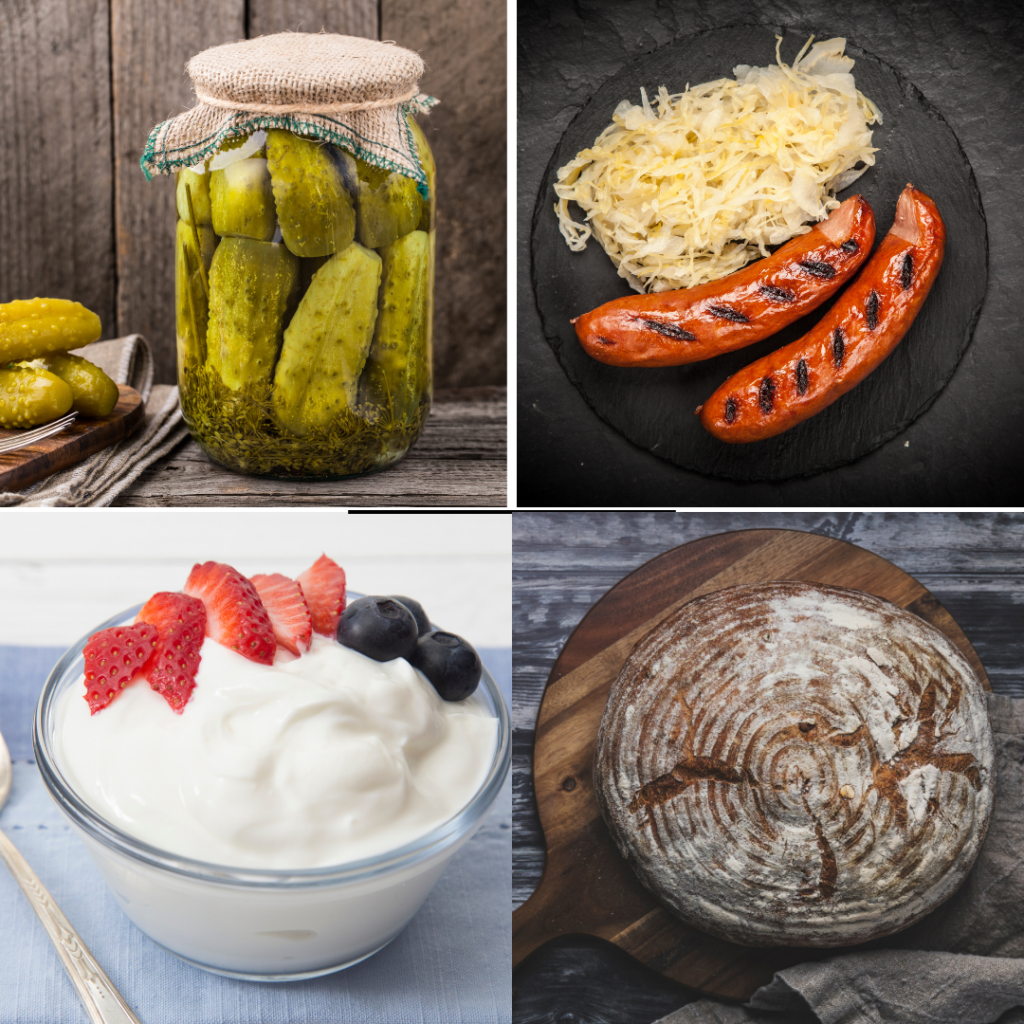
We can grow our own fermenting foods, too. Most people think of pickles when thinking fermented foods from the garden. But most pickles we eat are brined, which is a different process. Sour pickles are the ones that are truly fermented.
But take my favorite of all, sauerkraut (is my Polish showing?) No need to add an intentional microbe here, raw cabbage leaves are covered in beneficial lactic acid bacteria (Lactobacillus). The cabbage itself provides the necessary sugar. Mix in an appropriate amount of salt as a preservative, and create an anerobic (without air) environment, and the bacteria produce lactic acid that preserves the cabbage and gives it that characteristic flavor. Kimchi is an Asian, usually spicy, version of sauerkraut.
And no discussion of fermented foods from the farm, the dairy farm that is, is complete without cheese. Many people don’t give it a thought, but cheese is fermented milk with just the right bacteria added. So are yogurt and kefir. Kefir is a fermented milk drink that is over 2,000 years old, originating in the Caucasus mountains. And let’s not forget buttermilk.
You may not think of fermented products in baking, but sourdough starter is fermented, too.