Feel the burn: crack and snap … winter and woody plants
Mother Nature must have been feeling nostalgic, because it truly was over the winter and through the snow to grandmother’s house, we go … and it started in November.
As for gardeners and agriculture producers, we are just thankful for the added moisture after so many dry years both summer and winter.
But that old adage “too much of a good thing can be bad” is also true. And when I saw a neighbor out this frigid morning, beating his ice and snow laden evergreens with a rake, I knew exactly what my column was going to address this week: winter weather and woody plants. By the way, never ever do this; you are doing more harm than good.
Ideally, you would be going out during the snowfall and gently tapping the branches to reduce the snow load before it accumulates too thickly and before the temperatures drop.
Sure, there is nothing that says winter more than a Currier and Ives-like look when you open the curtains and see the first real snow of the winter, artistically covering each little branch and needle of the woody plants outside.
But winter can also be a harsh, damaging problem for our woody plants. The good news is there is still time to do (and not do) some gardening tasks to avoid long-term problems.
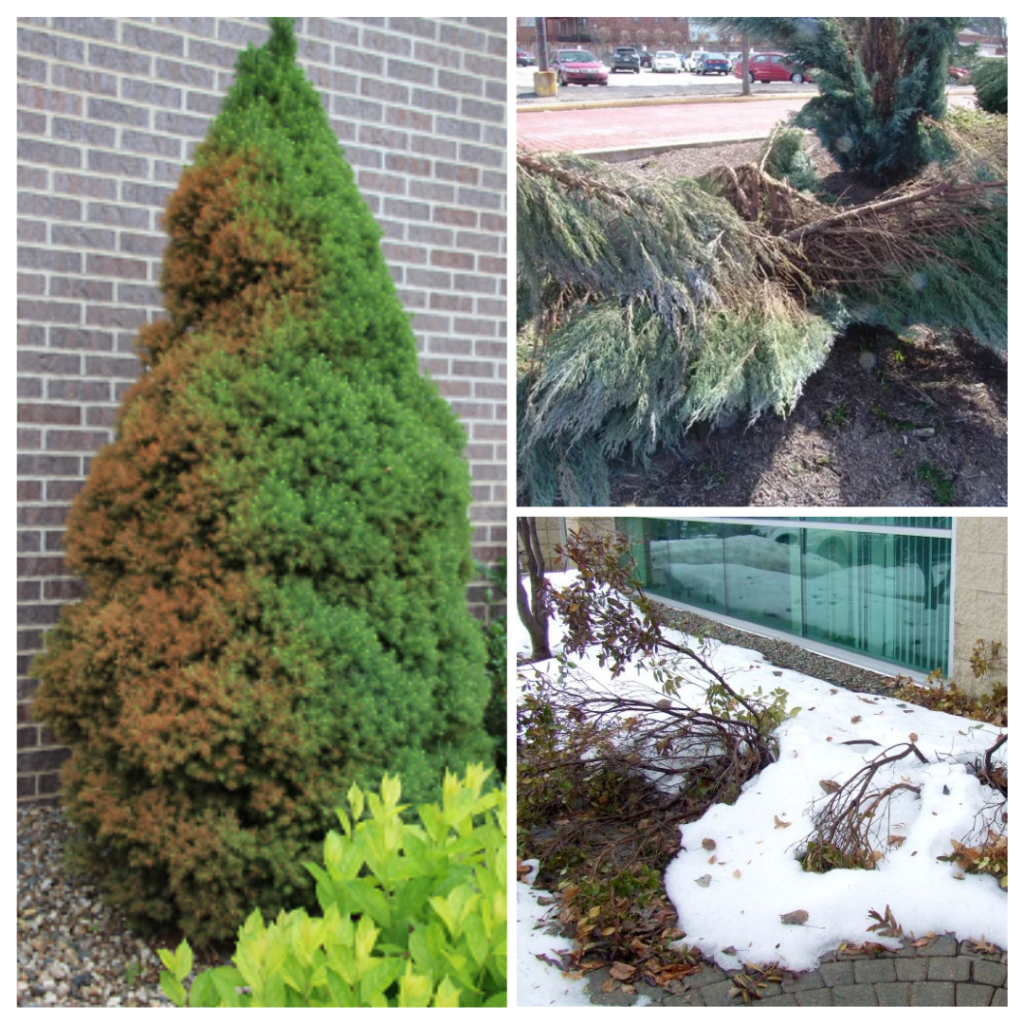
The most significant problem for our woody plants in winter is when we get ice. It is hard to conceive that just ¼” of frozen water will cause small branches to break; ½” inch is considered a disruptive storm and capable of breaking larger limbs; and 1 inch of ice is a true emergency, as it can break up large trees and pull-down electric lines.
Although there isn’t anything we can do to stop ice storms from coming, we can be proactive and, even now, do an inspection of your property for any limbs that are over/around power lines and any large limbs looming over your house.
We are in the dormant season now, and although I usually recommend pruning in late winter, dormant is dormant. Late summer and fall pruning is never recommended (except for safety issues and dead wood), because if we have a mild winter or no winter, or it gets cold and then warms back up (all which have happened over the last 3 years), late summer/fall pruned trees can be stimulated to start growing if conditions are right.
Fortunately, this year, we have had enough cold for a long enough times; the woody plants have gone into dormancy … so prune away. It should go without saying, but if you have any branches that are near power lines, leave it to the professionals.
First, call your power company and make them aware of the situation. Sometimes they will send their crews to clear the potential danger. If not, calling a commercial, certified arborist is the other choice.
Certified arborists are part of the International Society of Arboriculture and have taken classes and passed difficult testing. To find a Certified Arborist, go to the website http://www.treesaregood.org and click on the tab find an arborist. Enter your zip code, click on the button and Viola! All of the certified arborists in your area pop up. The University of Illinois Extension suggests calling three different ones, as prices can vary widely.
What you don’t want is your cousin’s neighbors brother’s stepson who is 16 and just got a chainsaw as a gift, even though his nickname is Clumsy. The other thing I don’t want is to see you out there with a 6-foot ladder that you have put in the bed of your pickup and you are standing on a cinder block you put on the top of the ladder because you just couldn’t reach that last branch. Personal safety is the top priority — always.
Besides clearing branches from near power lines and your home in case of heavy winter weather, another important consideration is for those “flame tip” evergreens. They are usually junipers or arbor vitae and are narrow and tall, and shaped like a flame. But add a little ice or a heavy snow, and now you have a jester’s cap. The beautiful shape is now split into three and bending outward, sometimes to the point of breaking.
This is where a good set of pantyhose come in handy. Just get dressed up for the evening and go out for a nice time, and you’ll forget all about your broken trees. Just kidding. Instead, use that pantyhose or any other flexible cloth — do not use zip ties, jute, wire, or other unforgiving materials, as over time, the winter winds will cause the sharp zip ties or rope or wire to literally saw the branches off.
Instead, take the pantyhose or stretchy fabric strips and in thirds, loosely tie the trees around near the bottom, in the middle and closer to the top. When the heavy ice or snow come, instead of breaking the tree apart, the bound-up tree will hold fast and the ice/snow will go over and around the tree, keeping it intact.
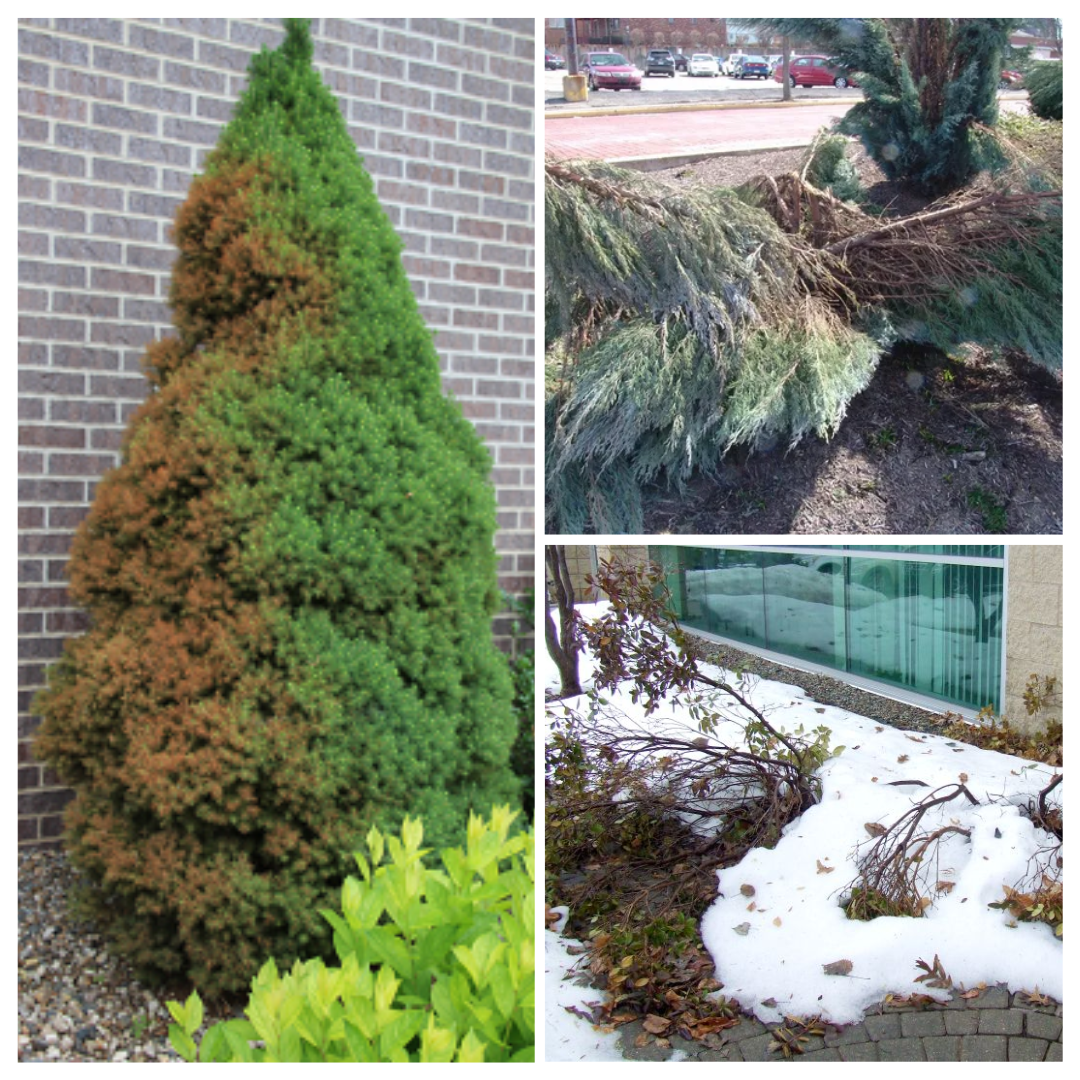
Another often overlooked consideration of winter damage to woody plants is winterburn of evergreens. In late winter, you start to see a bronzing or browning, usually one sided, of the evergreen foliage. The side for us that is affected is usually the southwest, as our prevailing winds (both summer and winter) come from the southwest.
The worst of winterburn affects our non-needled evergreens. Plants that have broadleafs — such as boxwood, rhododendrons and azaleas. These plants don’t have the luxury of losing their leaves, and their leaves are not thin like needled evergreens are. They are flat and have a relatively large surface area that is more easily damaged.
Your choices to prevent winterburn are just like us trying to prevent being cold outside in winter. You put a coat on or for exposed areas, you apply some moisturizer. Same is true for our woody plants.
You can put breathable fabric over the plants beginning in late November and taking the cover off in mid-March. Burlap is an excellent material for this. I have to chuckle every year that a few houses in Will County where they use this method make their conical evergreens look like garden gnomes with burlap coats on. But boy, do they have great looking shrubs the rest of the year.
The other option is to use an antidesiccant spray, basically a liquid wax. The University doesn’t recommend one brand over another, but the most common brand we have here is called Wiltpruf.
Follow all labelled directions but the basic idea is by applying this thin (invisible) wax layer, it protects the leaves from drying out.