Welcoming our winter feathered friends
Although fall has taken its time to get here, the animals are way ahead of that fall foliage. Squirrels gathering nuts, the queen of many bee, wasp, and hornet species, have bid a permanent goodbye to their nests and family to overwinter under some leaf litter.
But the most obvious indication that the calendar and seasons have changed are the presence (or absence) of different bird species.
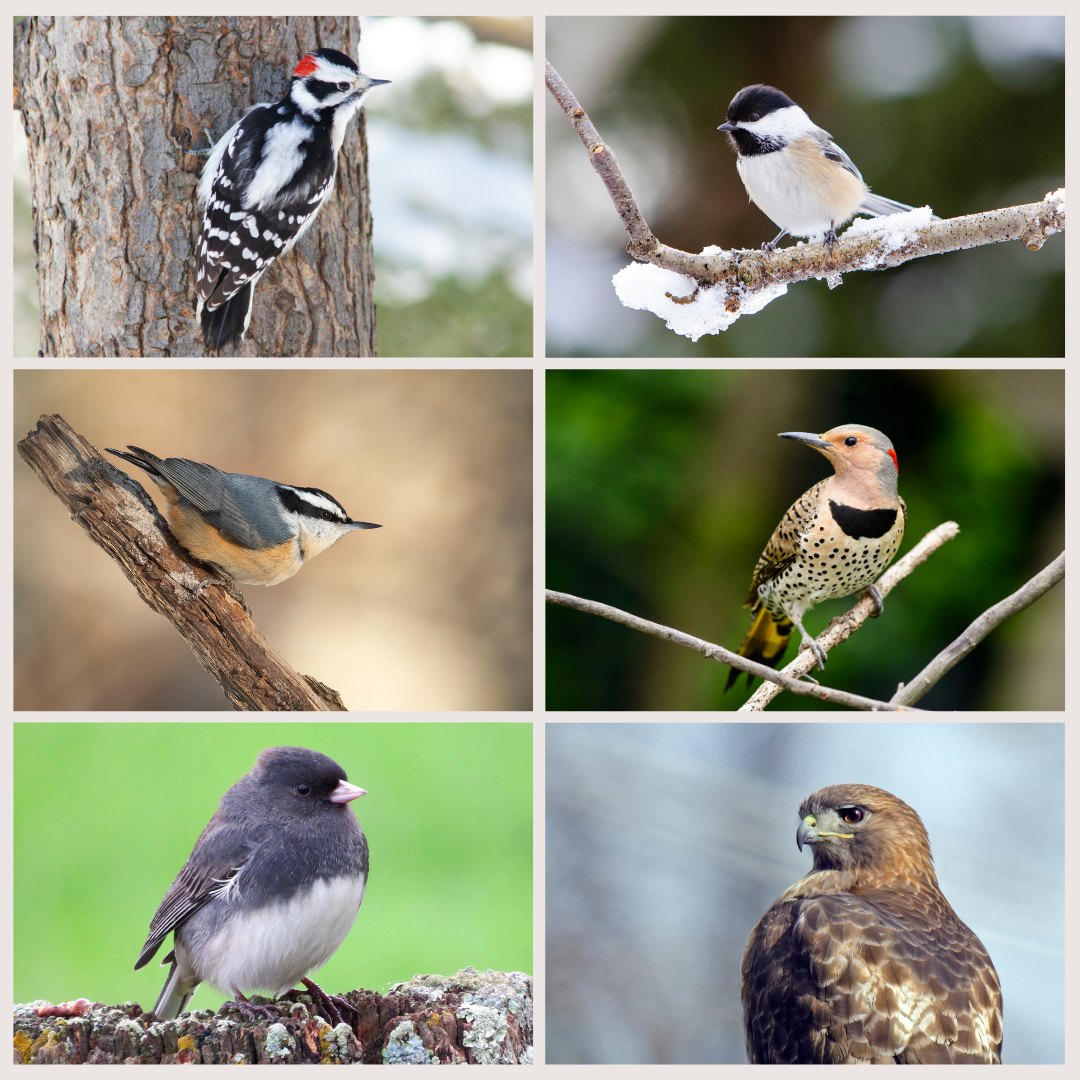
One of my former volunteers always texts me with her “firsts”: first robin of spring, and also the first dark-eyed junco of winter. These small slate-colored birds with the white bellies are the harbinger of fall and winter.
Ironically, they are moving here for a warmer winter, since their breeding (summer) grounds are far to the north in Alaska and central Canada. So, they are actually looking to our area as a warmer winter location.
Juncos have the nickname “snowbirds” — just like the term given to people who go south for the winter. But there are many more birds that visit our backyards more in the winter than the summer. These birds often spend their breeding season under thick protective cover in thickets and forests, and with adequate nearby food and water.
Other birds you may see more of during the cooler weather include white-capped chickadees, nuthatches — both white-breasted and rose-breasted — several of the woodpeckers, including downy, hairy, red-headed and their bigger relative, the Northern Flicker.
And then there are the usual suspects that stay year-round, from several species of sparrow and finch to lifelong committed pairs of cardinals and blue jays. And no discussion of winter backyard birding is complete without the one group you probably don’t want near the feeders — those that feed on those at the feeders — our birds of prey.
But for every call I get from a shocked and saddened bird-loving gardeners telling me they just witnessed the surgical precision of a hawk dissecting a mourning dove at your feeder, I give a gentle reminder that although unwanted and gruesome to us, this is nature.
Everyone is a meal for someone else. But there are some special strategies you can use to cut down on the grocery store shopping of our hawks at the feeders.
Every year, I try to proactively remind everyone with feeders that it is essential to not make your feeder an easy target for hawks to do some grocery shopping. If you have ever seen a bird of prey swoop down to capture an unsuspecting meal, they literally swoop.
They need a clear path to get in and out. And you can stop that by some simple blockades in their line of sight. Juxtapose your feeders between your trees and shrubs. Birds of prey don’t land and then walk or hop over to get their prey, it would take too long.
If you don’t have trees and shrubs that are placed conveniently for this strategy, do the next best thing … get feeders that are surrounded by wire enclosures. Many of these feeders used to be made specifically to exclude larger birds from overtaking the feeders. But there are even ground feeders made with large wire holes that accommodate even a mourning dove.
Not only do these physical features bar the birds of prey, but also the neighborhood cats. Another natural control to prevent cats and other animals from sneaking up on feeders is any prickly plant you have.
For me, I have 17 feeders, (Yes, I know I have a problem, but more on that later). But I also have dozens of rose bushes and other thorny plants. And many of my feeders are on shepherd’s hooks that are, you guessed it, right in the middle of my prickly bushes. No cats bother them at all.
Placing your feeders strategically really cuts down on bird loss during the months when most plants are leafless and don’t provide the cover they do in winter. Also consider keeping any pruned branches to place around feeders for a quick protected getaway once the first birds sound the alarm that predators are nearby.
Besides offering protection, another consideration is what you are feeding birds. Do they need different foods in the winter? The answer: Fat is where it is at! To stay warm and survive in the cold, the fats, and oils in suet, sunflower and peanuts are highly sought after.
If you only want to provide one birdseed to keep it uncomplicated, oil (not striped) sunflower seed is the overall winner. This seed is the preferred by most birds. But what about serial bird feeding enthusiasts like me with the 17 feeders? I have something for everyone.
You can feed certain foods to attract and distract certain birds and of course, squirrels. Safflower seed is a favorite of cardinals, titmice, chickadees, finches and nuthatches, although if you have just been feeding sunflower, it might take a while for the birds to warm up to safflower. Why add safflower? It has a bitter taste to the nuisance birds and squirrels.
I also have a wide variety of peanut feeders, whole roasted peanuts in the shell (only unsalted please) in a wire ring that attracts so many blue jays and woodpeckers.
For the smaller nut lovers — like, well nuthatches, chickadees and titmice — I have a tube feeder with a wire screen that is for unshelled peanuts. These smaller tube feeders are attractive to the smaller birds where the bigger nuisances can’t balance well.
Then there is the top of winter bird food — suet. Suet is a super high-energy food for birds made from animal fat that is highly attractive to birds particularly in winter months when no insects are available for birds.
But there are some important considerations. Buying suet cakes premade is a great option, but you can go through one or more a day, so some people think making their own suet is a better options, but it is usually not.
First, suet is raw fat which can become rancid really fast, as well as coat the birds’ feathers making them, excuse the pun, sitting ducks for predators. You can render your own suet, but it is a messy, smelly job. Not recommended.
Also to slow down the suet craze, buy an upside-down suet feeder. This is a roof with a grate underneath. Only the birds that have a prop tail, can hang upside down and feed easily.