Hubbard, Delicata, Red Kuri and more, not your everyday pumpkins
Maybe it is your thing, but I am not a big fan of these giant skeleton displays that seem to be popping up everywhere. But I absolutely love all of the natural fall decorations.
Whether people realize it or not, it is a celebration of Midwest agriculture. From those corn stalks, hay bales and, yes, those pumpkins and other decorative winter squash and gourds, are just stunning, and many are locally grown.
And every year, it is exciting to see more and more varieties of pumpkins, winter squash and gourds available.
But what about those other “pumpkins”? Just what are they, and are they edible? We know they are by our local wildlife, as I get several questions on how to “protect” the family Jack O Lantern from Chip and Dale, the neighborhood chipmunks.
Let’s address that first. Do you know the saying, “If you plant it, they will come?” Well, the same is true with our fall décor. If you set out and tastefully arrange your fall display, it is like setting about that unattended bowl of candy on Halloween with the sign “take one.” Kids nor wildlife understand that you didn’t put those treats out there just for them.
Wildlife, who are preparing for winter gathering stores of food and trying to put on a few ounces or pounds, think you are just putting out a food bin. And no, there is nothing that you can spray, glue, or concoct to put on those displays to deter wildlife practically, nor humanely.
If huge chunks are chewed out of those pumpkins, or the corn stalks are toppled and strewn about the lawn, just think of it as extra decoration.
But just what are all those interestingly colored and shaped pumpkins, winter squash and gourds? And what can you do with them? These are all part of the winter squash and gourd family. Their botanical family tree includes lots of the summer vegetables, too.
The cucurbit family includes cucumbers, zucchini, melons, pumpkins and all these winter squash plus gourds; even the washcloth gourd, the luffa sponge.
This entire family has the interesting botanical challenge that they bear separate male and female flowers (the term is dioecious). That means they are really dependent on pollinators to transfer that pollen to produce the colorful fruit.
The winter squash family is much bigger than just pumpkins. There are new varieties being developed all the time, and many of the heirloom varieties are having a resurgence. The beauty of the winter squash family, particularly if you were a pioneer, is they are the ultimate long-keeper vegetable.
I once received a beautiful Jarrahdale pumpkin, also called the “Cinderella Pumpkin,” from its interesting shape and blue green color. Just like many gardeners and farmers, I sometimes create my own little personal experiments. For this one, I decided to see just how long this winter squash would last before it had to head to the compost bin.
And I didn’t store it any way special, but rather, just set it on the floor in my office. I kept checking it to see for any signs of decline or rot, and I was thoroughly amazed that this big beautiful winter squash lasted an amazing 17 months at room temperature inside, before the stem end started to go soft.
Seventeen months! The value of these crops to pre-refrigeration people were extremely important.
The most familiar winter squash you might already recognize seeing at the local grocery store are acorn, butternut and the oddity of the winter squash family — the spaghetti squash.
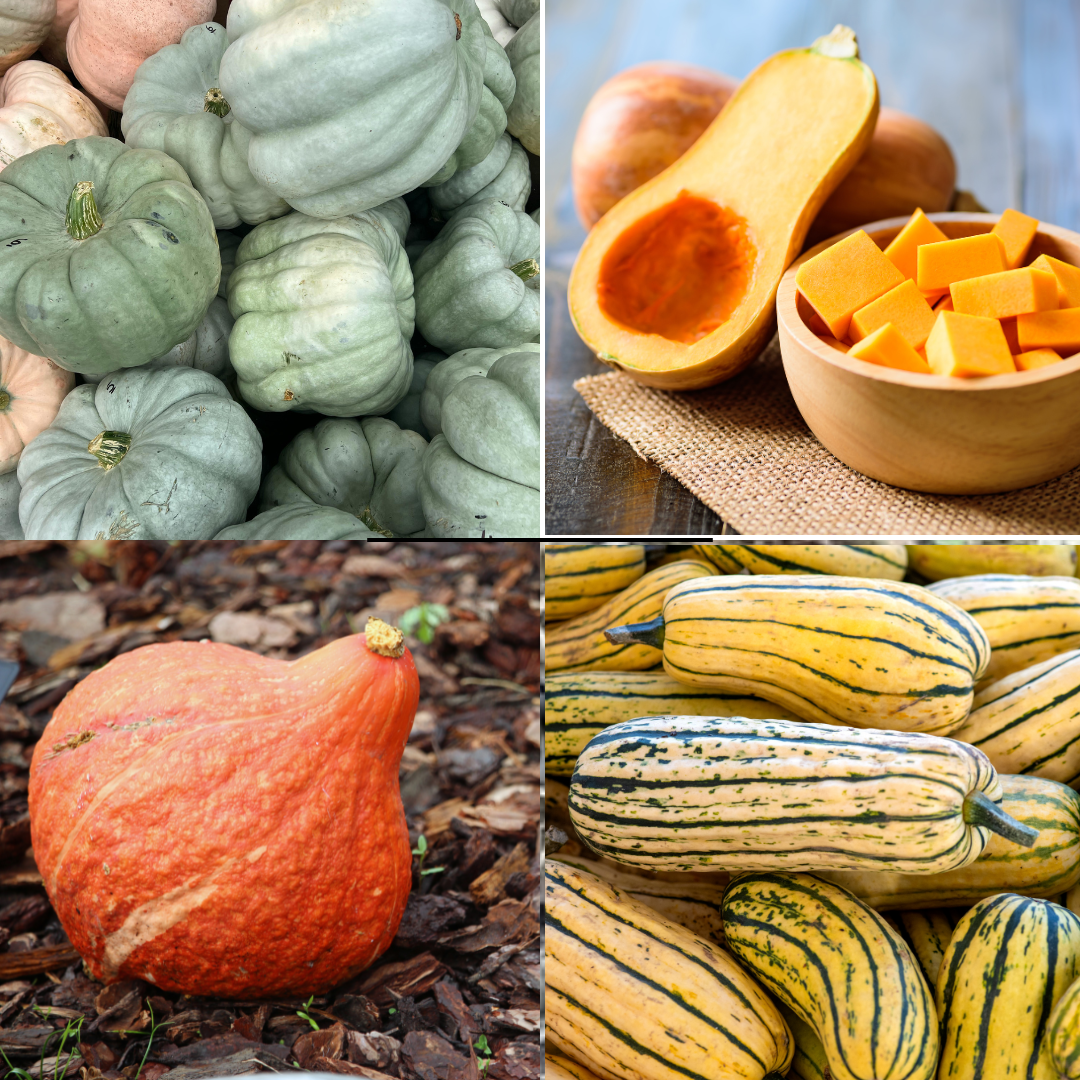
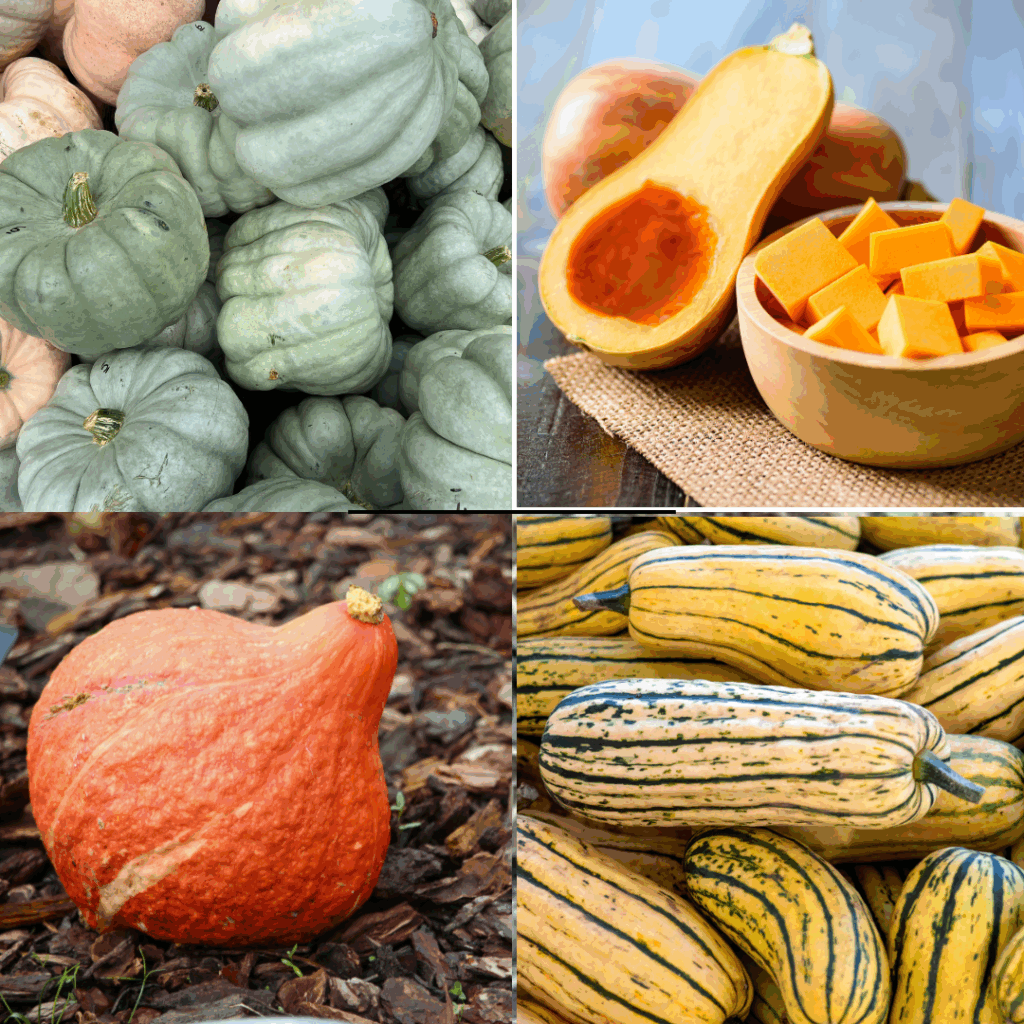
The acorn squash is probably the most familiar. This fall shaped squash has a mild sweet flavor. Butternut squash with its rich orange coloration has a sweet, nutty flavor. And then there is my favorite, the delicata squash. These colorful striped oblong squash have a delicious sweet creamy flesh. That is why delicata squash is often called the sweet potato squash. And the thin skin is even edible when cooked.
Now onto the odder shapes and colors of squash. The big blue pointed end squash is Blue Hubbard. This large winter squash is the heirloom of heirlooms and dates back to as early as 1798. The thick meaty inside flesh can be baked, roasted, boiled, steamed or pureed. The flavor is very similar to that of cooked pumpkin.
Kabocha squash, also known as Japanese sweet pumpkin, has a dark green edible rind with a soft fluffy interior. The flavor is described as halfway between a butternut squash and a sweet potato.
Newer on the winter squash scene is the teardrop-shaped, redder than orange, red kuri squash from Japan. The flavor profile of the red kuri is different than the sweet potato pumpkin squashes, it is described as having a sweet dry flesh with a flavor more like chestnuts (and who knows what that is, but why not give it a try?)
And then we have the true oddity of the winter squash family, the spaghetti squash whose medium-sized, yellow fruit, creates a Houdini effect when cooked. How else could we describe a winter squash whose flesh, when cooked, separates from the rind of the plant, and when gently teased away with a fork, transforms into spaghetti-like strands?
One of the greatest things about trying to eat and then grow some of these winter squashes, there is a variety for every taste and garden space.
Recently, much attention in the home garden world has turned to the smaller family size. I am extremely on board with this idea because I am a family of one. And no matter how much I love my vegetables and fruits, a 15-pound watermelon, or a 10-pound winter squash are just too much for me to eat at one time.
Enter the smaller varieties of winter squash. For the butternut squash lovers out there, meet the honeynut squash, a mini-me version of the butternut. Another mini butternut variety is butterbaby.
For the delicata and acorn squash fans, there is the honey bun. And more varieties are being developed all the time.
So maybe now you will look at your fall decorations as something more than just festive adornments, but also something for the dinner table.