Seasonal Questions: Where did fall go, or is it still coming?
Ah, October … my favorite month. The cooler temps, oh but wait, not that much cooler with some daytime highs near 80.
But oh, the fall colors, wait, where are the fall colors? For that matter, where is fall, in general. Is it hiding in November? Like all weather, we won’t know until it gets here.
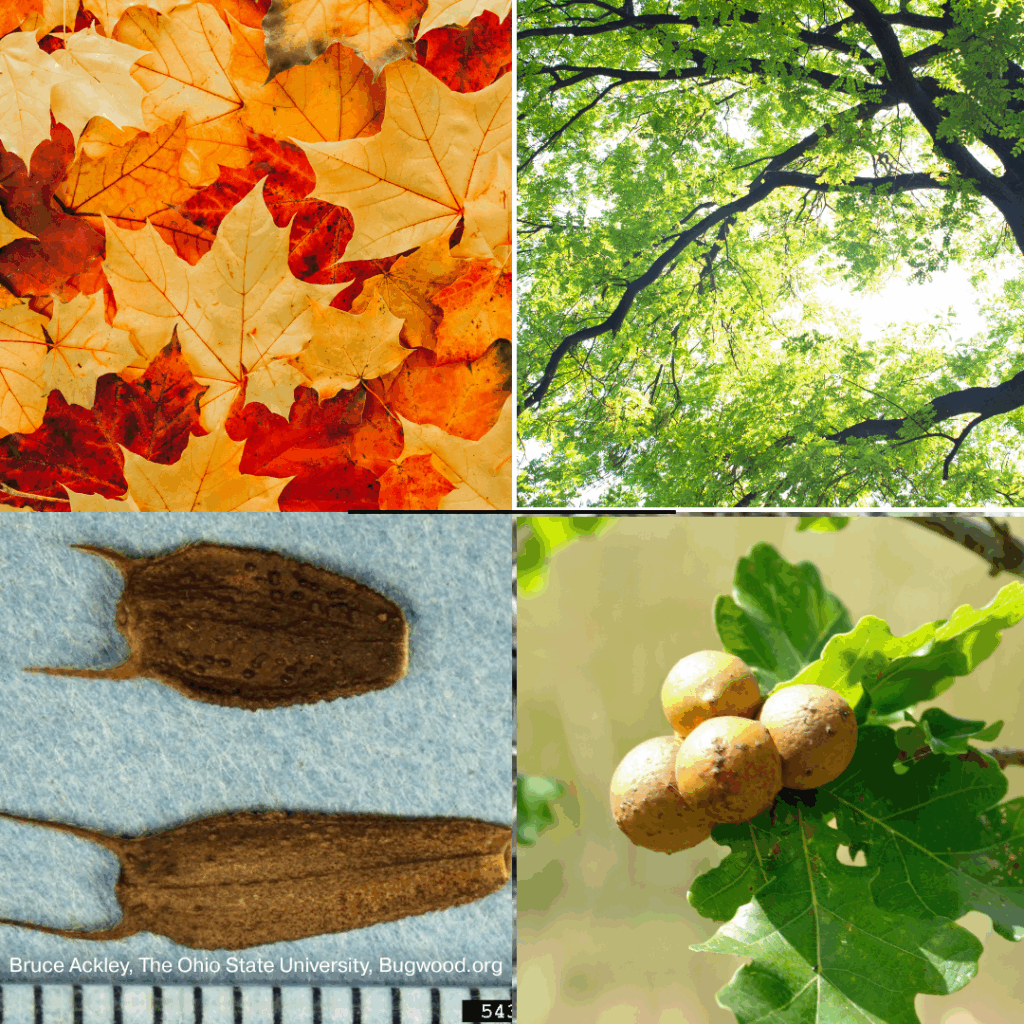
But just what makes these fall colors happen — two things — shortening day length and the amount of moisture. I find learning about nature is fascinating every day, but one of the most interesting of all is this topic of leaf change.
It isn’t surprising that primitive people made up all sorts of folklore and gods to explain the amazing natural phenomena. Remember, unlike us humans who need all sorts of coddling and training, nature especially plants, are hardwired with all the genetic information on how to live and complete their life cycle.
The mom oak doesn’t have to teach the acorn how to germinate and grow. It just does in response to the weather and the genetics of the tree. And this exists in every plant.
Same is true about the beautiful fall color change. These fall colors lie under the surface of the leaf all summer long, but it is not until that amazing energy factory of photosynthesis, that literally allows us to eat sunshine, gets the signal from our shortening length of days to shut down.
This triggers the photosynthesis to slow and stop, which causes the green of the leaves (cells called chloroplasts) to ebb away, revealing the rose, red, orange, yellow and pink of the fall palette.
We definitely have had shorter days, so where is the color? It is not only the shortening days, but another factor related to the shorter days: Usually the temperature drops especially at night. The perfect equation for fall color is having that ideal fall weather that so many people enjoy. Warm, sunny days, with cool but not quite freezing nights.
And for this year, we have had anything but. Few cool nights, and lots of warmer day temps. But that isn’t the whole formula. Having wetter growing seasons followed by a dry fall also makes for the best fall color. And it isn’t headlines to anyone that we have been in serious drought conditions, not just this growing season, but the winter previous, too.
Additionally, the droughty whole year we have experienced has stressed trees immensely. Like the elephant, trees have a good memory, memory of how much moisture they receive and have to store and use as they are many of our most long-lived perennial plants.
Earlier this summer, I had quite a few calls and questions about why trees even starting as early as June were dropping perfectly green healthy leaves. The reason? The energy budget of water.
An immense amount of evaporation occurs, a process called transpiration, every day a tree has leaves on it, especially broad-leafed trees (as opposed to the slim needle leaves evergreens have).
A mature maple can lose literally hundreds of gallons of water a day to this evaporative process. That is all well and good in a typical Midwestern Spring and summer where we get some real gully washer, raining cats and dogs storms.
But when there is little reserve or ongoing moisture, the trees have to cut their losses, by shedding some of those perfectly green and healthy leaves. The situation is much more dire this year. Early in the fall, many homeowners contacted me about the top of the canopy of their trees had started to become totally barren, looking more like winter.
That is a signal trees are in real trouble. We may not see the long-term effects of drought on some of our biggest and oldest shade trees for several years. And watering a big tree is not practical. The root system extends beyond the dripline. Thus, you might have to encourage your neighbors to water their lawn so your tree roots get some moisture.
But all is not lost, with these shifting weather patterns, our Novembers might be the new October. As long as we don’t get a hard freeze. Many meteorologists are predicting our first hard frost in early November. A full (shockingly) three to four weeks after our usual frost date of October 10.
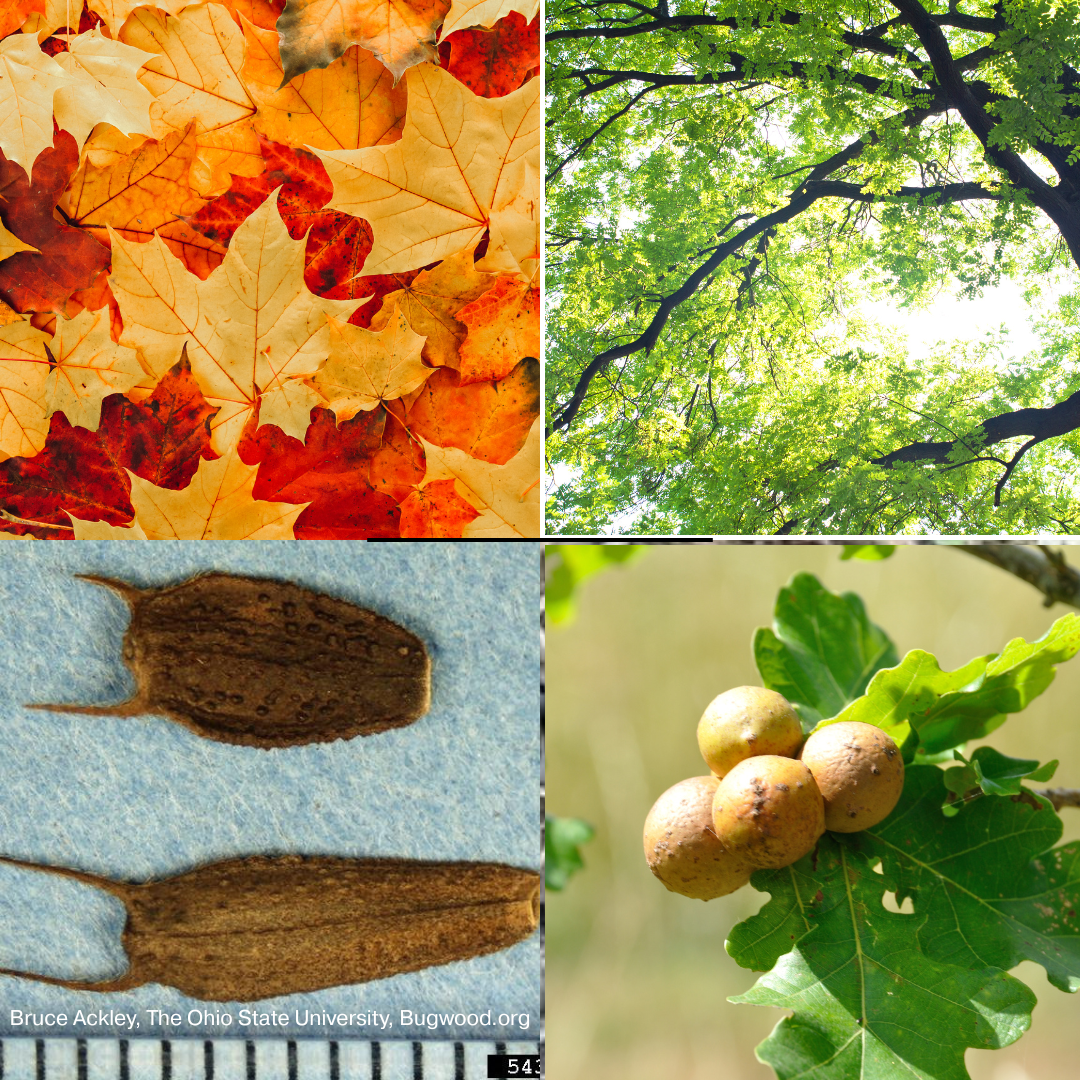
But tree color isn’t the only thing I am getting contacted about. Tis the season for the beggar’s tick bur. This isn’t the round bur from the weed, burdock (no that is not “wild rhubarb” growing out back). Beggars tick is a flat bur that comes from a sneaky perennial plant called Bidens frondose.
I think of beggar’s tick like looking somewhat vampire like with two “teeth” burs that hook onto your clothes. The reason I call them sneaky perennials is the plant of this bur looks very similar to our late-season perennials. The leaves look akimbo to the black eyed susans or coneflower, and the flower is so tiny and looks like the beginning of a black eyed susan, but never really is showy. Until the burs show up.
The other question I am getting recently is about the lumps and bumps on the few leaves that are falling. I have written full columns on this favorite topic of mine before — these are the odd, and sometimes horrifying-looking, but always innocuous bug houses made on leaves and stems of trees.
These insects are beneficial wasps (very tiny smaller than flies) not a regular wasp like a yellowjacket.
Galls are actually the plant’s reaction to having an egg inserted into their tissue. Kind of like when you get a sliver in your foot or hand, and your skin around it puffs up as a reaction. These galls can take on very strange shapes — wooly oak gall looks like large dirty cotton balls; hackberry nipple gall looks like — well, it is obvious from the name, and oak bullet galls look like hard balls of wood.
Nothing needs to be done with galls; just appreciate the amazing world of nature!