The Mighty Minute Pirate Bug packs a big bite
As you know, I love all things fall … well almost. But then the calls and emails start start coming in, just like leaves falling in a hot dry summer. The problem? The bite, the sometimes welt, without seeing any visible offender.
Mosquitoes? No. ‘Tis the season of the Minute (meaning extremely tiny, not one-sixtieth of an hour) Pirate Bug.
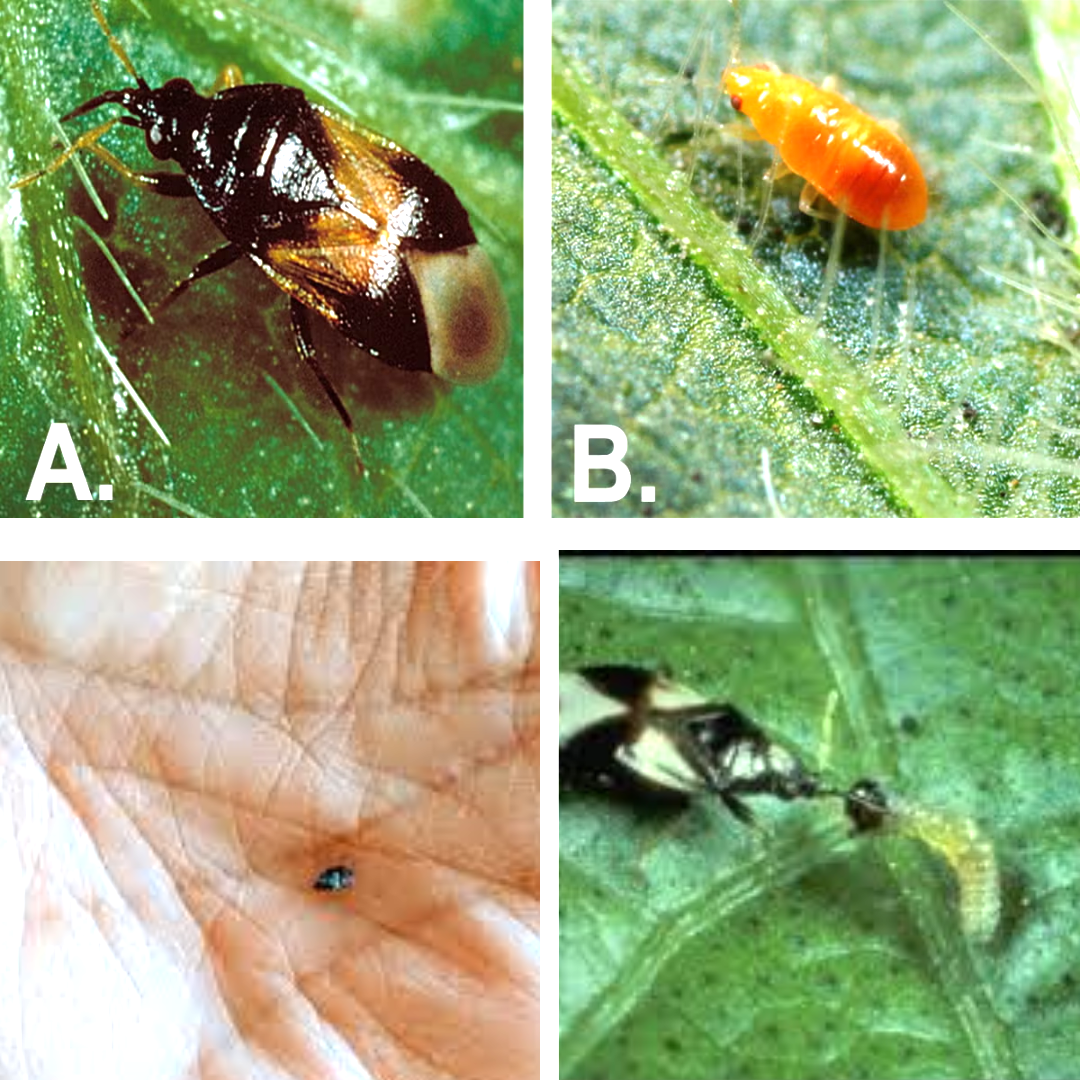
And why don’t you see them? They literally are smaller than one speck of black pepper. The good news is this insect may pack a wallop of a painful bite, but it doesn’t inject any venom or poison. Still, there are some strange urban legends concerning them.
The Minute Pirate Bugs, also known as Flower Bugs, are incredibly tiny. The adult is 1/12th to 1/5th of an inch long. They have oval bodies with a black (or purple) somewhat harlequin (diamond-like) pattern on their forewings.
Their eggs are literally invisible to the naked eye, measuring an incredible 1/100th of an inch. Their eggs are buried deep in plant tissue with just the “lid” of the egg case exposed. This lid is like the garage door that opens to allow the newly hatched nymph to emerge.
The nymphs (think small babies that look similar to the adults) are almost see-through with a bit of yellow coloring. The are teardrop-shaped and are wingless at this point, but just like any toddler, they are extremely fast runners.
Minute Pirate Bugs overwinter as adults in leaf litter (another reason to leave some leaves) in at least a few spots in the garden over winter. They also can overwinter under bark or other garden/forest/ag field stubble.
They emerge from those tiny garage door egg cases and go through five nymphal stages to get to the adult. This process takes approximately (weather and temperature dependent) 20 days. Females lay an average of approximately 130 eggs, and several generations are produced during spring and summer.
Minute Pirate Bugs have a small visible (with a hand lens) “beak” they bite with. The beak is what penetrates your skin. The do not feed on us, inject venom or saliva. And just like with many bugs, humans differ in their personal reactions to them.
You know how that is; you might be the person when you get mosquito bites, your skin looks red, irritated with bumps that could rival smallpox, and you are grabbing every itch reliever out there, where the person standing next to you is getting the same bites, but barely notices.
This is the same with the Minute Pirate Bug. Some people might not even notice they were bitten, but by the number of calls and emails I receive about this “invisible bug” plenty of people have a strong reaction. Their skin forms a pretty sizeable reddish irritated welt, considering the bug is so very small.
Now for the urban legend: There is once again a ridiculous bit of folklore that says the pain of a minute pirate bug comes from urine that the bug excretes while biting. Not true. Although it is true that most animals — from this tiny insect to frogs, toads, birds and beyond — do excrete urine or feces as a defense mechanism when they are being preyed upon.
Just yesterday when I had the Kids n Nature program at Pilcher Park, the kids wanted to hold a caterpillar. I said sure, but know it will probably poop on you. Which amid uproarious laughter, they said was so disgusting.
But I told them, nature is very wise in giving all its creatures abilities to try to get away from any predator, where excreting bodily fluids is a defense mechanism. So as with any urban legend, the idea about the Minute Pirate Bug urine causing irritation, there was a bit of truth that animals use urination as a defense mechanism.
But think about it, if a bug is biting to see if you are a caterpillar-worthy meal, that is more that the bug is a predator, not fearing it will be prey. So, disregard that information.
Besides, not injecting any poison or venom, the other even better thing is these little bugs are part of the good guy arsenal of beneficial insects that (usually) prey on the pests in our gardens.
From mites, to aphids, small caterpillars, to mealybugs, scale and insect eggs, these fierce little warriors are great for your garden and until fall, are more interested in the tiny-sized meals, over our skin.
When insect prey meals are not readily available, Minute Pirate Bugs are able to survive feeding on nectar, pollen and plant juices. Adults and immature stages can consume 30 to 40 spider mites or aphids per day. Minute pirate bugs are efficient at locating prey and are voracious feeders. (WVU Extension)
As far as meal planning, Minute Pirate Bugs are common predators in gardens and contribute significantly to the control of spider mites, rust mites, aphids, leafhoppers, mealybugs and thrips. All of these can cause significant problems in the garden, forest and fields. These little biters provide valuable natural pest control — and really, we don’t even see these heroes at work all summer long.
Minute Pirate Bugs are on the move late in summer and early fall looking where they want to overwinter. Their populations vary widely from year to year. Scientifically, they are somewhat difficult to predict their population size and locations year to year. Migration is random, too, and is not on a typical cycle.
Although you definitely can be sure to see them (if you can see them) on these dry, sunny, warm days of fall.
So, what is a person to do to control these tiny biters who are oh so good for the garden most of the year? Ideally, nothing. But there are a few strategies to avoid the bites.
Since they are flower bugs, avoid light-colored clothing (so you don’t look like a flower) and avoid fragrances. Dark-colored, long-sleeved clothing is recommended.
But don’t pick up the insect repellant or some killz-all spray. The available insect repellants have no effect on them. They will vanish to their overwintering sites once the weather cools.