Oh, nuts! It is fall, and that is such a good thing
Spring has its nature harbingers, like the first robin or last junco you see; fall does, too. The changing leaf colors, migration of birds and monarchs, and the crop of tree seeds (nuts) of each year signal nature’s turning the page to a new season.
We know fall color can be bright and beautiful, or in some years, muted and dull, but what does the nut crop tell us?
Have you seen a lot of nuts falling already? When you mow, does it seem like your lawnmower is making a machine gun sound as it cuts up and shoots out nut shrapnel? I mostly notice a heavy nut production year, because I am the Queen of Clumsy. And in heavy nut years, I look like I am doing some interpretive modern dance just walking in my back yard, which has some big (squirrel planted) oaks.
A big pile of acorns can create some pretty lumpy terrain. But I love every one of those nuts.
My yard and my attitude are very pro-nature. All nature. I welcome not only the fancy Baltimore Oriole, but the grackle and starling. Nuts are the lifeline for much of our wildlife, especially as they prepare for winter.
With 12 birdfeeders in my backyard, people often ask how I deal with squirrels. Easy. I feed them — squirrel corn in the non-nut season, and an abundance of acorns in the fall. As long as they’re fed, my birdfeeders are left alone.
So, what about the nut production in Will County this year?
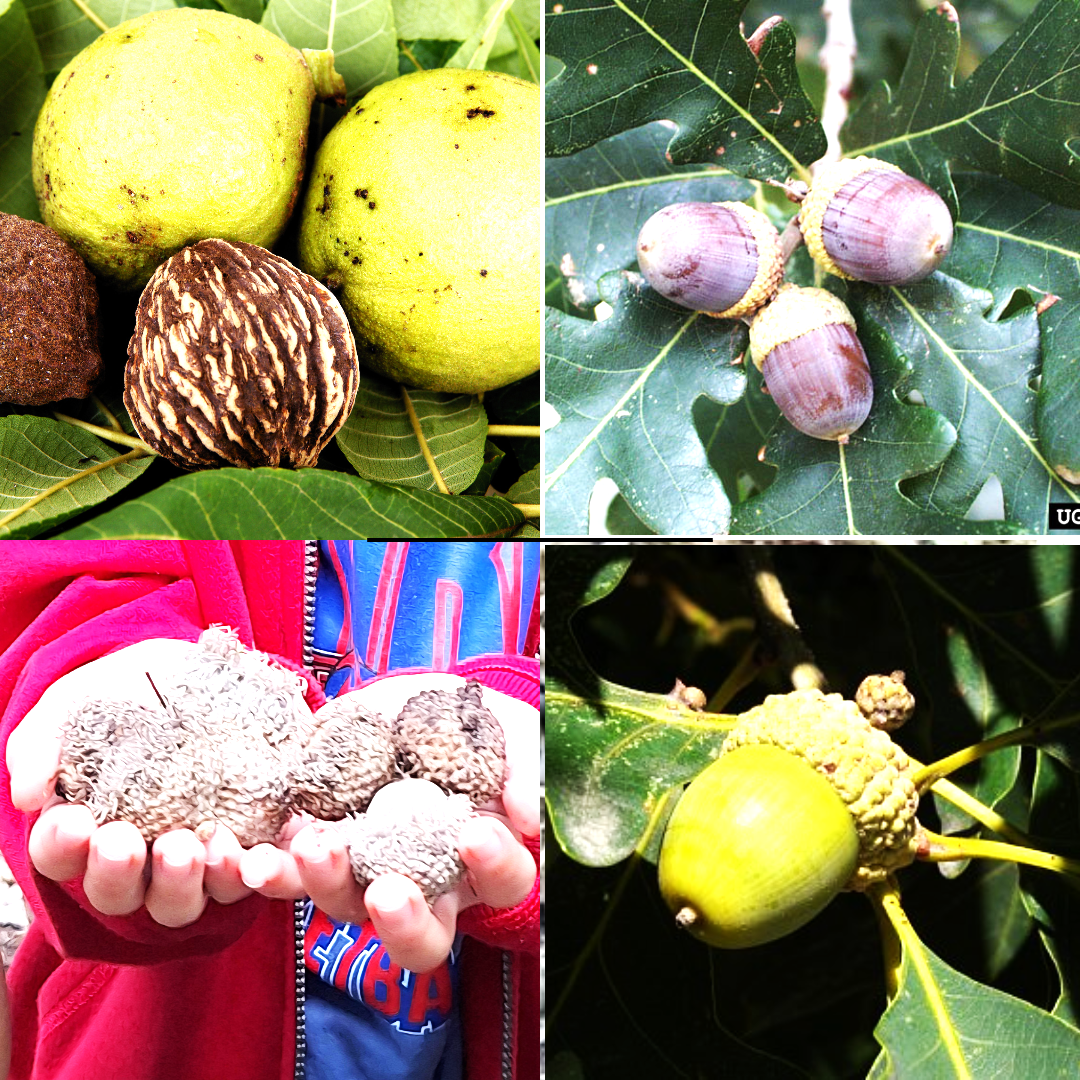
I have seen many posts about whether we are having a mast year in 2025. Mast is a botanical term referring to tree and shrub fruit, nuts and berries. Mast years are defined as when a population of trees or shrubs within an area produces an unusually large and synchronized crop of fruits, nuts or seeds.
A hard mast refers to seeds and nuts and soft mast are berries and other fruits. And, yes, from someone that has several oak trees in her postage-stamp back yard, it is a year of abundance. Or is it?
Besides my time in my own little slice of bad landscaped backyard heaven, I also spend a lot of time in the local forests teaching, and at first, I noticed the heavy baby nut sets. But as time and drought and searing temperatures went on, I observed that a few of the nuts in a cluster were developing regularly, but many were barely more than just a cap with little nut development.
University of Illinois Extension State Forester, Christopher Evans said, “I believe much of Illinois had a bumper crop of oaks this year, along with higher-than-normal crops of hickory nuts and walnuts, likely bolstered from the adequate amount of rain and overall good growing conditions in the first part of the year.
“However, we are seeing a lot of smaller fruit or early drop, likely due to the drought and high temperatures of the later part of the growing season. This will likely vary across the state.
“Mast production is not really a ‘yes’ or ‘no’ question exactly, as even in mast years there are variation. I would call this a mast year simply due to the heavy fruit set we are seeing on the nut trees, even if the drought caused us to lose a lot of them before they were ripe.”
So, what does this mean for our flora and fauna in Will County? When we have a mast year, the population of new trees that sprout increases. This not only helps to rejuvenate our forested areas, but young, tender sapling leaves are food for our herbivores and omnivores.
When we have an abundance of food for animals, such as a heavy nut set, their success as a species also increases. More food, healthier adults, more successful reproduction.
But nature is a fickle one this time around (isn’t she always here in the Midwest?) Although there are more nuts, many fell due to drought stress before they were mature enough to produce a viable tree. Just like when people want to try their hand at seed saving, the biggest mistake is picking the seeds before they are completely mature.
Similarly, when the nut (the real meat and potatoes) doesn’t fill out, the food value of these didn’t make it to adulthood nuts, don’t really provide that big nutritional boost. But that is nature, that constant and always variable giveth and taketh away keeping populations in check.
Many homeowners shy away from oaks for two reasons: the myth that they are slow growing, and the fact that they are “messy/dirty” trees. I would argue not, because for me, the mess is worth providing nature with home grown local food.
One other interesting thing I learned is how acorns got their name. I am reminded of this annually around Arbor Day when some well-meaning, but not very nature knowledgeable teachers call me to ask why they can’t find “seeds” for our state tree, the White Oak, for a tree planting activity.
And that is OK, because that is what I am here for, to help people learn about horticulture. I gently remind them that acorns are the seeds of oaks.
So back to why acorns have their own special tree seed name. The word acorn has a very old and convoluted history:
Back in the 1400s, the word akarn (Old Norse) or (German) referred to all forest fruit; not just the oak nut. Other etymologists (those who study the origins of words, not bugs) believed the word acorn originates from the prefix agr which meant open space, which eventually was the root of words like agriculture and acre.
Some theorize that people in the late Old English period thought the “æc” part of “æcern” to be a variant of the word “āc,” meaning “oak,” and the “cern” part to refer to corn. Since they come from oaks and they look like corn kernels, they reasoned, it makes sense that they might be called “oak-corn,” from whence we got the spelling “acorn.” (https://bit.ly/428pyRE)
And there you have it, no ag/horticulture article in the Midwest is ever complete until it circles back to corn one way or another.