What your trees are telling you now

Fall is a tricky thing. Look at what we have experienced already since the calendar flipped to meteorological fall this past week, when we turned the calendar to September 1: Scalding hot summer, then November-like chill? So, what is a tree to do?
I have had numerous questions on trees beginning in midsummer as the drought and heat took their toll. But I am also getting a lot of questions about what is happening now to their trees.
Questions and comments like, “I don’t ever remember my tree turning fall color as early as it did this year.” Or, “Why are there so many perfectly green healthy-looking leaves falling from my tree?”
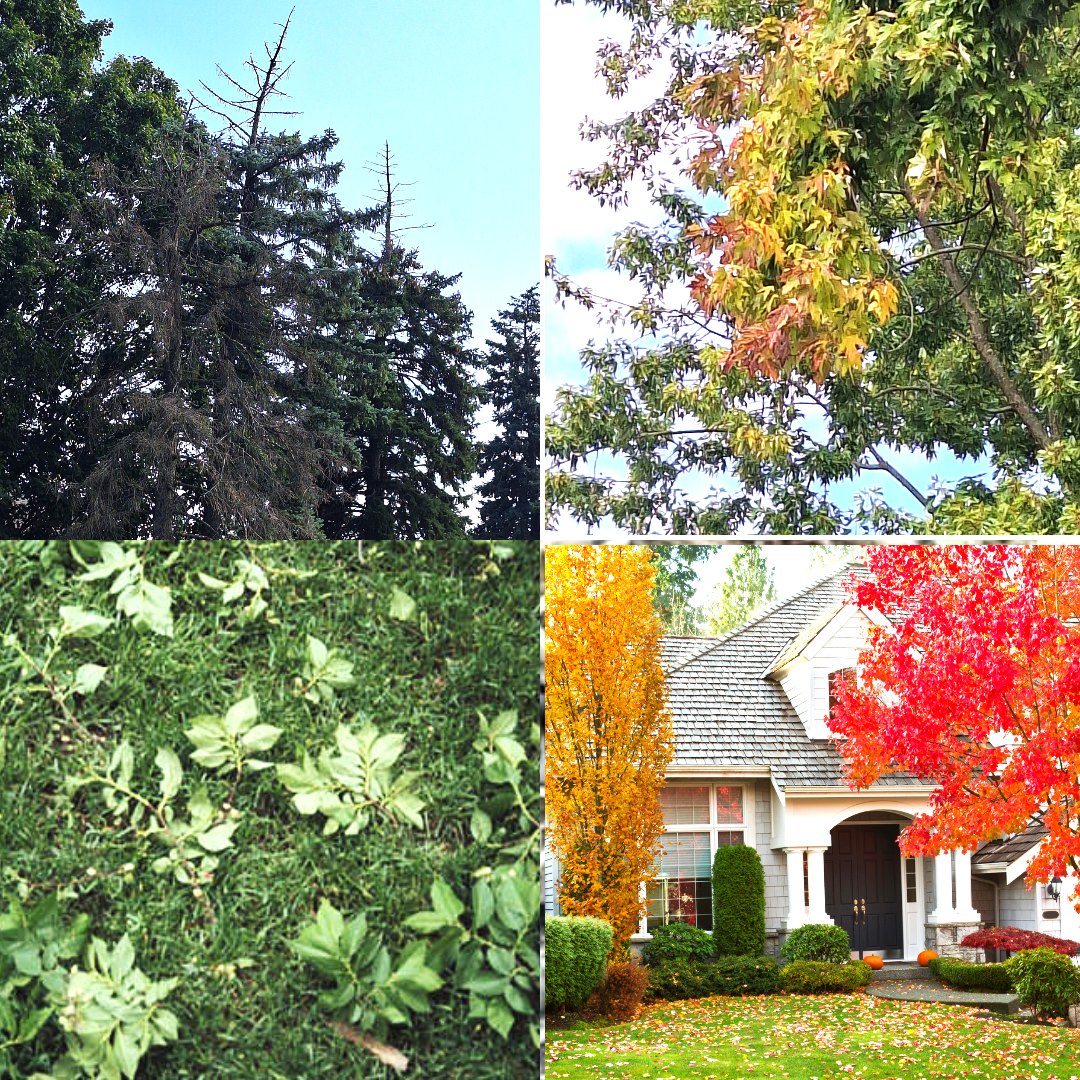
And then there are the questions that send up red flags to me: “How come my tree is bare at the top?” and “Weird, my whole tree looks great, except one big branch turned fall color in July. What’s up with that?”
There is no doubt it is somewhat weather-related. It isn’t just that it was hot and dry so much of this summer, but we didn’t have much snow. Nor much snow last year. Pair that with scorching drought conditions, and the moisture budget is in bankruptcy.
If you had a sapling, or a younger tree under 15 feet that was newly planted, watering was essential. But what about a 40-foot tree that has been there since the house was built; what about watering that? It is not realistic.
Big trees know what to do when water availability is slim, it is hard-wired into their genetics long before they started to grow. Big trees cut their losses. Just like we have to do when our budget is low. We start getting rid of things that cause us to spend too much.
In trees, that means they start dropping leaves — perfectly green, healthy leaves — lots of them. Leaves are energy factories for trees. Through the miracle biochemical of photosynthesis, leaves “eat” sunshine and make starches and sugars.
The problem is that energy factory expels water. Lots of water. Estimates indicate that a mature hardwood can lose between 26 to78 gallons of water every day through evapotranspiration – literally, tree breath.
When there is no available water, the trees drop these leaves to decrease that water loss. Perfectly normal, no treatment needed. Other tree changes, however, can signal bigger trouble.
Every year I have dedicated a column to what makes leaves turn fall color, and why are some years better color than others. It boils down to high/low temps, amount of moisture and day length. To summarize, as the above variables start changing, it signals the reduction of chlorophyll (the green) production, and increase in the carotenoids (yellow, orange) and anthocyanins (red, purple).
That all ends when there is a freeze and then whatever fall color you have at that point, is all you are going to get. What we hope for to get the most of nature’s artistry, is for a long slow, nonfreezing fall. The leaves start turning, ever so slowly, and then linger on for weeks. The speed of fall color is rarely an indicator of tree health, but rather as a result of environmental variables.
But what is a tree telling you if just one branch turns fall color long before normal fall, say the end of July? This is not normal, and often an indication of an untreatable vascular (circulatory system) disease of the tree.
Most commonly, that question deals with sugar maples. Homeowners indicate their tree is big and doing wonderfully; then suddenly one big branch has turned fall color. In the horticulture lingo, we call this “flagging,” and in maples is often an indication of Verticillium Wilt. Verticillium is a fungus that naturally occurs in our soils.
There is no rhyme or reason as to why some trees succumb to it, but research has shown it is a disease of stress. And what could possibly be stressful in our Midwest changing climate? Everything.
Diagnosis for verticillium can be done by cutting an affected limb and looking at the open cross section. If you see a green/brown donut coloration in the otherwise blonde wood, it is an indication that verticillium is present (officially lab culture would positively identify the issue).
This means the wilt fungus has clogged up the normally thin watery sap circulating in the tree, to become Jell-O like and permanently clogging that branch’s circulatory system. That is also why they leaves stay attached to the branch.
Abscission is the naturally occurring process where leaves fall from trees. But in verticillium affected trees, the clog of circulation, results in the leaves dying, but still clinging to the branches.
This disease is eventually fatal to the tree; how long it takes is very random. I have seen trees live up to seven years past that initial flagging, and I have seen others, die within two years. No treatment available; just promoting good cultural care.
The other critical sign of imminent concern on trees is when someone reports the top of the tree is barren. It might be that over a series of years it is gradual where you see more and more of the bare branches working down from the top. Or it can be sudden, occurring in a short time.
When bare branches occur at the top of the tree, it might sound like the opposite, but look to the bottom: The root system for the issue. Just like when humans have circulatory system or heart/lung disorders, it shows up in the fingertips turning blue. The problem is at the core, but the visible sign is farthest from the center of the circulation.
The same is true in trees. The number one cause of bare branches at the top of a tree is drowning. The root system are the lungs of trees; if they are submerged in water, they stress and eventually die, reducing the ability of the tree to push water up into those tall branches.
Drowning is best addressed before planting, when it is rarely even a thought. And for every site, there are several trees that like having “wet feet” and do well in those conditions: birches, willows and hackberry.