And away we go … or not — Fall Migration in Illinois

I never thought I would be able to say this again, but wow, Will County is swimming in monarchs right now. I am getting numerous calls on dozens of our state insect in people’s landscapes on a daily basis.
For the last five years, the number of monarchs seen in the county have been totally dismal. Many people in the last 3 years reported they didn’t see even one monarch, that is, until the end of summer but then, still only a few.
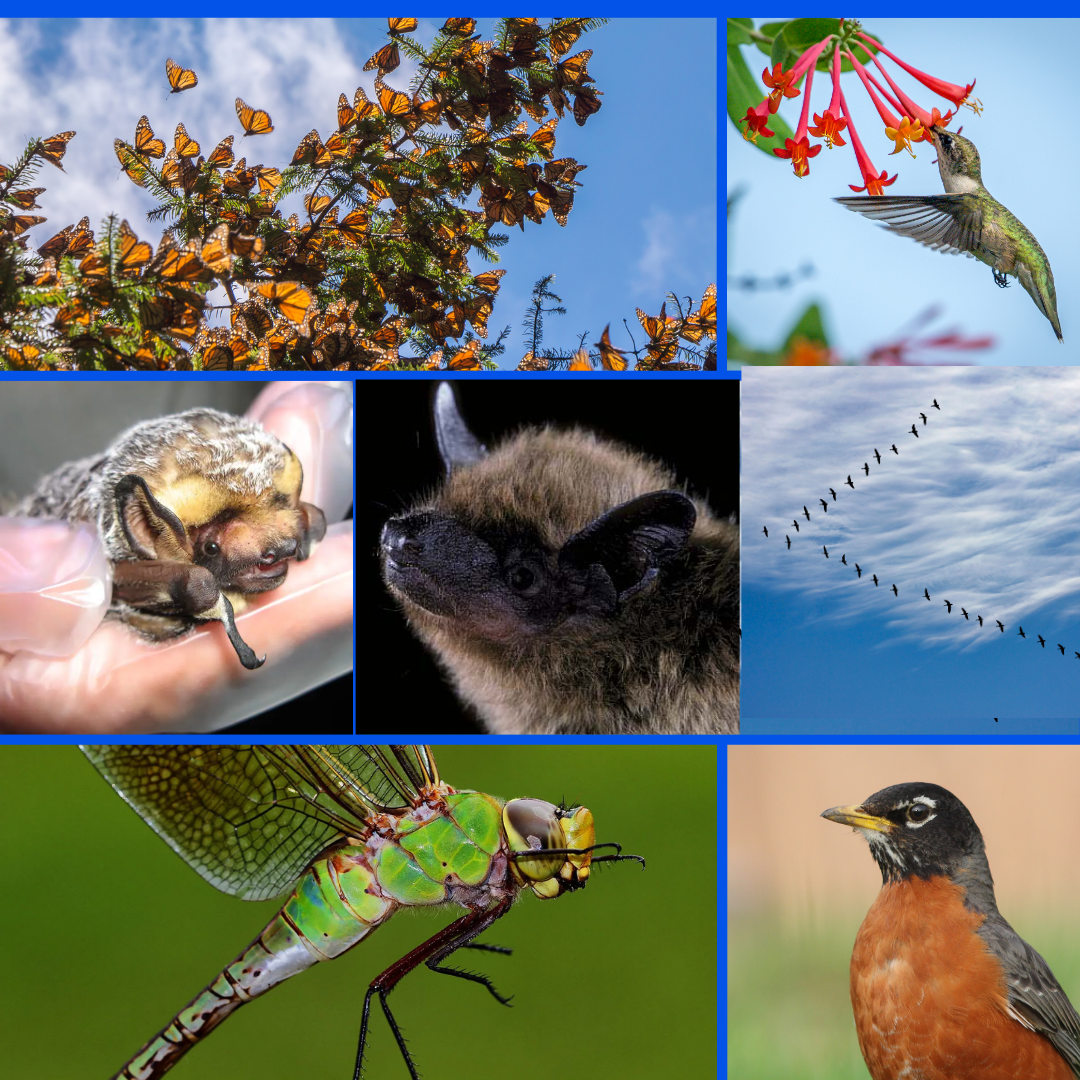
It is migration time. But monarchs aren’t in it alone, although they tend to get the greatest press coverage.
Although science has been studying and experimenting with different variables on the phenomenon of migration, much is still not known. I liken it to the feeling we get when the seasons change, a sort of restlessness, like when you start getting into the fall feeling, or winter holidays. For gardeners and crop farmers, it is an easy one, the restlessness to get outside as soon as we can in the spring. It is all we are thinking about.
But that is where it ends for us. We don’t drop everything and move hundreds of miles away, but migrating animals do, and then back again. How else to explain this ever so repetitive phenomenon when insects and animals fulfil the phrase, “if you know, you know,” every year. Whatever the trigger is, they know it is time to move.
Birds are the animal we most associate with migration. They classic Canda Geese V formation; wait, they are flying but are they migrating? For the most part the answer is no, anymore. And why not?
One motivation for all migrating animals is resources, food and shelter (as well as living in a temperature where they can sustain life if their genetics didn’t equip them to overwinter here).
With the advent of retention ponds and short grass everywhere you look, plus the less harsh winters, the need to migrate has waned. The same is true to a degree for the American Robin, the harbinger of spring. I still record when I see the first robin and the first “snowbird,” the junco, every year.
Now juncos are migrating TO our ‘warmer’ winter climate as their breeding range is in Canada. But I have addressed the robins lack of long migration in a column before, research shows that robins only move a little, to find the nest closest source of food. So, they may stay in our general area all winter.
Many of our wild birds migrate as do the jewel of the garden, hummingbirds, this tiny bird weighing less than a dime, flies to southern Mexico or Central America. It is not true that if you leave your feeders out, it will stall their migration. Cornell University, the worldwide expert on birds indicates the trigger for migration is day length; not availability of food.
When it comes to mammals, many are well-equipped with their thick coats to stay year-round, but we do have a few species of bats that migrate instead of staying all winter. The Hoary bat and the Evening bats migrate to southern states, and even as far as Central America.
And then there is insect migration. Insect migration isn’t always completed by individuals, but by several generations. It is fascinating that this is hardwired genetically, because for the insect migrators, the individuals don’t complete the full “loop” of migration, but only a section.
Insects could be thought of as bad mothers/parents. The parent dies long before their children are born. They do prepare them by laying their eggs literally in their own perspective baby food aisle. (For monarchs, on milkweed).
But the knowledge to take care of themselves is all genetic. No parent modeling. Just knowing. For monarchs, there are 4 generations per year. The first three generations (those who are born starting in late winter in the southern United States, and then the two following come as they move north to their summer homes. These each live a month to six weeks.
The supergeneration of monarchs, the ones you are seeing August through October, live nine months and are the migrants. That is why it is important to be sure there are enough plants available with pollen and nectar sources, for them to fuel up for this journey. They not only fly 3,000 miles to the Oyamel forests in Mexico. This generation lives to start the first leg back to Texas in late winter. There they mate, lay eggs and die.
Their offspring, never having been anywhere before, also has the genetic hardwiring that sends them north. A great concern, as we are seeing in these last years of rising temperatures, the usual late summer perennials, the goldenrod, and asters, are already flowering in early to mid-August.
What is left? Annuals. Annuals continue to flower, providing that essential food.
So even if you are a gardener who just likes to “get it done” and clean up the gardens early, remember the migrants are counting on you more than ever.
Also, don’t forget the non-migrants, there are many in the insect world there are many who overwinter here in cocoon, chrysalis, ootheca (egg case of preying mantis) and others. The most interesting to me is the wooly bear caterpillar.
Each year, I get calls on people poking around outside on a warm February day, and they lift up some leaves and, lo and behold, they see the little furry donut. Wooly bears overwinter as caterpillars, changing into chrysalis in early spring and metamorphize into the Isabella tiger moth adult.