If you can’t do this, stop feeding birds!
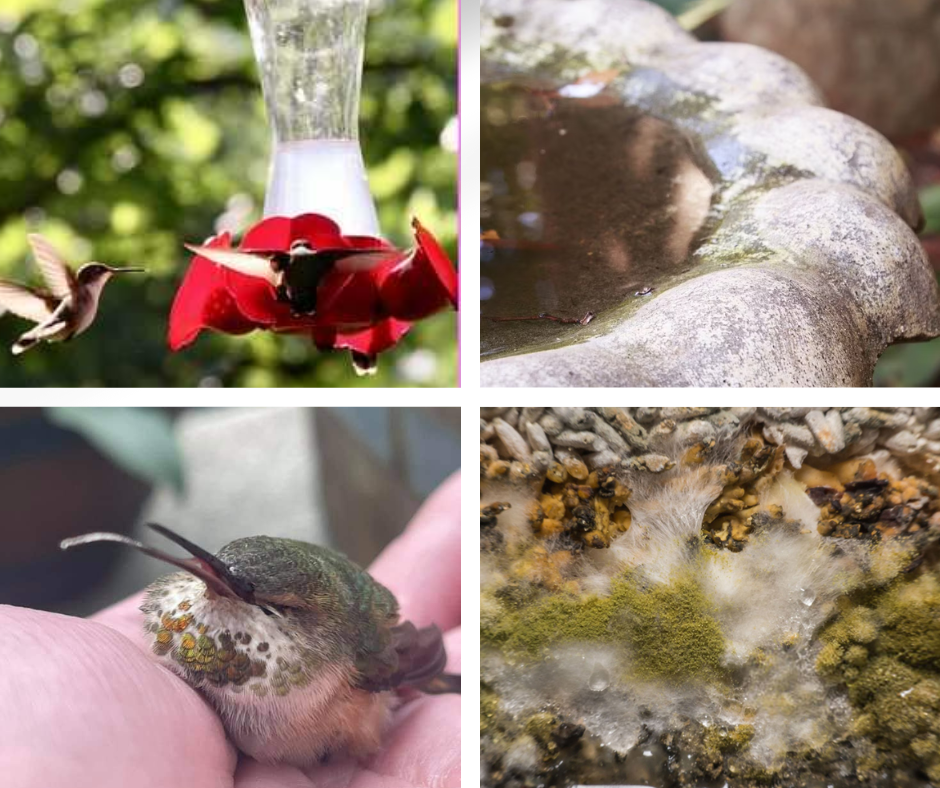
Danger! These hot weather situations can spell death for our feathered and furry friends: Hummingbird nectar should be changed daily in super hot weather, birdbaths need to be scrubbed out weekly or more often if they aren’t clear. Sadly, hummingbirds if fed sugar substitutes (like honey) or drink fermented nectar can have their tongues swell and cause fatalities. And don’t forget to regularly check the bottom of all of your birdfeeders. In hot humid weather, seed can become sticky and moist, and moldy-and unfortunately deadly.
I know that is a shocker of a title, because next to gardening, bird feeding/birdwatching is the second most popular hobby among Americans. And this title is meant to shock and wake people up.
Because if you are letting your feeders and birdbaths and nature water bowls and bee baths steep in this almost unbearable hot summer, you are doing more than just not being a good steward of nature, you are actually causing harm.
This column was inspired, as most of them are, by recent client calls I have received. The overall question started with “where have all my birds gone?” This is a common midsummer inquiry.
When the birds start nesting in the spring, they are looking for as much energy (food) as they can find. With insects sparse in early spring, the feeders are the place to be. As the insect populations grow, birds rely more heavily on the protein rich foods—insects. So, you may notice fewer birds at the feeders. But another reason may be problems with the food in the feeders themselves — especially in hot weather.
I noticed I was receiving several questions on what was making the client’s hummingbird nectar “funky.” One person even reported that their nectar was starting to bubble (like a witch’s cauldron). Oh, something wicked this way comes, but it wasn’t a Shakespeare play, it was actual fermentation!
When I asked when the last time the person had changed the nectar, they said they waited until the hummingbirds emptied it, just like with their birdfeeders. When I explained that their nectar has actually gone into the rotting/fermenting process and was definitely capable of not only not attracting our jewels of the air, but actually killing them, the homeowner was shocked.
There were other similar calls, but the common thread was several people never learned that hummingbird nectar spoils quicker the warmer it is. Everything does, that is why we have refrigeration! And this summer has been unrelenting with the heat.
Besides not changing the nectar often enough, another issue with hummingbird feeders is growing particularly among those who feel white sugar is equivocal to poison. But hummingbirds are not humans. And there is no substitute for the one and only white sugar for hummingbird nectar.
Well-meaning nature folk think honey is “more natural,” but honey actually can kill hummingbirds. When mixed with water, it can promote fungal growth that can cause the hummingbird’s tongue to swell to the point of starvation and death. Honey also attracts other insects. Also, no Stevia, and definitely no Sweet’N Low, saccharine or those other “diet” sugars.
When it comes to choosing a hummingbird feeder, the most important question to ask yourself isn’t, “Is this the cutest thing I have ever seen?” No, the question is, “Is it easy to clean?” And that means every single part of the feeder, including the feeding tubes. When I was still using hummingbird feeders (more on that later), I like the ones that actually came with some great little cleaning brushes that fit thru all the feeder parts.
The second most important feature of selecting a hummingbird feeder (and a reason you may choose to retire the current one you are using) is, smaller is better. Cornell University, the top bird expert, suggests hummingbird feeders that hold only enough nectar so it can be used up in a few days.
Yes, this means more cleaning and more filling, but our littlest bird, is relying on you. Which brings me to my reality: To start with, like many of you, I work and am not home during the daytime hours that often. So, I not only miss all the daytime bird and butterfly activities during the day, I also don’t realistically have lots of time to keep checking on my nectar. So, I made the best and honest choice for me. I gave all my hummingbird feeders away.
If I ever live long enough to retire, it is top on my list to re-engage in nectar-making. For now, I rely on my plants to do the job — my fantastic annual and perennials (mostly non-native). The hummingbird’s absolute favorites are the tender perennial black and blue salvia, the annual vine scarlet cardinal climber.
Hummingbirds will wait on my cable wire to get to those two plants. They also love the myriad monarda (native-and cultivated). The challenge with perennials in a hot summer is that the flowering time is reduced, particularly when it is hot and dry as it has been this year.
When it comes to seed birdfeeders, the heat and humidity is also a nemesis, particularly at the bottom of feeders. Regardless if they are tube, platform or even sock-style, the heat and humidity can cause the seeds to get sticky and moldy. When I get client questions about lack of bird at their seed feeders, the first thing I ask them to check is for wet or moldy seed.
Often, it is easy to overlook when you are refilling your feeders, but down there at the base, below the lowest feeding port, the seed can stagnate and start to rot. Again, just like with the nectar, rotten seed can make birds sick or worse. And it is important to clean them regularly.
This also applies to our birdbaths, bee baths, and any water bowl you are putting out to help our local wildlife make it through this hot summer.
Cornell University suggests soap and water for seed feeders is best and just water and a dilute bleach solution (no more than one part bleach to nine parts water).
Research suggests that soaking feeders in a dilute bleach solution for 10 minutes is a very effective step in addition to scrubbing away debris and old seeds. Rinse thoroughly and allow to dry before refilling. Never add any oils or sticky deterrents to the ports of hummingbird feeders as it can contaminate nectar. Instead use ant moats and bee guards.