What cid-er you on? Apples are more than just for fresh eating
Ahhhh … fall. I know I have been waxing on about my favorite season, but there is one thing even the most summer-loving person I know enjoys about fall — the apples.
Take my friend and former Will County Farm Bureau staffer, Debbie Werner. I am amazed at the number of delicious-looking homemade apple pies and apple sauce she makes from her apple trees each year.
Apples are one of the easiest and versatile fruits that we can grow, store and use in a variety of recipes. Apples are not just for dessert. They can be worked into so many different recipes.
And there is an apple for every taste and recipe. And newer varieties coming out all the time. But like with any crop, you need to know what that fruit variety is made for. Fresh eating? Baking? Canning?
Fortunately, the grocery stores and you pick orchards have started providing some informational signage about which apple works best for what. Apples also have a wide variety of flavor and texture profiles.
Are you more of a Honeycrisp fan with that powerful burst of crunchy sweet flavor? Or are you a Granny Smith aficionado who enjoys an apple that is the tarter the better?
But horticulturally, there are some important things to know about apples. Ripe apples give off a gas called ethylene. It is an odorless, colorless gas that is also called the ripening, aging, or even death hormone. Other fruits like bananas, melons, peaches, and pears all give off ethylene.
I am sure you have heard about putting an apple in a bag with an unripe fruit and it will cause it to speed up ripening? This is the science. However, ethylene gas is not selective; it ages everything.
Apples should be stored in closed, separate containers both in and out of the refrigerator. Apples also cause some flowers to prematurely age. So that is the downside. But the upside is the versatility of apples.
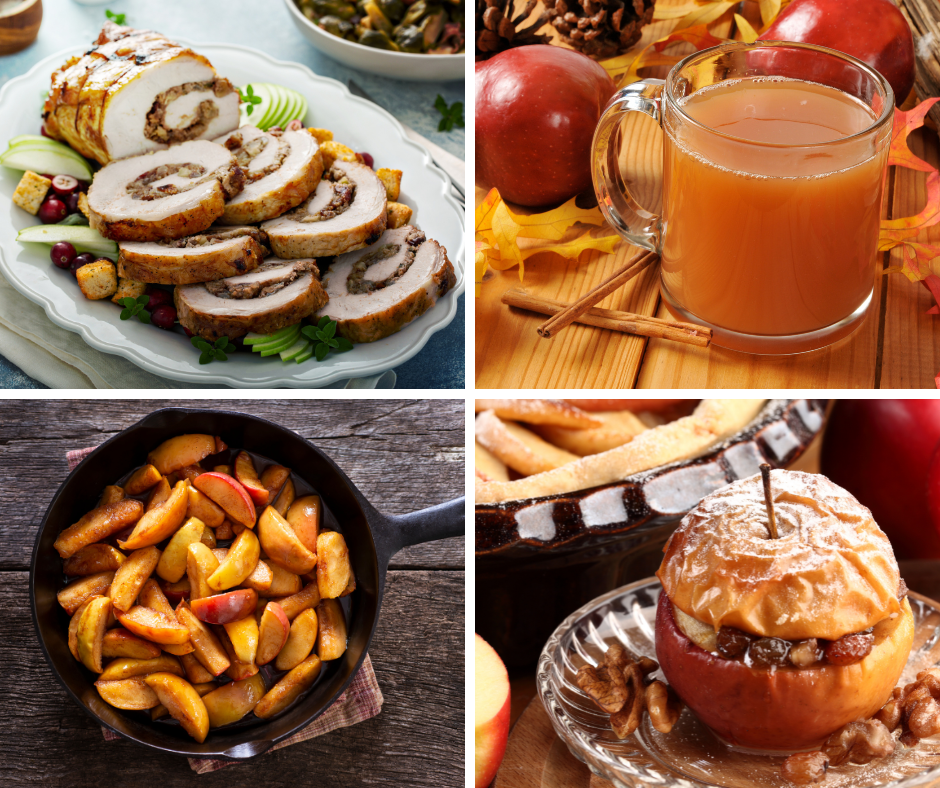
Although they appear in lunchboxes everywhere, did you know apples can add fresh taste and flavor with even savory recipes. I don’t have to tell this pork-producing state that pork and apples are a marriage made in heaven.
From stuffing a pork loin with apple-pecan stuffing, to kielbasa with apples and sauerkraut, the pork apple combination is delicious.
And let’s not forget the easy ways to add apples to your meals. Making your own “artisan” apple sauce really is no Martha Stewart, six-hour baking lesson. Peel and core some apples, put them on low heat with a little water to start and let them cook down to your desired level of texture (are you a chunky or smooth?); then taste and add sugar as needed.
And then there is apple cider. Both “unleaded” and “leaded.” Apple cider is made from pressed apples, usually unfiltered. Hard cider takes it a step further; the cider goes through a fermenting process, producing alcohol.
One of my favorite hot cider recipes is called “Adult warm apple pie ala mode.” The restaurant I ran in Champaign long ago used to serve it. And it actually tastes just like the name. It is perfect for those chilly winter nights.
Adult Warm Apple Pie a la Mode in a Mug
(contains alcohol)
• Microwave safe mug
• Fill ¾ full with non-alcohol apple cider
• Heat in microwave till warm
• Stir in a half shot of peach schnapps
• Top with whipped cream and a dash of cinnamon