Anyone for a cold glass of beer?
Editor’s Note: Sandy Vasko is taking some time off. Today, we re-run one of her most refreshing columns.
By Sandy Vasko
I guess there is nothing more refreshing than a cold glass of beer on a hot day, or a tall one after work, or perhaps your favorite brew while watching football. Beer has been made for thousands of years. Today we look at one of the earliest breweries in Will County – the Markert Brewery in Wilmington Township.
Strangely enough, in the 19th century, beer and ale were not considered alcoholic beverages, but more like a health drink. Our earliest-known reference to the Markert Brewery reminds us of that. From August of 1868, “We are indebted to Messrs. Markert & Co., for a keg of pure, choice lager. They make up small packages for family use, and an occasional glass to people in feeble health will be found healthful and invigorating. Messrs. Markert and Geo. Bez have one of the finest locations for a brewery in this section, and they are turning out the finest qualities of ale and lager.”
The brewery was located north of the city on River Road, along the banks of the Kankakee River. The brewery itself no longer exists, but the house belonging to the Markerts is still standing.
We have a description and drawings of the brewery. At an initial cost of $30,000 ($563,500 today), it was a substantial investment, but it paid off well for the owners.
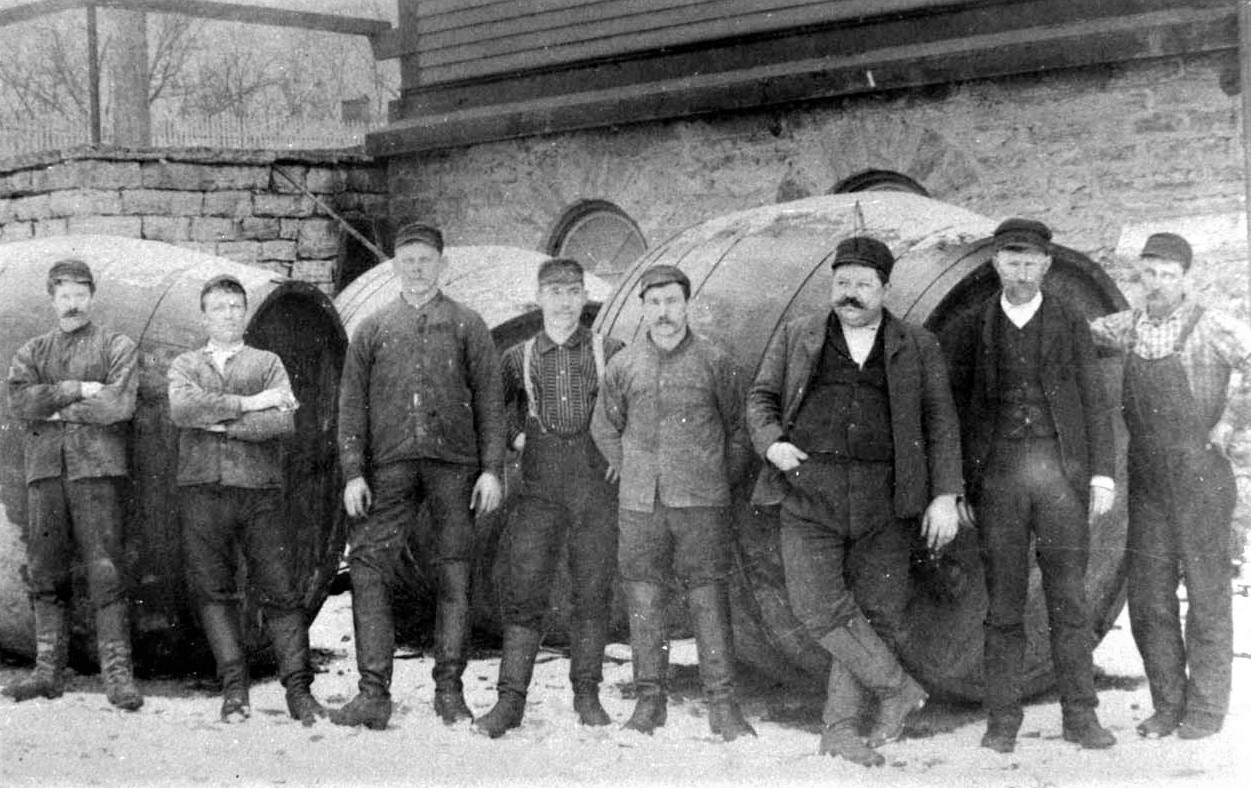
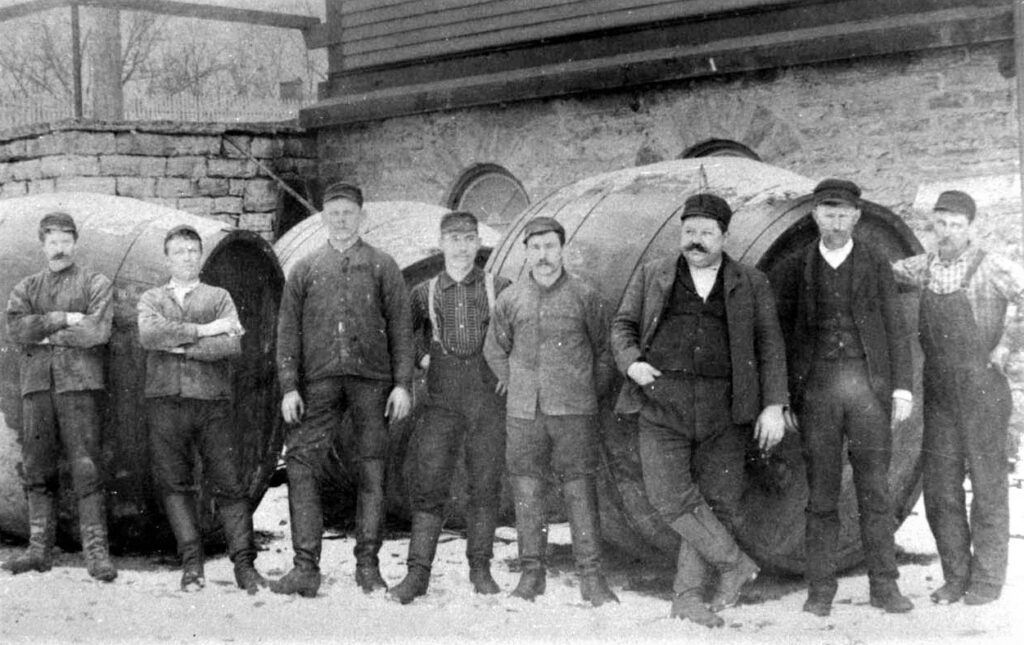
It was a three-story building and included a full basement. The basement consisted of three rooms about 22’ x 20’ that were filled with ice the year-round. In these rooms, the huge casks of beer and ale were stored, each cask containing about 22 barrels of brew each. There was an elevator operated by horsepower, which allowed the hoisting and loading of the casks for shipment. The furnace and boiler were both located in the basement as well.
On the first floor was the malt mill, driven by horsepower, which ground 500 lbs. of malt per day. The process of making malt is as follows: First, barley is thoroughly saturated with water in the malt tubs. The barley, like any other seed, would start to sprout.
After sprouting, the barley was taken to the second floor and rapidly kiln dried. It was then ground up and called “malt.” At any given time, hundreds of pounds of ground malt was stored at the facility.
Also on the first floor were the mash tubs. It was here that the ground malt was mixed with other ground grains and fresh water. They used a cold-brewing process, which required that a huge copper vessel containing ice be kept floating in the tubs. Eventually the enzymes in the malt would break down the starch in the grains to sugars so the fermenting could take place.
On the third floor, the beer was thoroughly cooled in a large shallow pan measuring 15 x 25 feet. It received the benefit of “the four winds” as the building had unique latticework walls along with rolling shutters on both the second and third floors. During fine weather, these were opened and caught the river breezes on even the hottest days. If a storm came up, the shutters could be easily closed and locked down for protection.
Besides brewing the beer, the Markerts engaged in cutting ice in the winter to be used in the cooling process. During the winter of 1875, we know they harvested 2,500 tons from the Kankakee.
In the late 1870s, they improved their brewery, bringing in steam engines and using a warm-brewing process. In 1882, they excavated huge vaults out of the limestone near the brewery to keep the barrels and casks of beer cool without direct use of ice.
In 1885, they were forced to dig a 600-foot-deep artesian well on the property, as the water from the Kankakee was no longer so pure. And in 1886, they brought in the newest marketing idea – bottled beer. We read on May 7, 1886, in the Wilmington Advocate, “Markert & Co. have put up a beer bottling establishment. Orders left for bottled beer at the brewery or at any saloon in the city will be promptly filled. They warrant their beer to consist of pure malt, pure hops, and pure water – and nothing else. The beer is put up in cases containing two dozen pints each. Prices low. Try it.”
By 1900 though, the Markert Brewery was out of business. The closing of the I & M Canal traffic on the Kankakee, together with the opening of the huge Porter and Sehring breweries in Joliet, contributed to the shut down as well.
Sandy Vasko is past director of the Will County Historical Museum and Research Center, and now serves on the Board of Directors and Collections and Research Chair.
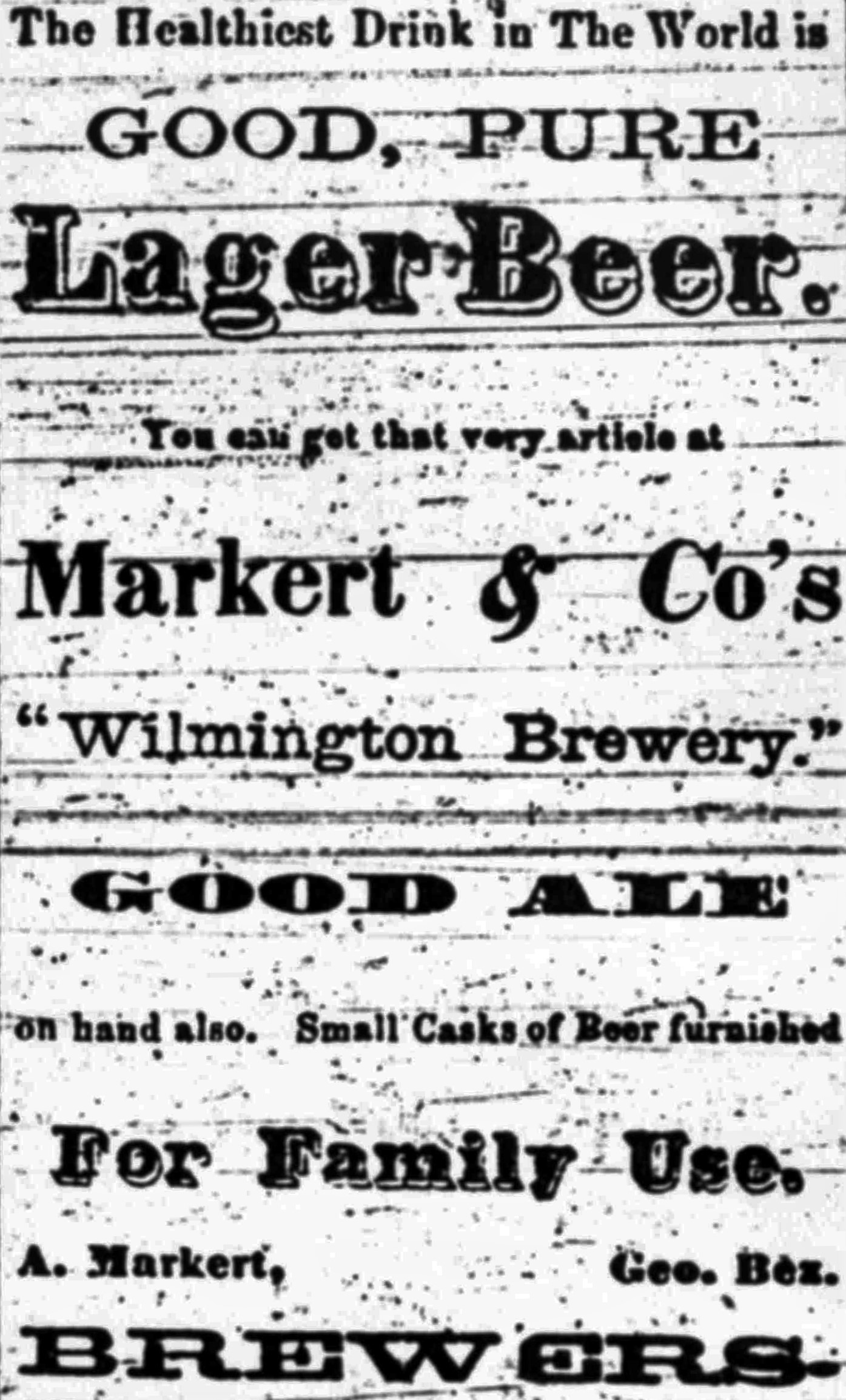
A sign advertising the refreshing offerings of Markert Brewery in Wilmington Township.