What made the Roaring ‘20s roar: Booze and Bullets
One hundred years ago, in an age dubbed the Roaring 20s a huge change in society was going on.
Men had been to war in a foreign country, had seen life in “Gay Paree,” and like all returning soldiers, had a bit of what was called “shell shock.”
It was called that because it was thought that the concussion from exploding ordnance was the cause. Prohibition was in full effect, creating organized gangs who took full advantage of the public thirst for alcohol.
As early as September of 1918, the following edict was published: “The food administration announced on Friday that the manufacture of beer and other malt liquors will be prohibited after December 1, as a war measure.
“This announcement said the decision had been reached at conferences between President Wilson and representatives of the fuel, food and railroad administration and the war industries board. Immediate suspension of the purchase of grains for malting purposes was ordered.”
On January 17, 1920, the Volstead Act, known as Prohibition went into effect. There was an immediate effect on industry. We read on January 30, 1920, in the Joliet Evening News: “The Citizens Brewing Co., of Joliet, plans to remodel its plant shortly for the manufacture of malt sugar also non-alcoholic drinks, food products of every description.”
Even children were affected by the new social norm. From Wilmington, April 20, 1920: “The third grade, which Miss Mildred Allott is teacher, won the beautiful 5 x 8-foot American flag given to the school room sending the most people to the Anti-Saloon League meeting at the M.E. Church last Monday evening.”
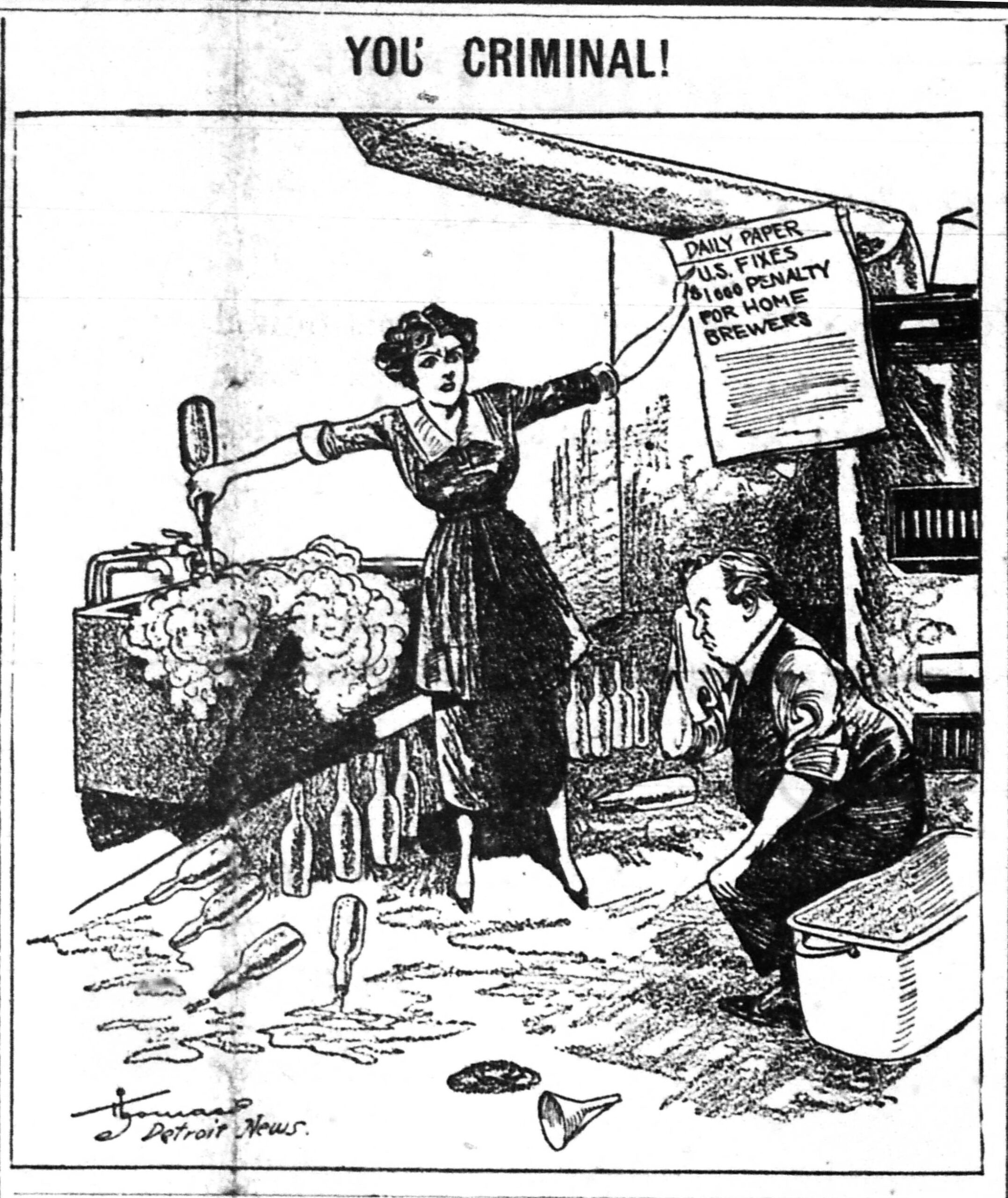
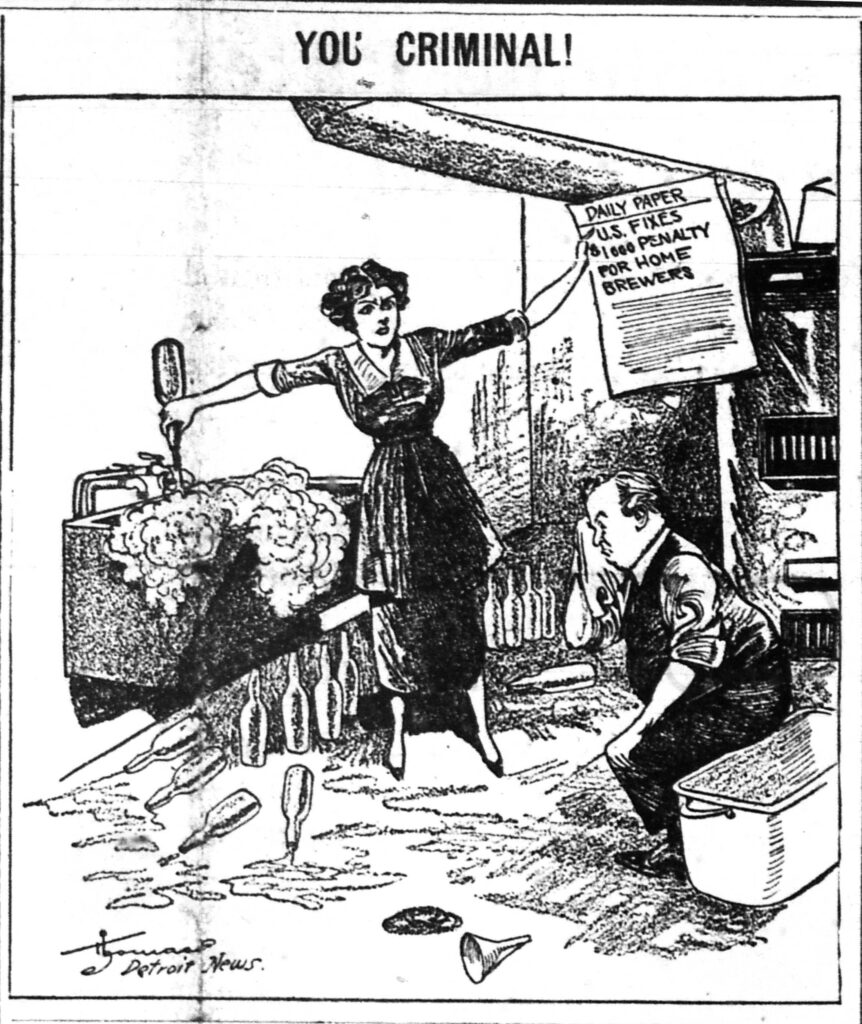
Warnings went out in the papers: “Home brewing grows more perilous all the time. If the man who “makes his own” avoids blowing up the house or poisoning himself, or getting into trouble with the local police, Uncle Sam is likely to catch him sooner or later.”
May 1920 brought this bit of information: “One of the largest illicit whisky stills in the country was seized on a farm near Peoria recently by federal prohibition agents. It had a capacity of 11,000 gallons a day. The place was deserted when the officers swooped down upon it.”
Enforcing prohibition laws was not the only thing federal officials had to deal with. Bank and mail train robberies were also on the rise. From May 21, 1920: “After holding up five postal clerks on the New Orleans limited on the Illinois Central railroad near Kankakee and stealing $480,000 ($7,877,300 today) from mail pouches, Royal Walton, himself believed to be a postal clerk, shot and killed one policeman and wounded another, barricaded himself in an at 816 E. 51st Street, and was there riddled with bullets and killed in a terrific pistol battle with Chief of Detectives James L. Mooney, Lieut. Michael Hughes and half a hundred police officers who had surrounded the place.”
And closer to home, on June 10, 1921 we read: “Two young holdup men walked into the private bank of Nunzi DeLorenzo in the business part of Joliet at noon Tuesday last, beat and choked Miss Mary De Lorenzo, cashier and daughter of the owner, and escaped with a little over $300 ($5,500). The men then walked leisurely down Chicago street, disregarding the crowds that lined the street.
“They then met Desk Sergeant Jas. Cavenaugh and Police Driver John Swiggart who attempted to capture them, but the robbers were too quick for them and made them throw up their hands and beat it, which they did. The robbers then stopped Michael Granada who was approaching in an automobile and commanded him to take them to Aurora in his machine.”
This decade was also known for the rise in hate crimes against minorities and religions which sometimes broke out in riots. We read on June 25, 1920: “Two men were killed and a patrolman was fatally wounded in a race riot here (Chicago) last night. The battle raged for more than an hour and hundreds of shots were exchanged. Quiet was reported after a heavy detail of police was rushed to the scene.”
In Will County, from the Kankakee Democrat of Dec. 2: “The investigation of the Deselm church fire is being continued this week. Deputy State Fire Marshal George P. McNally is examining witnesses in the Deselm town hall. One theory, which was that several Wilmington people had set fire to the Latter-Day Saints church, has been proven false. McNally was in Wilmington several days and after a thorough investigation was convinced that no one in that city is guilty of the crime. Several people in the neighborhood of Deselm are now the only suspects in the case.”
Author’s note: Any resemblance of the accounts above to the present, is purely a result of the old adage. History repeats itself. Those who don’t learn are doomed to repeat it.
Sandy Vasko is past director of the Will County Historical Museum and Research Center, and now serves on the Board of Directors and Collections and Research Chair.
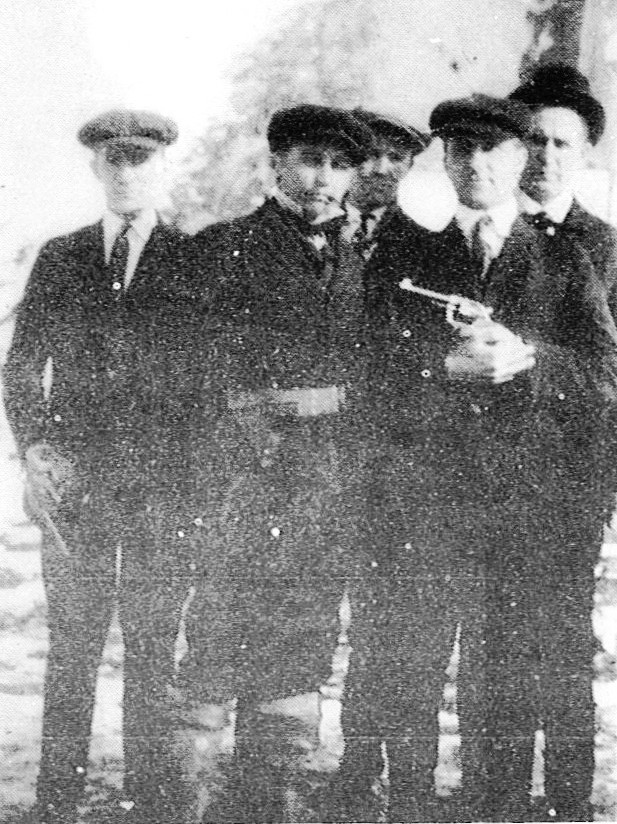
Photo of railway clerks in 1922 whose job it was to guard the mail bags; most look just like kids.