Fashion and dance at the Joliet Pen
By Sandy Vasko
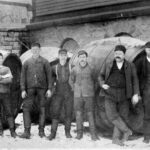
Today we are back at the Joliet Penitentiary on Collins Street. Out of the July 6, 1896, Joliet Weekly News, we read of prison reforms that changed the fashion and lives of the men living there and a bit about the ladies, as well:
“The Fourth of July came as a day of welcome cessation from the daily routine to the prisoners at the penitentiary, and joy almost dared to show itself. Everything that could be done was done to give the 1,200 prisoners a happy time.
“Aside from the festivities that had been prepared, the day had a greater significance to the prisoners. It marked the beginning of a time when the state recognized that all criminals were not equally bad.
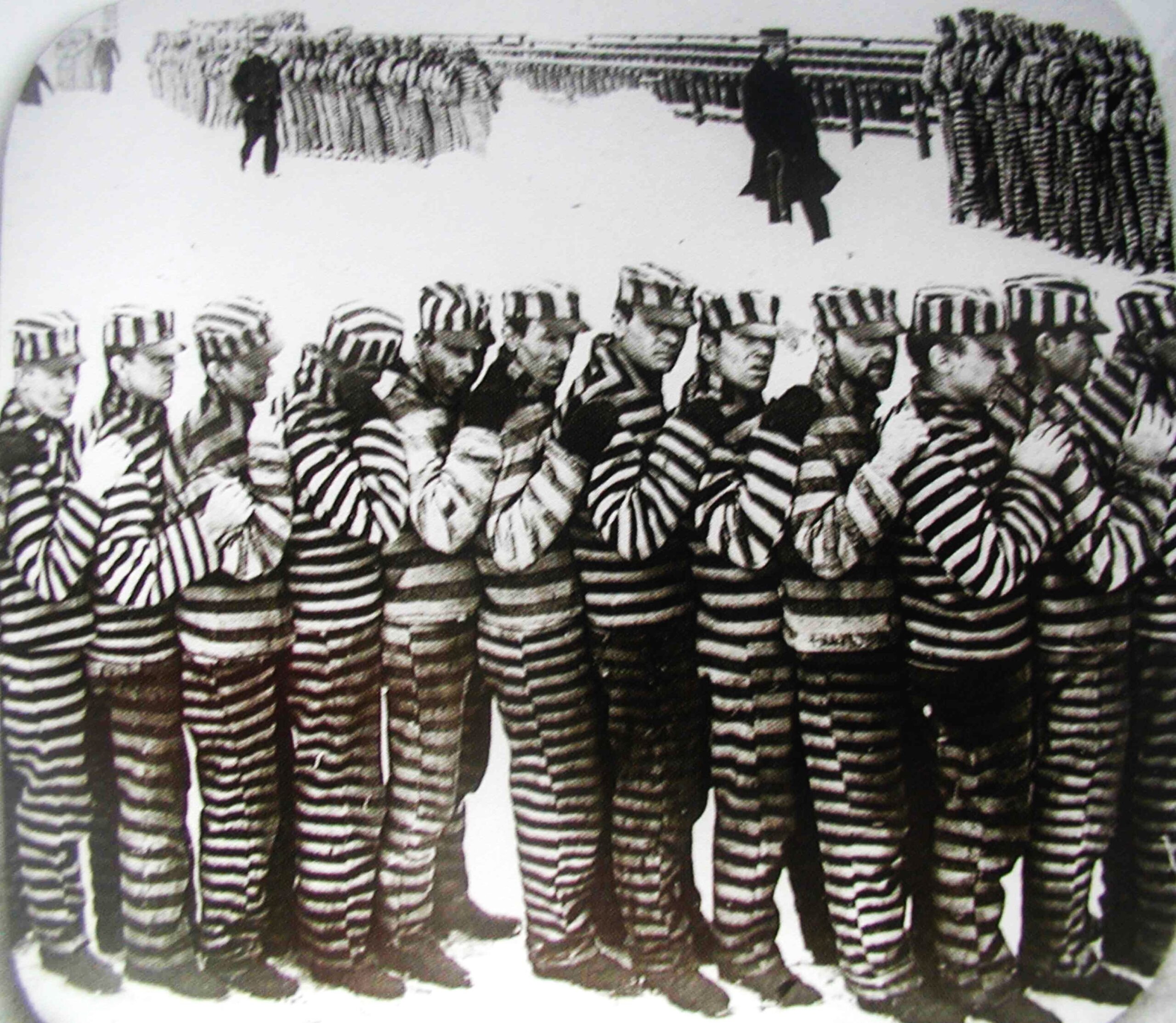
“In the future stripes will not be significant of the penitentiary. Hereafter, plain colors will be used and the convicts will wear blue or other colors as they prove themselves worthy. Each color represents an advance in obedience to the prison authorities and regulations. Of course, all were given blue suits to start with. Changes will be made every six months and the color of the convict’s garb will show what his conduct has been.
“The first step in the change was made Saturday. At the hour for confining the 1,293 men in their cells on Friday night all wore the despised stripes. Closeted with them for the night each man had a new and clean suit of a gray-blue color – coat trousers, and cap with a visor of leather. By 9 o’clock on the morning of the Fourth of July the breakfast had been served, the convicts were dressed in their new garb, the cell doors were unlocked, and the men marched out in the regular lock step.”
This change away from striped prison uniforms was not long lasting. After a few years, the stripes were reintroduced for troublesome prisoners and soon for all prisoners once again.
It is interesting to note the striped prison uniforms have made a comeback. Stripes are used today in Arizona, Mississippi, Kansas, Ohio and Texas.
And what of ladies present on that grand day? Were they not included in this change of fashion? The answer is, they were not. Women prisoners, still housed in the same building as the men at this date, were given a separate celebration. Let’s look in on them:
“If the morning was pleasing to the men fancy what it must have been to the women. There were 60 of these latter. When it is told that of these 60, the majority was colored the prevailing entertainment may be surmised. Of course, they danced. And as they did dance what was more natural than that they should have held a cake walk?
“The women formed in twos or threes or fours or went singly, and they paraded about in a corner of the jail yard, which had been specially fitted up for them, and for the observance of the day. It was decorated as completely as was the part allotted to the men. The cake walk was won by two colored women, but the warden would not tell their names. The cake was cut and eaten on the spot. They spent most of their time in dancing, and were put into their cells again after two and a half hours.”
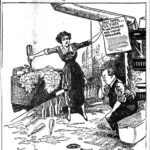
This bit of the story is interesting because of the dance the ladies did – the cake walk. This dance originally came from plantations where slaves would mimic their masters dancing the minuet. It involved kicking legs extremely high and parading around in time to the music.
It was the first dance to cross the color line, becoming popular with white couples in the 1890s. In fact, on June 15, 1894, we read in the Joliet News: “Joliet is to have a real social novelty – for this city. The colored people are arranging a grand ‘cake walk’ for Friday, June 29, in the first story of the Speer block, and as it is for the Silver Cross hospital, the managers of the hospital propose to meet their generosity by uniting to make it a swell event. An artistic colored orchestra will play and there is to be a program, but the walk will really take the cake. Particulars will come later.
From this dance we get two expressions: “That will be a piece of cake” for something easy, and “Well, that takes the cake!” for something that is above and beyond, the winner so to speak.
Sandy Vasko serves on the Board of Directors of the Will County Historical Museum & Research Center, and is Collections and Research manager.
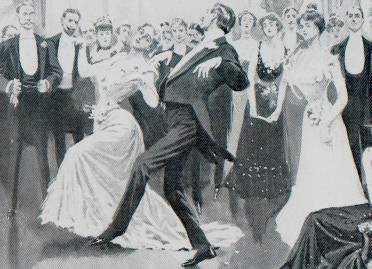
A depiction of the cake walk dance, adapted by high society from plantation workers, which gave birth to several well-known sayings used today.