Forest Preserve Launches Campaign to Curb Fishing Line Harm to Wildlife
As fishing and boating season begins, the Forest Preserve District of Will County is urging anglers to properly dispose of fishing line that can strangle, maim or kill wildlife.
The District is also encouraging preserve visitors to help clean up discarded line, hooks and other debris that can harm birds and animals.
As part of the effort, the Fishing for Trash program has been expanded from a short-term initiative to a season-long effort through October at Hidden Lakes Trout Farm at Hidden Oaks Preserve in Bolingbrook and Monee Reservoir in Monee Township. Visitors can pick up gloves and bags at the Tackle Box bait shop at Hidden Lakes or the Monee Reservoir Visitor Center, then return filled bags for a treat. Tackle Box and Monee Reservoir Visitor Center hours are listed online at ReconnectWithNature.org.
“This program came out of a need,” said Angie Opiola, facility supervisor at Hidden Oaks Nature Center. “Staff, volunteers, visitors all have seen firsthand what discarded fishing line does to wildlife, and it is honestly heart wrenching. Birds tethered to trees, geese with several feet of line trailing behind from their mouths. Animals without any feet. Nests made with more fishing line than natural material. I could go on and on.”
Opiola said she hopes the expanded program raises awareness about the dangers of improperly discarded fishing line.
“Whether you are an angler or not, you can do something about the line. If you see it — grab it! And feel like a hero because you literally are saving an animal’s life.”
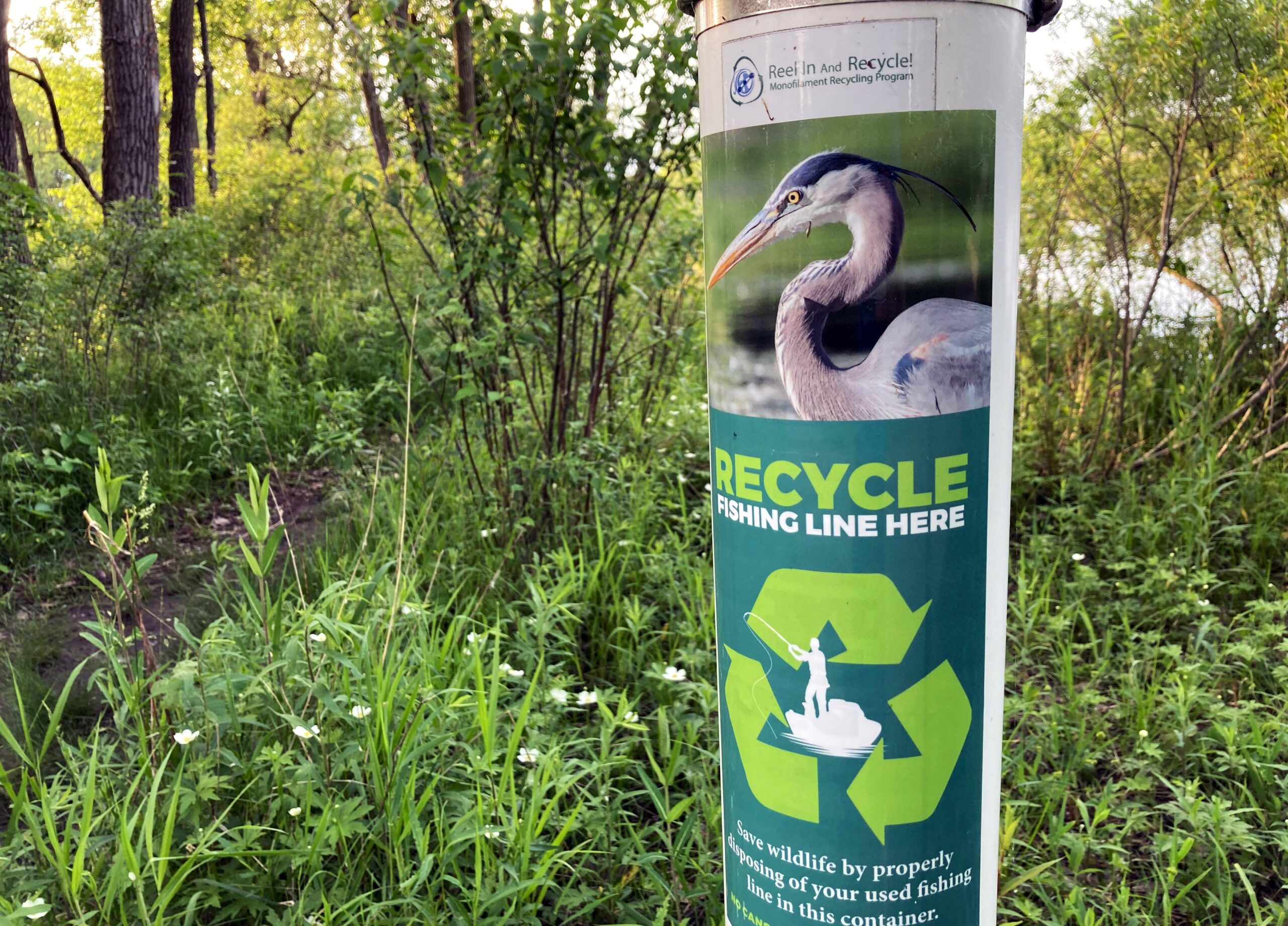
The 2026 campaign follows the installation of updated monofilament recycling tubes at fishing locations in 2025. The redesigned bins are more durable and better equipped to prevent misuse, while making it easier to collect line for proper recycling.
Collected line is sent to the Berkley Conservation Institute in Iowa, where it is repurposed into products such as fish cribs, spools and tackle boxes. Since 1990, more than 9 million miles of fishing line have been recycled through the program. Improperly discarded line can persist in the environment for up to 600 years.
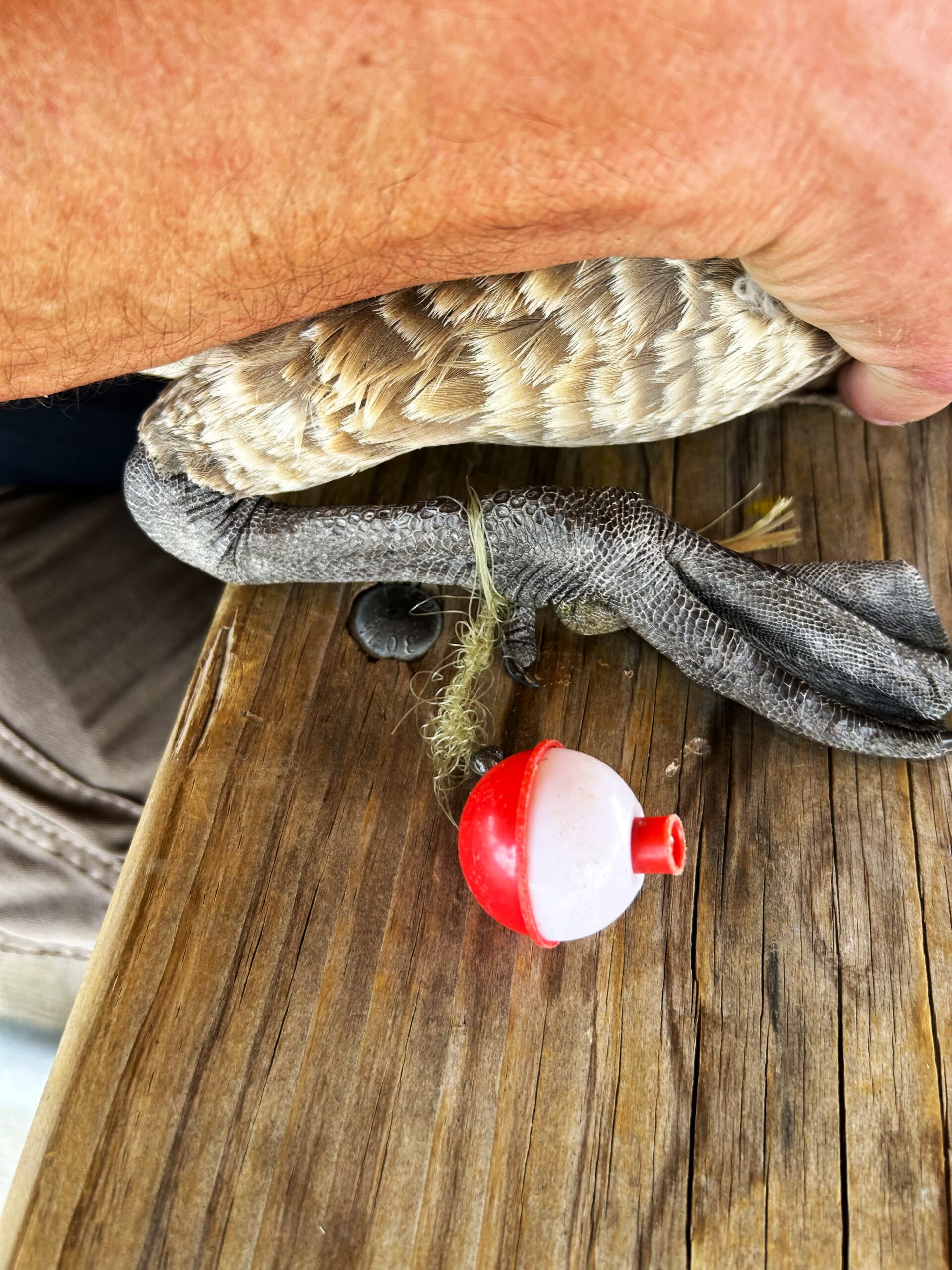
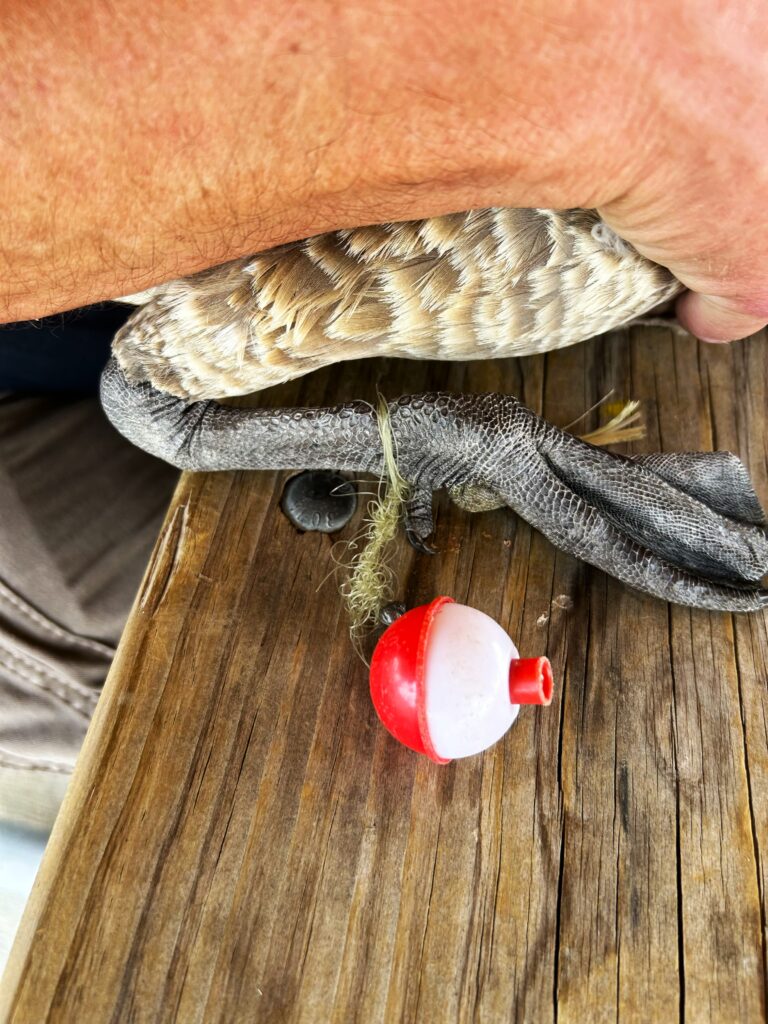
The Forest Preserve has documented multiple cases of wildlife harmed by discarded line, including birds and waterfowl that became entangled and died or required rescue. A pelican had to be euthanized after becoming tangled in fishing line at McKinley Woods in Channahon. A dead egret was found hanging from a tree at Lake Renwick in Plainfield, and a great blue heron died at Rock Run Rookery in Joliet after being ensnared in fishing line in a tree. Two emaciated Canada geese were rescued and treated for leg and foot injuries and infections after being found with fishing line wrapped around their legs at Whalon Lake in Naperville. A robin suffocated after becoming entangled in fishing line and hung from a tree at Isle a la Cache in Romeoville.
A social media campaign will further highlight the issue and share tips for safe disposal, including using designated recycling bins or cutting line into small pieces before placing it in the trash if recycling is not available.