The case of the guilty conscience
By Sandy Vasko
I was researching in the March 22, 1907, Wilmington Advocate when this headline caught my eye: “CAPTAIN HOOKER, FORMERLY OF WILMINGTON, WILLS ESTATE TO UNITED STATES.”
I started to wonder what kind of idiot this guy was, when I heard the music running through my head. You know the tune — the theme from “History Detectives.” And I found myself plunged into the case of the guilty conscience.
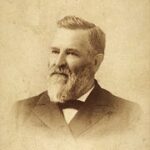
James Hooker is somewhat of a mystery man from the beginning. Why he came west to Will County, we will never know, but we do know that his real name was Charles Hooker, and he came from a pioneer family in Rochester, New York. They were wealthy, having made their fortune in the nursery business.
James/Charles H. Hooker must have been an enterprising young man. The first time we can find mention of him living in Will County is in the 1860 census. It shows him living in Wesley Township with another couple from New York and their daughter. It gives his occupation as farmer, and tells us that he was worth a cool $1,500 (about $54,700 today). It also tells us that he was born in New York in 1832.
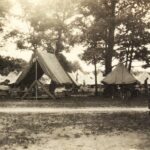
When the War Between The States broke out, we find James instrumental recruiting a company of men from the Wilmington area called the Florence Rifles. They would become Company E of the Thirty-ninth Illinois Voluntary Infantry. The men of the company elected Hooker captain. In Dr. Charles Clark’s book about the regiment we learned that Captain Hooker gave a brief but rousing speech to the regiment just before it left for the front.
The history of the 39th is a long one, and in the first year, a very peaceful one. In fact, too peaceful. The regiment saw very little front line action, ending up guarding trains, etc. behind the lines. This was not what most of them had signed up for.
Whether it was for this reason or something else, we find James H. Hooker’s resignation from the 39th on May 26, 1862. We also know that he was not the only one that resigned at that time. We read in a letter from the front printed in the June 23, 1862, Wilmington Independent:
“In my last communication I forgot to speak about the change in the company officers of our regiment which took place during our long march from Luray to Fredericksburg, and back again. Four captains, among the number Captain Hooker of Company E, and four lieutenants, resigned, and their places were filed by the promotion of lieutenants and sergeant. Eight company officers out of twenty-seven resigned almost at once.”
While we don’t know why Hooker resigned, we do know how the men he left behind felt about it. In the same letter we read, “They held their places and drew their pay till they began to feel some of the hardships which the private always has to undergo, and then, when the prospect was that they would be greatly needed and there appeared to be hard and dangerous service just ahead, they took advantage of their privilege and bade us farewell.
“I do not speak thus to give the impression that we have sustained any very great loss by their resignation; for I believe that the regiment is as well off as it was before, and that it would be improved if some others would follow their example.”
Hooker never returned to the Wilmington area. Perhaps he could not hold his head up among people who still had loved ones at the front – the same loved ones he himself convinced to fight just a year before. He returned to his native state of New York by 1870, returning his first name to Charles.
He amassed quite a fortune by farming and being a nurseryman. By the time of his death on Feb. 28, 1907, he was worth $200,000 ($7,027,500 in today’s money). We know he had a wife and four children, but the Philadelphia Inquirer stated that he left no immediate relatives, only about a dozen nieces and nephews. However, the New York Times reported that he had a widow, two daughters and one son.
When his will was read, the United States Attorney General was immediately contacted. He had left everything to the United States of America and named President Teddy Roosevelt as the executor. He also left a 183-acre farm near Galesburg, Illinois, to the federal government for a National Park, or an officer training school similar to West Point. He apportioned out the money to the various branches of the military, with the Army getting the bulk of it.
In April 1907, the Attorney General directed that all necessary steps be taken for the preservation of the property until title could be acquired. By July 1907, the New York Times reported, “As soon as the will was made public, the relatives began efforts to break it. The City of Galesburg is fighting for probate of the will.”
Finally, in January of 1908, the Surrogate Court set aside James/Charles H. Hooker’s will, declaring him to be incompetent at the time it was written.
Did Hooker try to leave his money to the government because he hated his relatives? No, I think it’s just a plain case of a guilty conscience.
Sandy Vasko serves on the Board of Directors of the Will County Historical Museum and Research Center and is Collections and Research manager.