Finding the right place, one family’s story
By Sandy Vasko
Just like a dog turning around and around to find just the right place to settle down, many early pioneers did not settle in the first place they happened to land. These people already had the spirit of wanderlust, and they had come along way to find their own idea of paradise.
Sometimes moving around was the only way to find it. Set the way-back machine to 1832, just after the Black Hawk War.
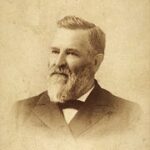
On June 3, 1936, the Joliet Herald published a Centennial Edition to honor the 100th birthday of Will County. In it Frank X. Lasser gave an interview of his memories of Will County. At the time Mr. Lasser was 75 years old and living in Joliet.
“They asked me if I remember ‘the early days.’ Yes, I can remember the early days when Bluff Street was a busy waterfront, and I remember stories my father used to tell of his experiences as a pioneer settler living in a lonely log cabin out on the ‘Grand Prairie.’ My father came to this country in 1832 from France, and he built the first log cabin on Riley’s hill, near Lockport. My mother came from Germany in 1843 and lived a mile east of my father’s cabin on the Marley road. They were married in 1859.
“Soon after their marriage, my parents moved down to Wilmington and settled on the Grand Prairie, that vast stretch of fields which reached without a hill or a tree from the Kankakee River to Bloomington.
“My father raised farm products, and he used to walk to Chicago to trade his goods for cloth and implements, which he carried back to his cabin on his back. It took him 10 days to walk to Chicago and return. My mother would know about the day to expect my father home, and she would go out into the yard at night, press her ear to the ground and listen for his approaching footsteps. On a quiet night she could hear a horse munching grass four miles away.
“On his lonely trips, father never carried a weapon of any kind. He carried an axe, but that was a necessary tool for the pioneers.
“Father moved into Wilmington in 1865 and opened a grocery store on the main street which had the Stewart House, a blacksmith shop, a grog shop, and then my father’s grocery store. The big flood of Feb 21, 1867, occurred when an ice jam backed up the Kankakee river. Water covered all the village of Wilmington excepting the railroad depot, the Methodist Episcopal church, and the Brewery. Father’s business was ruined. Like many other merchants he left the village and never returned.
“Back in Joliet, my father worked as a gardener for Dr. Frank X. Werndell, a prominent man in the early 1860’s. I was named after Dr. Werndell. A silk industry would have been established in Joliet, and might have been operating prosperously today, if Dr. Werndell had lived to complete his experiments.
“He bought seven acres of land on the west side on Summit Street, in 1832 and planted mulberry trees. He imported thousands of silk worms, and after 10 years the mulberry trees were reaching maturity, when Dr. Werndell died, just as he was on the verge of making the first silk in Joliet.
“When I was a boy in Joliet, I worked with my father sawing firewood for 30 families, which we had as customers on our route. There was no coal in those days. I remember we cleared dead timbers out of Demmond’s Woods, between Plainfield Road and Pine Street, south of Division Street, where Abraham Lincoln spoke in 1864.”
Author’s note: Although it is a popular conception that Abraham Lincoln spoke in Joliet and Lockport at various times and places, he could not have spoken there in 1864. Once Lincoln left Illinois for Washington after his first election, he never returned to his home state alive.
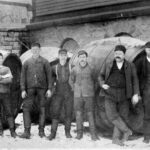
“Later, I went to work in a shoe factory owned by Fireman Mack, afterward mayor of Joliet, on Bluff Street. For 47 years I worked in this shop, which would be the oldest business of its kind in Illinois if it were still going today. In those days, a shoemaker was the highest paid tradesman, often making $75 (about $1,610) a week; today he is the lowest paid.
“In 1869 a fire started in the Hershberger shop on the north end of the street and burned all Bluff street to Oneida street. Only building not burned was a stone place across from the fire engine house. One of the ruined buildings was an undertaking establishment, and the morning after the fire, all the kids in the neighborhood were paddling down the canal in the wooden coffins.”
One has to smile at the image of kids in coffins paddling on the canal. People took pleasure in the little things in life. Perhaps, that’s the take away from this simple story of one pioneer family.
Sandy Vasko serves on the Board of Directors of the Will County Historical Museum and Research Center and is Collections and Research manager.