Looking at the earliest days, pioneers’ reunion
Editor’s Note: Sandy Vasko is taking some well-deserved time off. So we are re-running some of our favorite columns.
By Sandy Vasko
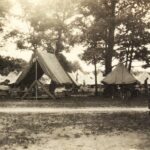
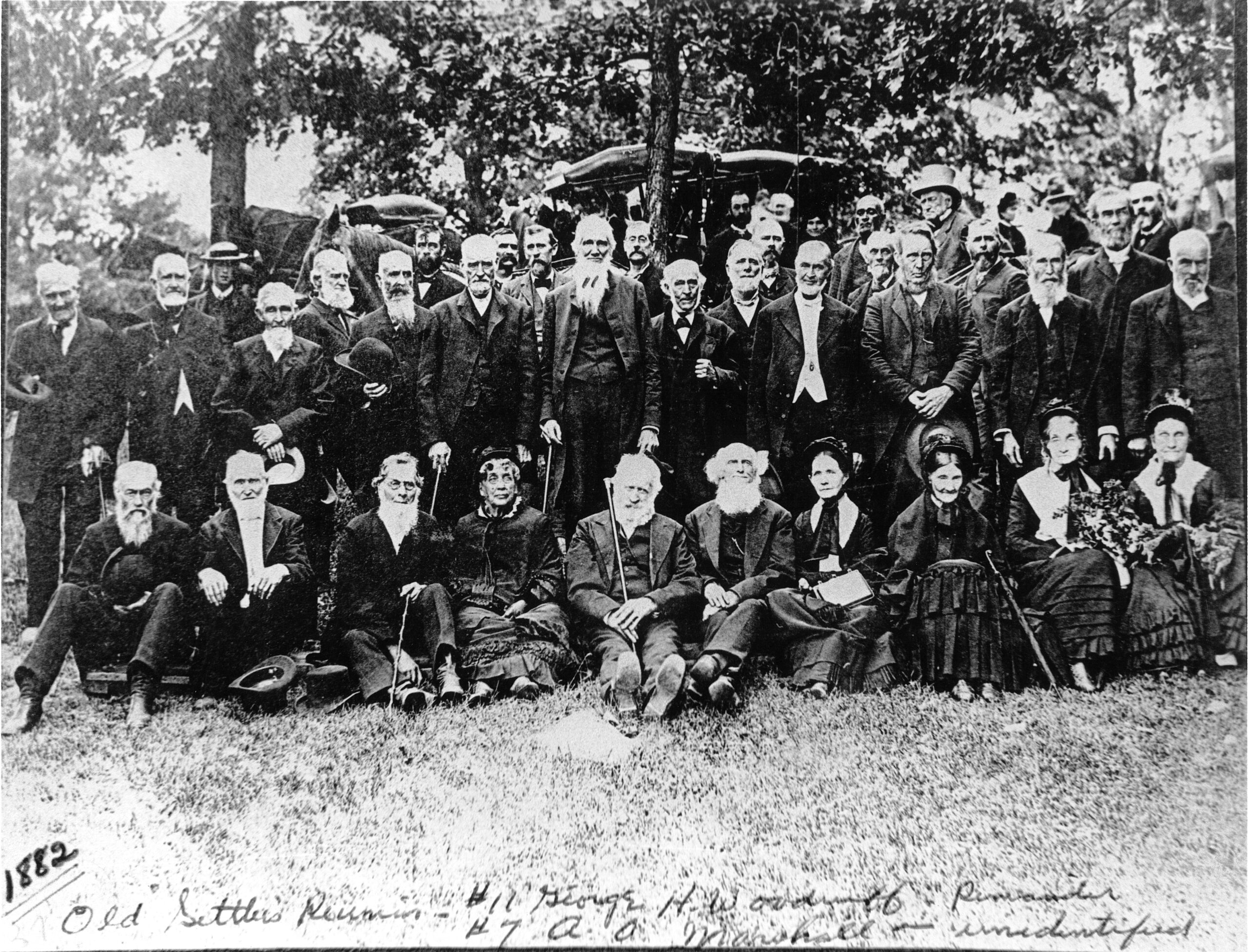
The 1880s in this area was a time for looking back. Many soldiers’ reunions were held, and Old Settlers’ Reunions were begun. Historians of that time knew that the earliest of Will County settlers were passing on, and in hopes of preserving history for us, they got together to record their recollections.
The first Pioneer Reunion was held in 1854, about 20 years after the first of them arrived in Will County. We read in the January 9, 1855, Joliet Signal:
“Yesterday the second annual Festival of the Pioneers of 1836 was held at the National Hotel. We had not the pleasure of being present, but learn that the attendance was respectable. Mr. Adams, the worthy host of the ‘National,’ did the honors of the occasion admirably. So perfect and ample were his arrangements and preparation that his guests could not help enjoying themselves.”
In 1857, this was written about those earliest times: “On the ever memorable 8th of January, a large and goodly number of our oldest residents, Pioneers of ’36, assembled at the National Hotel, in this city, to celebrate and talk over the early scenes and events of the first settlement of Will County – an interesting period, engraved deep in the hearts of the settlers of Northern Illinois – a time when every new addition to our then few and scattered neighbors was hailed with joy and brotherly friendship. A time when the erection of a log cabin was a matter of deep interest to all, and when each felt his dependence on the other for help and aid to protect and assist him in gaining a home in this then western wild, cultivating and implanting in each heart brotherly good will and confidence in each other.”
By September of 1883, the reunions had become so large that they had to be held at the Fair Grounds in Joliet. Special invitations had been sent to all known early pioneers that resided outside the Joliet area. Among them was Gurdon Hubbard.
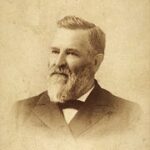
Gurdon Hubbard was probably one of the most colorful and important men in the settling of north central Illinois. Hubbard worked for John Jacob Astor’s American Fur Company. In 1818, he is listed as working as a clerk in Montreal. In his letter of regret for the 1882 reunion, he recalled a bit of this time in his life:
“My first passage down the Des Plaines River was in a Mackinac boat, in the fall of 1818. The same fall I was in St. Louis. With the exception of those composing our party, I did not see a white man or a white woman till within 18 miles of St. Louis then a town of less than 800 inhabitants. That year I wintered where Hennepin now is, being in the Indian trade, and visited during the winter the Mississippi and Wabash rivers, without meeting with a white inhabitant. What a change!”
Hubbard went on to build two trading posts on the Iroquois River in the 1820s in Iroquois County and is counted as one of the county’s earliest white settlers. In 1826, he married Watch-e-kee (Watseka), chief Tamin’s niece, to seal ties between himself and a band of Pottawatomi with whom he had been trading. They mutually dissolved the union nearly two years later.
In 1827, during the so-called Winnebago War, he walked the entire route from Chicago to Danville to bring back 50 men for the protection of the white settlers there.
Later the route he took, and first pioneered, was named Hubbard’s Trace, now known as Illinois Route 1.
Hubbard also did not attend the 1883 reunion, but literally hundreds of others did. It is described in the September 11, 1883, edition of the Joliet Signal: “The largest convocation of the Old Settlers’ Association of Will county ever convened since its organization met at the Fair grounds last Wednesday to do honor to the pioneer men and women of the county.
“A grand dinner was served at 1 o’clock by the ladies of the Brooklyn Baptist Church and it tickled the appetites of the old timers wonderfully. Consisting of roast beef and dressing, roast lamb and dressing, roast chicken and dressing, boiled ham, corn beef, cold tongue, pork and beans, boiled potatoes, succotash, green corn on ear, cold cabbage, cheese and all kinds of pickles, all kinds of pies, rice pudding, hot tea and coffee. All for the paltry pittance of forty cents each ($14 today), ice cream, lemonade, nuts and cigars.
“At 1 o’clock the president, G. H. Woodruff called the vast concourse to order. The exercises were opened with a prayer, after which the annual oration was delivered by Woodruff who repeated the story of the last generations back to the time when ‘Will County was not, but existed as nature’s wilds, with loving Indians as its only denizens.’
“Many others gave talks that day recalling the hardship of the early days, and several original poems written for the occasion were eloquently read.
“One of the poems written by Capt. Phelps was a sort of a rib to all the old pioneers gathered there that day. The first two stanzas were:
What a precious, fine set of old coves, to be sure,
Here gathered together! as grave and demure
As if, in the days of your young settler-hood,
You hadn’t raised thunder whenever you could!
Don’t think to deceive us young chickens today
With your sober demeanor and stately array,
For we, from our own past experience, know
What wicked young rascals you were long ago
Then a choir sang some of the “old tunes,” and by 6 in the evening, the crowd was dismissed.
The last reunion I can document was held in 1908, and there were still over 100 people in attendance.
Sandy Vasko serves on the Board of Directors of the Will County Historical Museum & Research Center. She is the Collections and Research chair.