Twelve Mile Grove, and other mysteries of Wilton
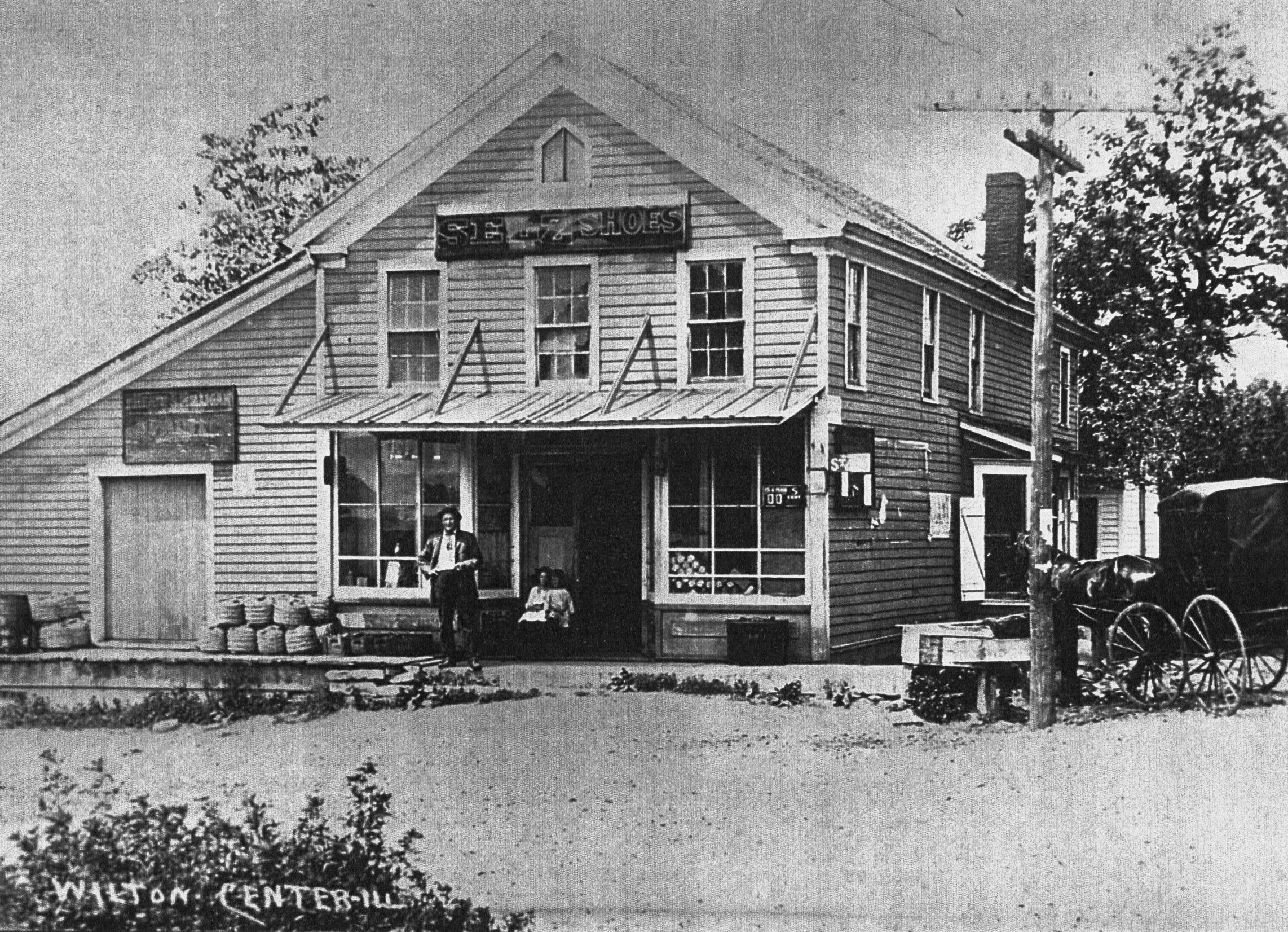
Take 52 south, past Manhattan, and you will come to the community of Twelve Mile Grove, now known as Wilton Center. It is perhaps, the most romantic spot in the county, historically speaking.
The Native Americans who once lived there found it a perfect spot to live with its endless wildlife, deep woods and open prairie. And there are a few mysteries concerning the place; let’s explore them:
The first mystery is why it was called Twelve Mile Grove. It’s Indian name, Nabena-quinon, has never been translated. George Woodruff says that it meant “12 miles from anywhere,” but as the Native Americans had no concept of miles, this seems improbable. Others say that it was 12 miles from Joliet, the county seat. We may never know.
The next mystery concerns those Native Americans. Although several tribal groups lived there, mainly Pottawatomie, they were not officially given the land until 1832, the year of the Black Hawk War. Four years later, they chose to leave their land to go with the rest of their tribe to reservations in Kansas and Nebraska. No one actually forced them to leave. We can only guess that they left to be with their people, rather than be isolated here among white men.
One of the first white men to live at the Grove was Samuel Holcum. He was somehow affiliated with the Indians, but no one knows how. He lived as they did except for one thing; he built a log cabin while they lived in long houses and wigwams. When the Indians left, he left with them, with no explanation to anyone and became lost to history.
Abram Huyck came immediately after the Indians left, and for two years, his was the only family in the Grove. He lived with many reminders of the previous occupants. George Woodruff in his History of Will County relates this story about the Grove:
“When the whites first began to settle here, many traces of the former occupants of the grove were yet visible. Among the most interesting of these, as illustrating their methods of sepulture, were the tombs of three Indians, supposed, from the profusion of their decorations, to be chiefs.
“The sepulcher, or whatever it might be called, consisted of a little pen, built up of small sticks, laid one upon the other, to the height of about four feet, being from four to five feet square. The whole was covered with sticks, weighed down with heavy stones.
“And therein, on a kind of stool, sat the three poor fellows looking lonesome and ghastly enough. The cracks between the sticks composing the pens were sufficiently wide to admit of inspection, while being at the same time too small to allow of their being disturbed by wild animals. In this position, these ghastly remains sat in all of their feathers, beads and jewelry, with the flesh decaying from their bones, for a number of years, till at length a foolish lad, who lived in the neighborhood, upset their charnel-houses, scattering their bones about the surrounding country.”
Although Twelve Mile Grove had everything an early settler could want — fertile land, water, timber, game, stone quarry, etc. — it did lack one thing: transportation.
Early in Will County history, Peotone Township was combined with Wilton, as there were only 2 voters in Peotone. After the railroad went through, Peotone experienced exponential growth, while Twelve Mile Grove started withering away.
However, many early names are still with us today like Donohue, Nugent, Kennedy, Barr and Quigley. A small village featured a church, general store, blacksmith, implement dealer, etc.
We have a quaint view of the village from August of 1875 in the Joliet Weekly Sun: “A few days since Misses Eliza and Mary Lardner, utterly humiliated by repeatedly passing our cemetery on their way to church and the stores, and which was completely overgrown with a dense growth of weeks and underbrush, armed themselves with a broad axe and corn knives, and commenced slowly and laboriously to hew their way to the last resting places of some of the dead.
“The next day, they were reinforced by Miss Jennie Jenks; and during the day, they succeeded in clearing a large portion of the grounds.
“We have a croquet set here in Wilton Center. It is owned by a charming young widow; and at almost all hours of the day and evening, may be seen numbers of the children, young men and women, and some on whose shoulders the cares and responsibilities of the world are supposed to rest, wending their way back and forth to the grounds of the afore said lady, there to match their skill in the exhilarating game.”
Ah yes, the thrills of croquet! Don’t let this rural picture fool you. Twelve Mile Grove had its scandals, too. But that is a story for another day.
Sandy Vasko serves on the Board of Directors of the Will County Historical Museum & Research Center and as lead researcher there.