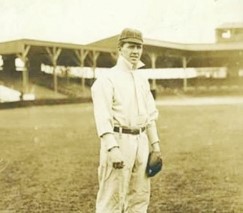
The hometown hero hurler hunted success
By Sandy Vasko
Will County is a sporting place, whether it’s football, baseball, basketball or even fishing, sports has always played a big role in the community. And certain sports are more popular in certain years.
The first decade of the 20th century was the time for base ball. (Note at the time, the sport was spelled with two words).
Let’s play ball!
First let me say that my favorite baseball team, the Cubs, once again have been eliminated from the playoffs. Now that I have mentioned it, please don’t remind me again.
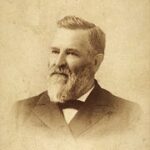
The base ball hero of the year for Wilmington folks was Burton Elwood Keeley. Keeley was born in Wilmington on Nov. 2, 1879. He stood 5’9” tall and weighed about 170 lbs. With those stats, he doesn’t seem so little to me but the standard way to describe him was, “the clever little pitcher.”
According to the Baseball-Almanac.com his nickname was “Speed.” It’s too bad that there was not way to clock his pitches back then, but he was fast, real fast.
In January 1904, we read in the Wilmington Advocate: “The Joliet Standards won from the Chicago Corn Exchange base ball boys in Joliet Sunday last by a score of 32 to 8. Several of the visitors played a fair game, and Bert Keeley was always in evidence, but the majority of the crowd were like a lot of novices and in no way worthy opponents of the Joliets.”
And in 1905 we read: “Bert Keeley, a Wilmington boy is still winning for himself an enviable position as crack pitcher in the Chicago Gunther’s base ball team (a semi-pro team). Sunday his team took the first game of the season from the Spauldings, in a hotly contested nine innings by a score of 4 to 3. Bert had the honor of having his picture in the Chicago American Wednesday.”
In February of 1907, we read in the Chicago American: “Bert Keeley, the clever little twirler for the Gunthers Hall Club, has just signed a contract to stay with the popular North Side team for another season. Bert is considered one of the greatest pitchers who is not connected with the professional leagues.
“It is, however, not his fault, that he is not pitching league ball, for he has had many offers for places on prominent teams for the coming season. Keeley, however, is employed regularly in Chicago and wishes to go on with his work, and this he can easily do and at the same time play Saturdays and Sundays with the Gunthers.
“Bert is probably as light a man as ever played regularly in the pitcher’s box. He weighs only about 130 pounds, but has speed and curves as strong as any of them. He often plays in other positions, both on the infield and outfield, and is considered a natural ball player.”
He did extremely well, both pitching and financially. He made enough money to come back home and with his fellow teammate open a roller-skating rink. We read on November 22, 1907, in the Wilmington Advocate: “The roller-skating rink opened last Monday evening in the Opera House in this city by Burton Keeley and Robert Meinke, of Chicago, drew a large attendance on the evening. Music was furnished by Sweet’s orchestra of Joliet.”
When the following spring came around, we read: “Burton Keeley and wife, of Chicago, visited here Thursday at the home of the former’s mother. Bert leaves Chicago this morning for New York where he will join the Washington base ball team of the American League.” He had finally made it to the majors.
That summer, he played well and the hometown fans took every chance they could get to see him play. We read on June 12, 1908: “About thirty-five of our base ball enthusiasts were in Chicago, Sunday last to witness the Washington team of which Bert Keeley is one of the pitchers, play the Sox of that city. Bert was in the box and pitched a star game. The score stood 2 to 1 in favor of Chicago. Bert’s Wilmington admirers presented him with a pair of diamond cuff buttons.”
After the regular season was over, the Washington club toured around the country playing semi-pro teams, I assume because they needed the money. We read on October 16, 1908: “A few baseball fans from this city went to Dwight Thursday to witness the Washington American league team cross bats with the Frank D. Smith baseball team of Dwight. The former Wilmington boys Bert Keeley and George Cutshaw were in the game. The score stood 4 to 3 in favor of the Senators.”
Note that a second Wilmington player was mentioned, George Cutshaw. Cutshaw would break into the majors for real in 1912, although I have an article that he was playing in Brooklyn in 1910. In 1908 he was playing for any semi-pro team that would give him a chance. In this case, he was playing for the Frank D. Smith team of Dwight.
Keeley ended the 1908 season with an ERA of 2.97, pretty good. He was frequently asked to pitch both games of a double header, which resulted in damage to his shoulder and throwing arm. His manager was even censured for his treatment of Keeley. There truly must have been something wrong because in 1909 his ERA jumped to 11.57.
In 1911, he was playing for an Omaha, Nebraska, semi-pro team when he was involved in a train accident. He was thrown the length of a train car, landing on his shoulder. He would never play again, though he did coach several other teams.
In a few years George Cutshaw, would emerge as another hometown hero, but that’s a story for another day.
Sandy Vasko is Director of the Will County Historical Museum & Research Center and President of the Will County Historical Society.