Searching for Illinois’ roots? Start in Kaskaskia
Ah, it’s summer, and for some it means summer vacation. If you are a history buff, and want to see more of the state where you live, you might think of heading south where Illinois started.
Living in the northern part of Illinois, we often think the Black Hawk War in 1836 marks the beginning of the history of “civilized man” in Illinois. But travel south, and you will find that it really began almost 200 years earlier.
The French coureurs de bois, or fur traders, had come to Illinois in the early 1600s. They traded and lived with the Indians, and eventually helped France to claim all of the land that was drained by the Mississippi, from the Allegheny Mountains, to the eastern side of the Rockies.
Native American tribes moved around constantly, and the French Jesuit Missionaries, mainly Father Marquette and Father Gabriel Marest followed them, establishing missions near them. The fur traders quickly followed the priests, and thus established the first white settlements in Illinois. Cahokia was the first, and running a close second in 1703, was the lost city of Kaskaskia.
Located on a peninsula between the Mississippi and the Kaskaskia rivers, it became the cultural, economic, and commercial capital of Illinois for over a century. Almost all the citizens of the first capital of Illinois spoke French, and were French-born, or Native American.
Some of the French men had brought their families with them, while other took Indian wives. This meant of course, that the French had first choice of the “in-laws” trade furs. And in the wilderness that was Illinois, furs were better than money.
The English coveted these close relations with the Indians, but as it was, they were forced to trade with the French middleman when it came to the lucrative fur trade. The third party who wanted to control the wealth that came through Kaskaskia was the Americans. And in a surprise raid, on July 4, 1778, just two years to the day that the Declaration of Independence was signed, George Rogers Clark and 175 Kentuckians took possession of the settlement of Kaskaskia. Thus, in an informal way, Illinois finally became part of the infant country of America.
When Illinois became a state in 1818, Kaskaskia naturally became the first capital. But as the new state boundaries were laid out, it appeared to everyone that a more centrally located capital would be necessary. Previous to Illinois’ entrance into the Union, Congress had appropriated 4 sections of land for a state capital. This was not done in Illinois, but finally in 1819, it did, and the chosen site was laid out and named Vandalia. Although Kaskaskia was no longer capital, it continued to be the county seat of Randolph County and important commercially.
But while all these politics were in play, another, stronger force was at work at Kaskaskia – the mighty Mississippi. She was a restless river, and often wandered where she had not been before, especially during flood times. In 1844, she flooded wide over the countryside, and inundated Kaskaskia, whose position on the flood plain had become more and more dangerous with each passing year.
Most reasonable people moved to higher ground. The county seat was removed to Chester, whose location, high on the bluff, was out of harm’s way.
In 1881, another record flood wiped out most visible signs of the town. After the water went down, the river flowed in a new channel she had dug for herself, partially using the former bed of the Kaskaskia River. The town site now sat on an island on the Missouri side of the river.
By this time all the citizens who had lived there had moved, but those who had died there could not. The bodies of all those early pioneers could not be left to the mercies of the catfish. In January 1892, work began in the three old cemeteries left at Kaskaskia. The bodies were removed to a fitting home, the site of Fort Gage, taken by George Rogers Clark in 1778 after he took Kaskaskia. Here, they spread out across the side of a hill, overlooking their former home.
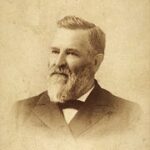
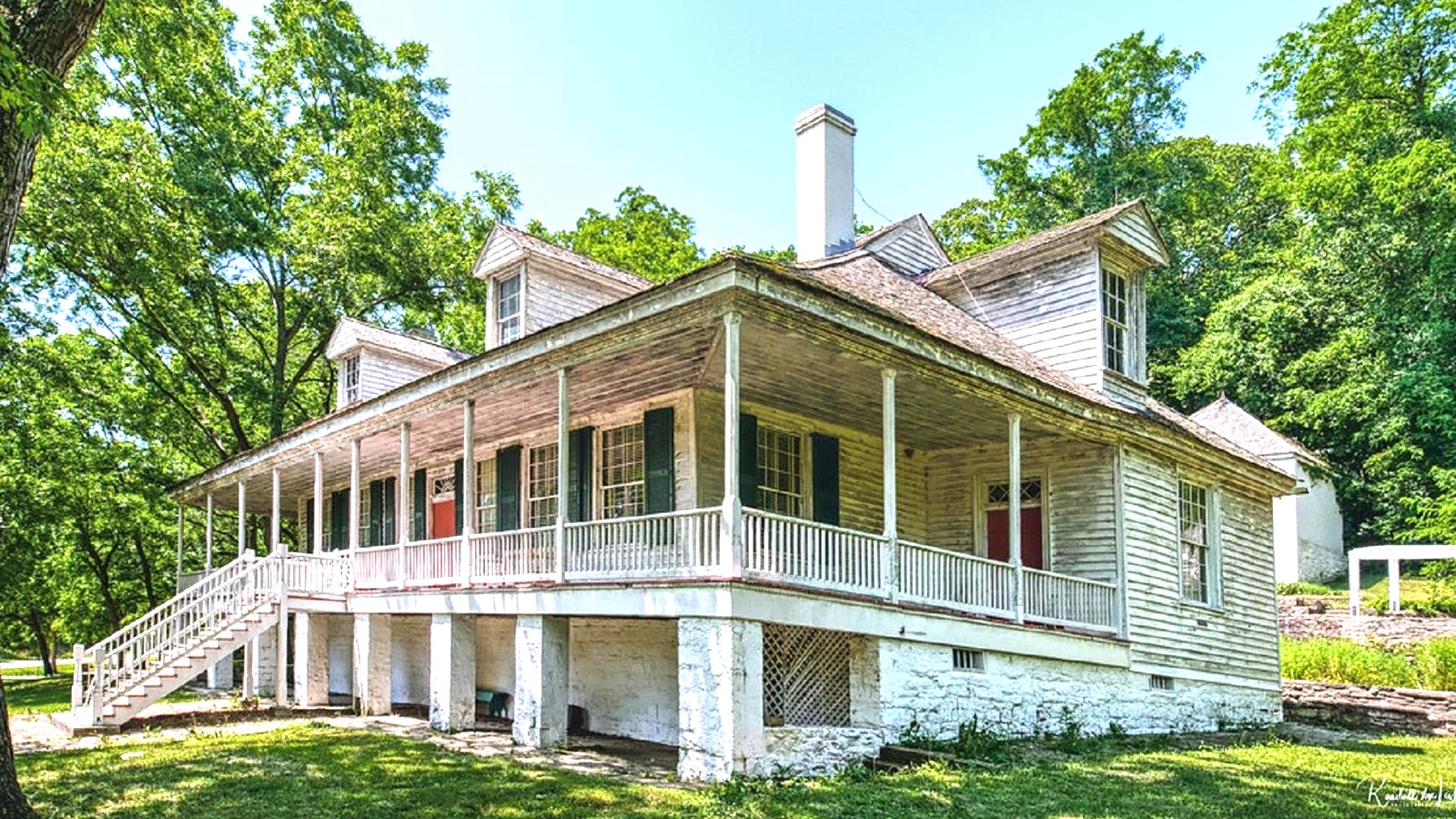
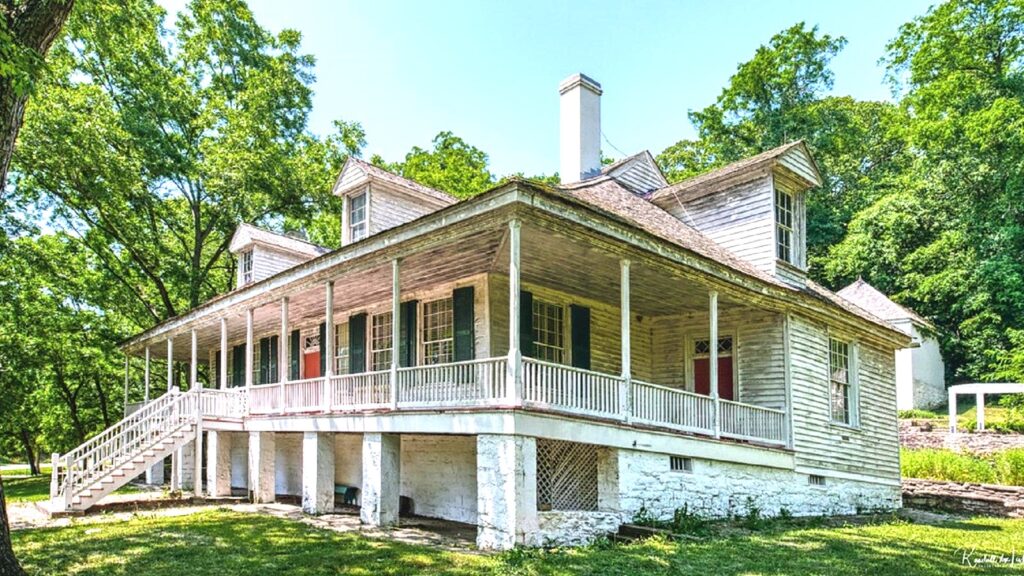
But there is still a piece of old Kaskaskia to see. It is Pierre Menard’s home. It was formerly located on the eastern edge of the town, and was built on higher ground on a high foundation. Menard moved to Kaskaskia in 1791, and by the age of 30, had become a prosperous merchant, fur buyer and trader. He was active in political affairs and held many political offices including regimental Major, judge, and delegate to the Indiana Territory Legislature.
In 1812, he was elected president of the first Illinois territorial legislature and was selected to write the constitution for the new State of Illinois. In 1813, he became the State’s first Lieutenant Governor after the constitution was amended to allow the foreign-born Menard to hold office.
The Illinois Historic Preservation Society operates the Pierre Menard Home State Historic Site. An audio-visual program and museum are located in the lower level of the home. The main level of the home is handicapped accessible.
Sandy Vasko is Director of the Will County Historical Museum & Research Center and President of the Will County Historical Society.