Farmers united, it was called the Grange
While trying to put together a picture of what made Will County what it is today, I have often talked about the I & M Canal and the Kankakee River improvements. The availability of canal boats to our merchants turned the 1870s in Will County into a boom time, despite the severe economic depression felt in other parts of our country.
But it was not only the merchants who benefited from water transportation. They were only the middlemen. It was the farmers in the area that really felt the impact of the canal boat.
Farming is, and always has been, the backbone of our economy. But in the latter half of the 19th century this was even truer.
Most of the population of the United States lived in rural areas, and after the Civil War, many of the young veterans came home, wanting nothing more in life than to till the soil for a living. But that same Civil War had turned the railroads into huge monopolies.
Their strategy was simple: They lowered the cost of transporting goods until all the stage and freight lines that used horses went out of business. Then they raised the rates. For the most part, they had no competition.
For the farmer, everything he could not raise or make himself, came to him by train at a high price. The farm products he raised could only get to market by train, again at an extremely high charge. It was estimated that sale of 75 percent of a farmers’ produce went to transporting the remaining 25 percent to market.
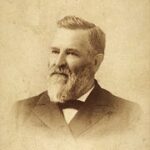
In 1867, a government clerk named Oliver Hudson Kelley, decided to do something about it. He had toured the South for the Bureau of Agriculture and found the farmers poor, discouraged and uninformed about advanced farming methods. Mr. Kelley and six of his friends started the farmer’s movement called the Grange, officially called the Patrons of Husbandry.
He started in his home state of Minnesota, and by 1875, there were 21,000 Granges in the Midwest.
Farmers used the Grange to organize opposition to the unfair practices of the railroads. It secured passage of state laws to limit railroad rates.
Illinois was at the forefront of this movement, and passed laws setting the maximum transportation and grain storage rates. Owners of railroads and grain elevators objected to the laws as interference with interstate commerce and violation of property rights. In Munn vs. Illinois, the Supreme Court ruled that property which affected the community at large “must submit to be controlled by the public for the common good.”
This was a huge victory for Illinois farmers. But where did the farmers of Will County stand? It depended on where the farmers lived and farmed. The farmers who lived near the I & M or Kankakee River were the last to join the movement.
The first Wilmington Farmer’s Club was organized in August of 1873. The Wilmington Advocate hailed the news with these words: “It is better late than never; the farming community in this section have waited quietly and submissively until their rights have been outraged and themselves made slaves for the aggrandizement of monopolies.”
Why did it take them so long? The answer is the river. In Wilmington, the railroads were not a monopoly. The canal boats provided a cheap alternative, at least for three seasons of the year. As early as 1862, when the first canal transportation was available, the only commodity that was shipped from the port of Wilmington was corn.
Grain warehouses sprang up along the river like mushrooms. From Altorf down to the Feeder Canal, there was a warehouse every 2 or 3 miles. Shipping corn by water saved the farmer about 1.5 cents a bushel.
In September of 1871, the Wilmington Advocate reported, “Over 100,000 bushels of grain chiefly corn, was received at Chicago by canal on Monday. A good days business. This was all local traffic, i.e. none of it came from the Illinois River towns. The canal carried this grain in spite of the three parallel railroads, which compete with the boats for the trade.”
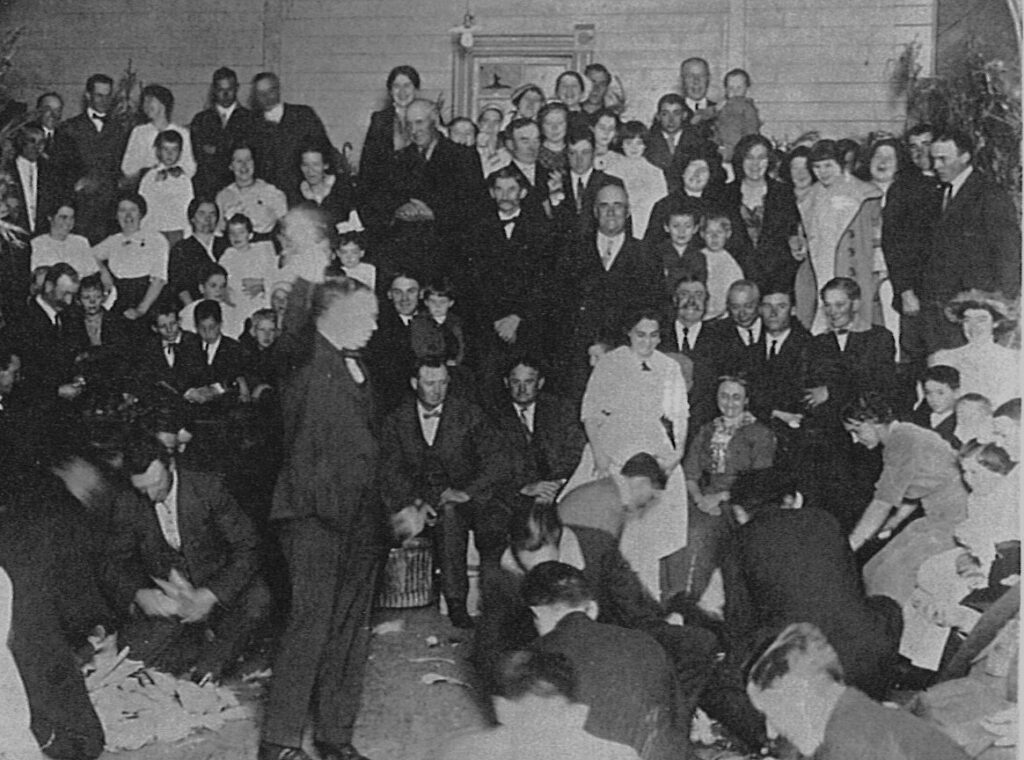
Conversely, in Jackson Township, the Grange thrived well into the 20th century. In 1894, Jackson Grange built a new hall. They were more than just agricultural; they also encouraged the intellectual as well.
A description of a typical Jackson Grange meeting was given in May of 1894: “The literary part of the meeting was really first class and the members who were not present will never know what they have missed. The singing, select reading and music were all really fine. An essay entitled, ‘Opportunities Lost and Improved,’ was worthy of being printed in full and read in every school room in the land.
“The author after showing how the neglect or seizing of the chances offered has made or ruined both nations and men, then turned to the possibilities of the present ‘as it was in olden times so it is today’. They have got to be sought for and earned before they are gained. In the race of life today there are thousands and thousands eagerly pushing forward, each striving, hoping to win, and the reward will be to the one who makes the most of his opportunities. It is what will someday, give women the right to vote and go on strikes; then they can make stump speeches claiming their right to the eight hour a day system.”
The Jackson Grange also held their own Fair. In 1908 we read, “The premium list for the tenth annual fair for Jackson Township, Sept. 16. 17, 18, has been received at this office. The fair under the able management of Elias Brown, will be bigger and better than ever before. There will be exhibits of all kinds, good music, both vocal and instrumental and a programme on each afternoon. Be sure and attend as this township fair under the auspices of the Jackson Grange is becoming noted as the principal fair held in Will County.”
So, while it seems that local farmers were slow to organize against the outrages of the railroads, it depended on the access to cheap water transportation. And after organizing, the Grange became more than just shipping grain, but also bringing the fruits of civilization to the folks living in the rural areas of our County.
Sandy Vasko is Director of the Will County Historical Museum and Research Center, and President of the Will County Historical Society.