Coming Harvest Season Means Reviewing Grain Bin Safety
By Stephanie Irvine
With the arrival of harvest season, the Manhattan Fire Protection District is urging farmers to maintain safety protocols when working around grain bins, especially after two incidents involving grain bin entrapments — one deadly — already have been reported within the last month in Illinois.
Illinois is in the top four states for grain bin-related entrapments. And the Manhattan fire district is no stranger to responding to emergency calls involving grain bins. They practice grain bin rescue procedures.
MFPD Fire Marshal Lt. Dave Kolosh explained that in recent history, there were two grain bin fires, one of which occurred just last year. There were also three grain bin dryer fires that luckily didn’t catch the silo contents on fire, and one medical emergency on top of a grain bin that required rescue.
Manhattan’s fire district, which encompasses approximately 145 square miles, has three large commercial grain bin elevators, along with hundreds of private grain bins of various sizes on farmsteads.
The district is also part of the MABAS-19, providing mutual aid assistance on calls that warrant a large response, common with grain bin incidents.
Entrapment is too easy
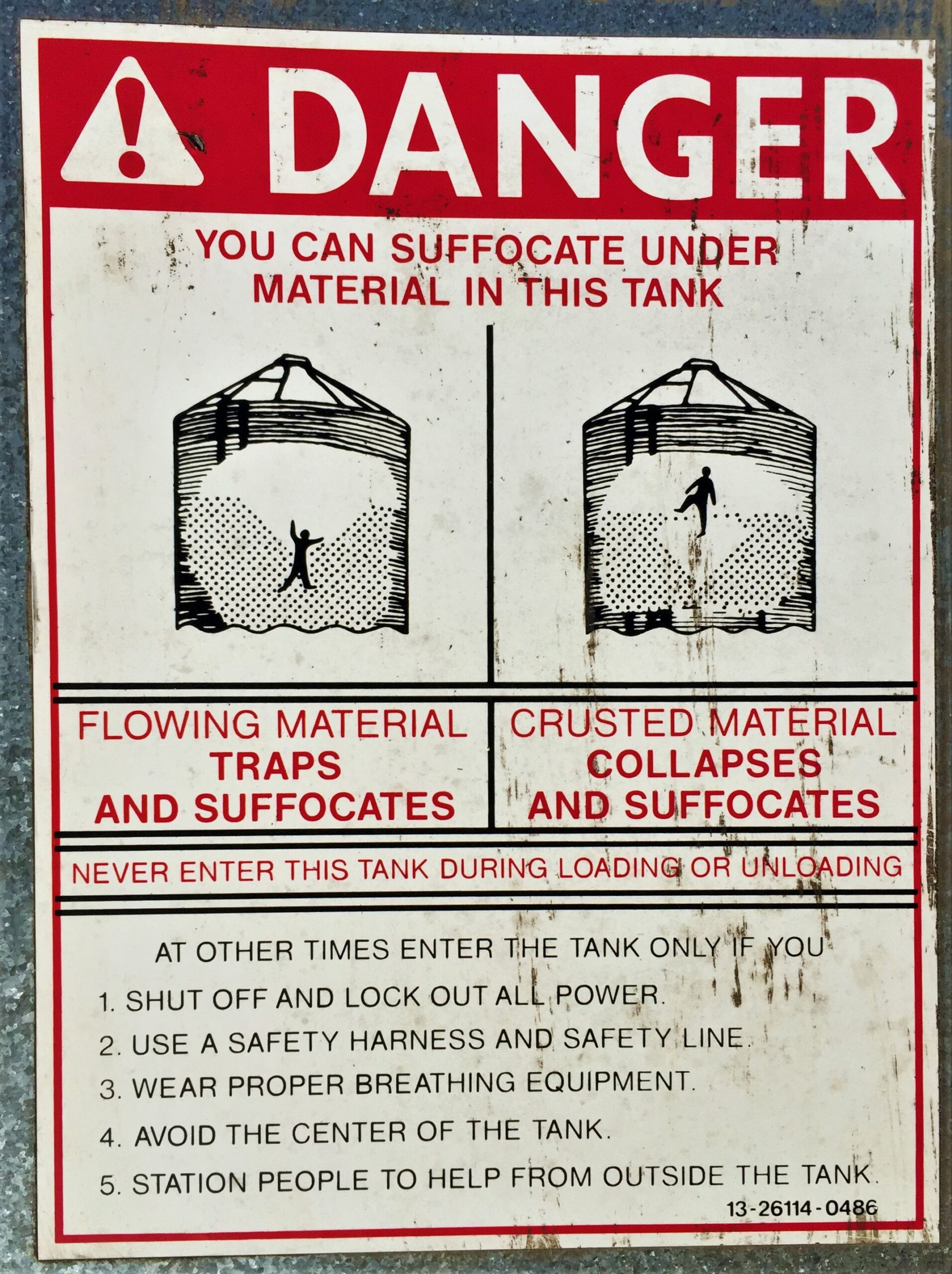
Working around grain bins or silos presents unique challenges. Inside the large, dusty silos, dried crops like corn and soybeans are stored. Farmers and bin operators can find themselves in precarious situations when unloading material, trying to break up encrusted material inside the silo, or trying to clean the bin.
Workers can fall in, get buried under an avalanche, or get sucked under in the quicksand-like environment.
“Grain bins can become deadly traps in seconds,” Kolosh said.
There are also several fire hazards, as the fine grain dust is combustible, and fires can turn serious quickly once ignited.
“One misstep can lead to engulfment, and once someone is trapped, escape without assistance is nearly impossible. Grain dust can also create the conditions for dangerous explosions and fires. That’s why prevention and preparation are so critical,” Kolosh added.
While agricultural and safety organizations alike beat the safety drum, it can sometimes be ignored — not out of disrespect — but out of complacency.
Experienced farmers and grain bin operators are accustomed to working around their equipment. They know it’s dangerous. They do the work daily and know it well.
The Blue Mound, Illinois, grain entrapment incident that occurred at the end of August took the life of 73-year-old farmer Thomas Ritter. He would’ve been starting his 51st harvest season, FarmWeek reported.
Undoubtedly, Ritter knew his way around his farm. His son urged prevention and precaution in his interview with FarmWeek.
These incidents are a warning, as confined-space agricultural incidents nationwide are on the rise at 51 incidents in 2024, up 25 percent from 2023.
Of those confined space agricultural incidents, 34 of those incidents were grain-related incidents, according to research compiled by Purdue University.
Those incidents resulted in 22 fatalities.
While these nationwide numbers may not seem like a lot, they hugely affect Illinois farmers — and they’re preventable.
The most recent incident in Nokomis, Illinois, a small central Illinois town, had a happy ending, but it could’ve been much worse.
“Responding units located the trapped individual who was surrounded by corn and could not self-extricate himself. Other individuals at the location tried to extricate the victim with no success,” the Montogomery County Emergency Management Agency press release said of the mutual aid call.
The press release noted it took an hour and a half to move the grain to be able to extricate the individual, who was transported to the hospital.
Rescuers can become victims
Farmers in Will County may think these incidents are limited to central Illinois, but they aren’t. In nearby Manteno, a grain operator lost his life inside a commercial grain bin in 2020. Reports note the man had worked at the grain elevator for 40 years.
The OSHA incident report indicated that two employees were initially working in the bin, but after one left, the other, not wearing a harness, subsequently fell 70 feet inside the bin. The second employee then attempted to help the fallen worker, who then needed rescuing himself. The first employee who fell died as a result of injuries sustained by the fall.
Grain bins on private farms aren’t subject to OSHA safety protocol, but MFPD urges area farmers to practice safe operations every time they’re around the equipment.
Lock Out/Tag Out safety protocol should be followed, even on private farms. This protocol essentially confirms that all augers and conveyors are completely powered down and that all energy sources are disconnected.
Though entering a grain bin is discouraged, those who must should work in pairs and use a harness or a lifeline, because it can limit how far down a person falls and potentially prevent them from getting fully engulfed.
Realistically, it is better to work from outside the bin, using tools such as long poles.
Air quality is another concern, so proper ventilation is encouraged, along with using dust masks.
Proper grain management is encouraged so conditions don’t arise that put workers in danger. This means making sure the augers are in working order, there aren’t leaks in the roof that could spoil the product, and ensuring proper storage temperature and humidity.
“Every farmer knows time is valuable during harvest, but no bushel of grain is worth a life. We encourage everyone to slow down, follow safety practices, and call for help when needed,” Kolosh urged.
In the event of an emergency, call 9-1-1. Do not attempt to go in after someone, as much as instincts may draw you to help. Emergency personnel are trained and have the right equipment to conduct a rescue. Attempting a rescue often results in that person becoming a second victim.
MFPD has a special technical rescue team and has the proper rescue equipment, including grain rescue tubes, augers, atmospheric monitoring devices, and rope/confined space systems to ensure safe and efficient operations.
The fire district wants farmers to know they’re available to help before disaster strikes. They welcome calls for proactive walk-throughs to help identify hazardous areas that could be remedied, whether on the farm property in barns or around grain bins.
These informal farm inspections are designed to help prevent fires and other emergency incidents from occurring. Anyone interested in this free service can call (815) 478-3197 or email [email protected] to schedule a visit.
Stephanie Irvine is a freelance reporter.
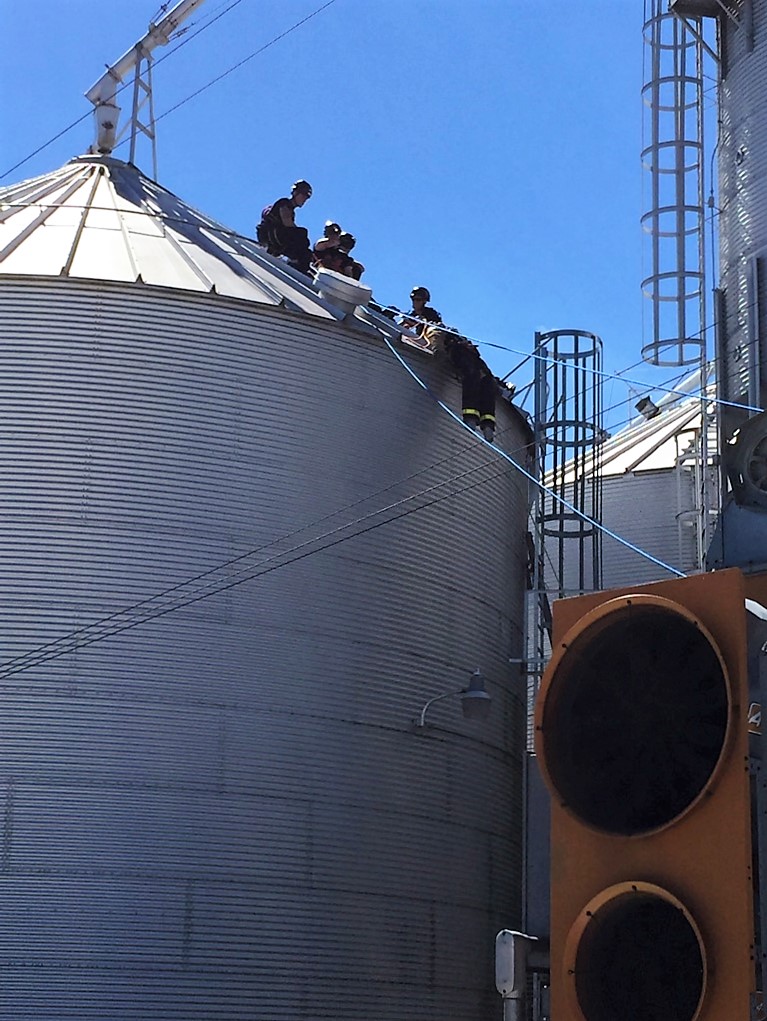
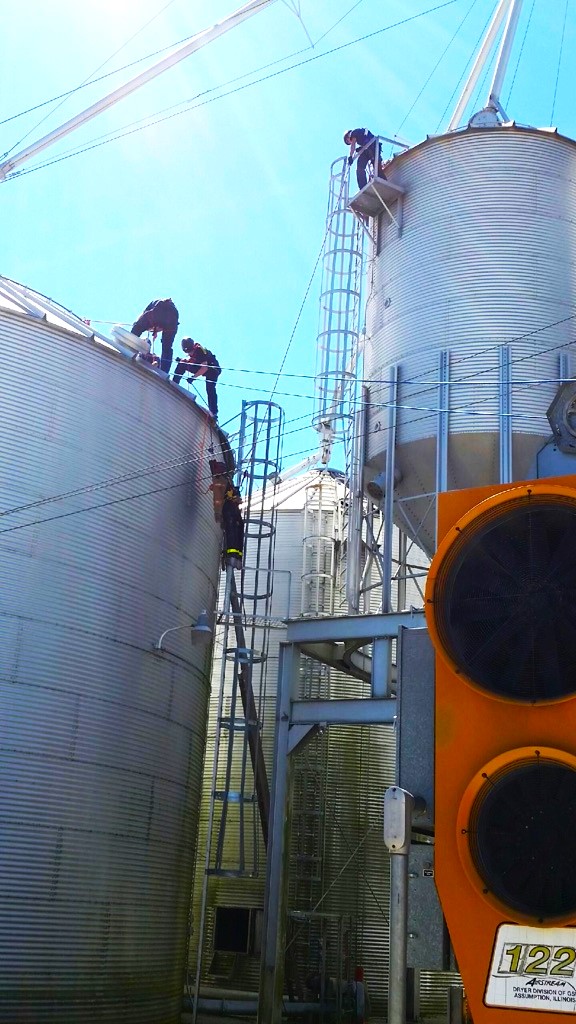
There are many ways for a person to become trapped in a grain bin, from inside or outside, even for experienced farmers. One is falling from the top. Manhattan Fire Protection District personnel practice such rescues, knowing untrained people who try to rescue victims on their own often become victims themselves.
(Photo courtesy of the Manhattan Fire Protection District)