Stateville Plan Combines Male, Female Facilities, Logan Ultimately to Close
By Nick Reiher
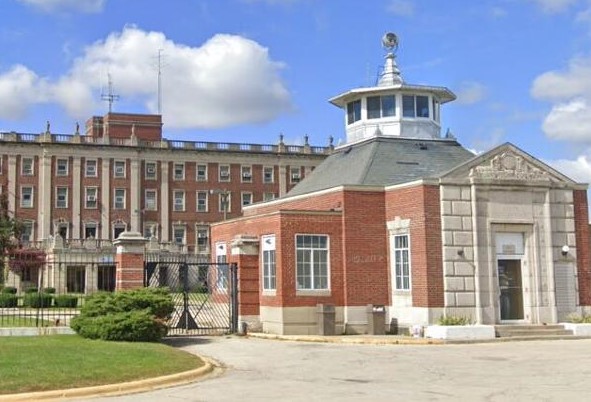
State officials have released their plans for a $1 billion project on the former Stateville Correctional Center site in Crest Hill, with separate facilities to serve male and female populations.
The move confirms the expected but controversial decision to ultimately close the Logan Correctional Center near Lincoln, which serves women, and move that population to a new facility on the Stateville site.
The women’s facility will have 800 multi-security level beds, plus an additional health care unit and crisis stabilization beds.
The men’s facility will have a capacity of 1,500 beds, plus an additional health care unit and crisis stabilization beds.
The men’s facility also will include infrastructure that would allow for the construction of housing units with an additional 450 beds, if IDOC were to decide in the future they were needed.
State officials say the new facilities will be designed for a “trauma-informed, gender-responsive, rehabilitative model of corrections,” rather than the punitive corrections model.
Crest Hill Mayor Ray Soliman said city officials have been working with the state since Gov. JB Pritzker announced his plan two years ago to close Stateville and redevelop that prison and the Logan Correctional Center.
“I feel bad for the people in Lincoln,” Soliman said. “But the Crest Hill site is closer to Chicago, where, frankly, most of the inmates come from.”
Soliman added that the Crest Hill has had a sound working relationship with the Illinois Department of Corrections, even before the city took over sewer and water service in 1988. That allowed Crest Hill to include the Stateville inmate population in its census count for funding from the state.
Soliman said those funds have been dwindling since the Stateville population fell from a high of 4,000 to 4,500, to about half, with further reductions since the state began moving inmates to other facilities two years ago in preparation for demolition.
The Northern Reception & Classification Center will remain on the Stateville campus, Soliman added. That’s where all people sentenced to prison spend about six weeks for all types of evaluations to make sure they get the proper placements.
He said the city will serve the new facilities with sewer and water, the latter coming from Lake Michigan. Crest Hill is part of a water commission with Joliet, which plans to have Lake Michigan water by 2030, about the same time the new prison facilities should be ready.
Soliman added the state will be building a new forensics lab and State Police headquarters in Crest Hill, across Division Street, to the north of the Stateville property. Those projects were part of the governor’s $45 billion Capital Plan passed in 2019.
“This is a big win for the City of Crest Hill and a big win for the people of Illinois to have these facilities located in one area.”
Soliman credited state Reps Natalie Manley and Dagmara Avelar, and state Sens Rachel Ventura and Meg Loughran Cappel for their help in moving the Stateville project forward.
“Both the Stateville rebuild and the building of the new Logan facility is great news for Crest Hill,” Manley said. “The plans for modern facilities and a location that accommodates the families is not only smart but compassionate.”
Ventura noted the two new facilities will offer what state officials say are designed for a “trauma-informed, gender-responsive, rehabilitative model of corrections,” rather than the punitive corrections model.
“Illinois needs facilities that have a focus on rehabilitation and reentry,” she said. “By rebuilding Stateville and building the Logan facility in the 43rd District, it allows for families in the north to be a part of that rehabilitation, resulting in better outcomes for our communities.
“It also allows the state to be purposeful in programming, mental health, education and job training. It is time we moved away from the punishment mentality and towards one of rehabilitation.”
Following an email query by Farmers Weekly Review, a state spokeswoman defined “gender responsive”:
“Providing gender‑responsive design in a women’s facility means creating spaces that support community, emotional safety, and the ways women naturally engage with one another. In outdoor areas, for example, women often prefer areas that encourage connection, such as a walking track where they can walk and talk, rather than the free‑weight areas that are more common in men’s facilities.
“Inside the housing units, gender‑responsive design moves away from a single large, open dayroom and incorporates several smaller communal areas where women can gather and talk. These multiple conversational spaces help foster supportive peer networks.
“Family connection is another core need. Providing a welcoming, non‑intimidating environment for children’s visits is essential. Although important for all populations, this kind of space is especially impactful in women’s facilities, where caregiving identities are deeply meaningful.”
State officials said most of the remaining vacant building on the current Stateville property will begin to come down toward the end of the year, adding the demolition may not be complete by the time new construction begins to make sure the new facilities are up and running as soon as possible.
The Illinois Department of Corrections and the Illinois Capital Development Board announced a timetable for the plans, and that the Vanir/Milhouse Joint Venture team (VMJV), will serve as the project’s Construction Manager and Owner’s Advisor.
State officials said they will host a series of industry outreach events for prospective vendors on June 24, 2026, in Edwardsville, and June 26, 2026 in Chicago.
On or after July 24, 2026, CDB will publish a Professional Services Bulletin seeking proposals for a Progressive Design Build Entity (PDBE) team to design and build the new facility.
They will be looking for a design and construction team able to build facilities with multiple buildings for 800 female prisoners and 1,500 male prisoners on the current 2,200-acre site.
State officials project that planning, design and construction will take about five years, adding a more detailed timeline will be determined after a contract is awarded to a Progressive Design Build Entity (PDBE).
IDOC officials said they chose to focus on modernizing Stateville and Logan considering overdue maintenance, the high cost of modernizing existing buildings and the ability to more easily move staff and those in custody more easily than other facilities.
Further, they said, the existing structures, due to their age and floor plans, don’t allow for the updated correctional practices that focus on rehabilitation.
The VMJV team’s analysis showed, unlike Logan or Lincoln, Crest Hill provides the site capacity, configuration, and infrastructure necessary to support a modern women’s correctional facility without operational compromises, and provides added benefits of possible shared infrastructure with the men’s facility such as a central utility plant, warehouse, shared entry drive and parking lot, expanded access to healthcare resources, and enhanced opportunities for educational partnerships and re-entry resources in the area.
“Building two Crest Hill facilities supports a significantly shortened project duration, stronger cost control, and a facility design that meets IDOC’s operational and rehabilitative objectives,” the press release said.
In determining the location for a women’s facility, IDOC officials said they considered many factors, including “workforce availability, proximity to medical facilities, community-based organizations, and educational and program partners, prior residences of individuals in custody and current locations of family and support systems, impact on local communities, geographic distribution of IDOC facilities across the state, environmental impact and construction costs.”
State Sen. Michael Hastings, D-Frankfort, said the project represents a “responsible and forward-thinking approach to modernizing our correctional system.
“This nearly $1 billion investment will not only deliver safer, more effective facilities focused on rehabilitation and re-entry, but it will also generate hundreds of construction jobs over the next five years and create long-term employment opportunities for our region. It’s the kind of smart infrastructure investment Illinois needs.”
Will County Executive Jennifer Bertino-Tarrant welcomed the announcement.
“The new facilities will prioritize safety and accessibility, with a focus on restorative practices,” she said. “This project will additionally secure construction jobs for the next five years and long-term permanent employment opportunities, representing a significant investment in our growing region.”
Meanwhile, Logan Correctional Center will remain open and functioning as operational guidelines allow, state officials said, as IDOC evaluates future uses for the property.
State officials said the State Historic Preservation Office within the Department of Natural Resources and the CDB held a meeting on June 4 concerning public interest in and suggestions related to the preservation of the narrative history of all structures and/or activities at the abandoned Stateville Correctional Center Farm and adjacent parcels.
Another hearing will be held at a later date to solicit feedback on the preservation of a narrative history of the land and buildings within Stateville’s secure perimeter, they said.
Members of the public are invited to contribute information relating to the preservation of the narrative history of the buildings on the parcels as well as the history of the property as a whole, which includes the original farm dormitory, livestock barns and grain processing structures. Although efforts to photograph the interior and exterior of the buildings on the properties noted above have already begun, members of the public are invited to provide written comment concerning narrative preservation of history at the Stateville Correctional Center Farm.
Written comments may be personally delivered or submitted in email, PDF, or Word format by the close of business on June 8, 2026. Please deliver comments and any materials to:
Capital Development Board
Attn: Dan Troglio
401 S Spring St.
Springfield, Illinois 60181
Email: [email protected]
The project is part of the state’s ‘RISE IDOC: Rehabilitation and Restoration Inside Safe Environments’ (RISE IDOC) initiative “dedicated to creating safe, accessible, and restorative correctional environments that transform lives, strengthen family and community connections, and foster a supportive culture for both individuals in custody and staff while advancing rehabilitative opportunities through education, programming, and innovation,” according to the press release from the state.
Nick Reiher is editor of Farmers Weekly Review.