Guest View — What You Need to Know about Flock Cameras
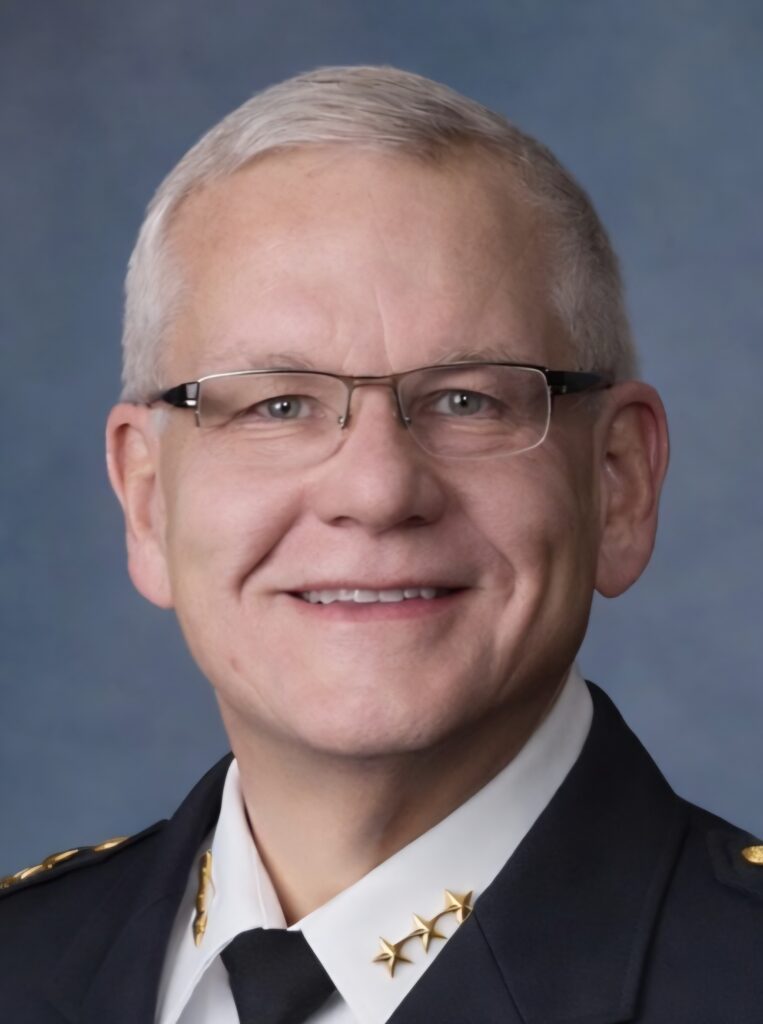
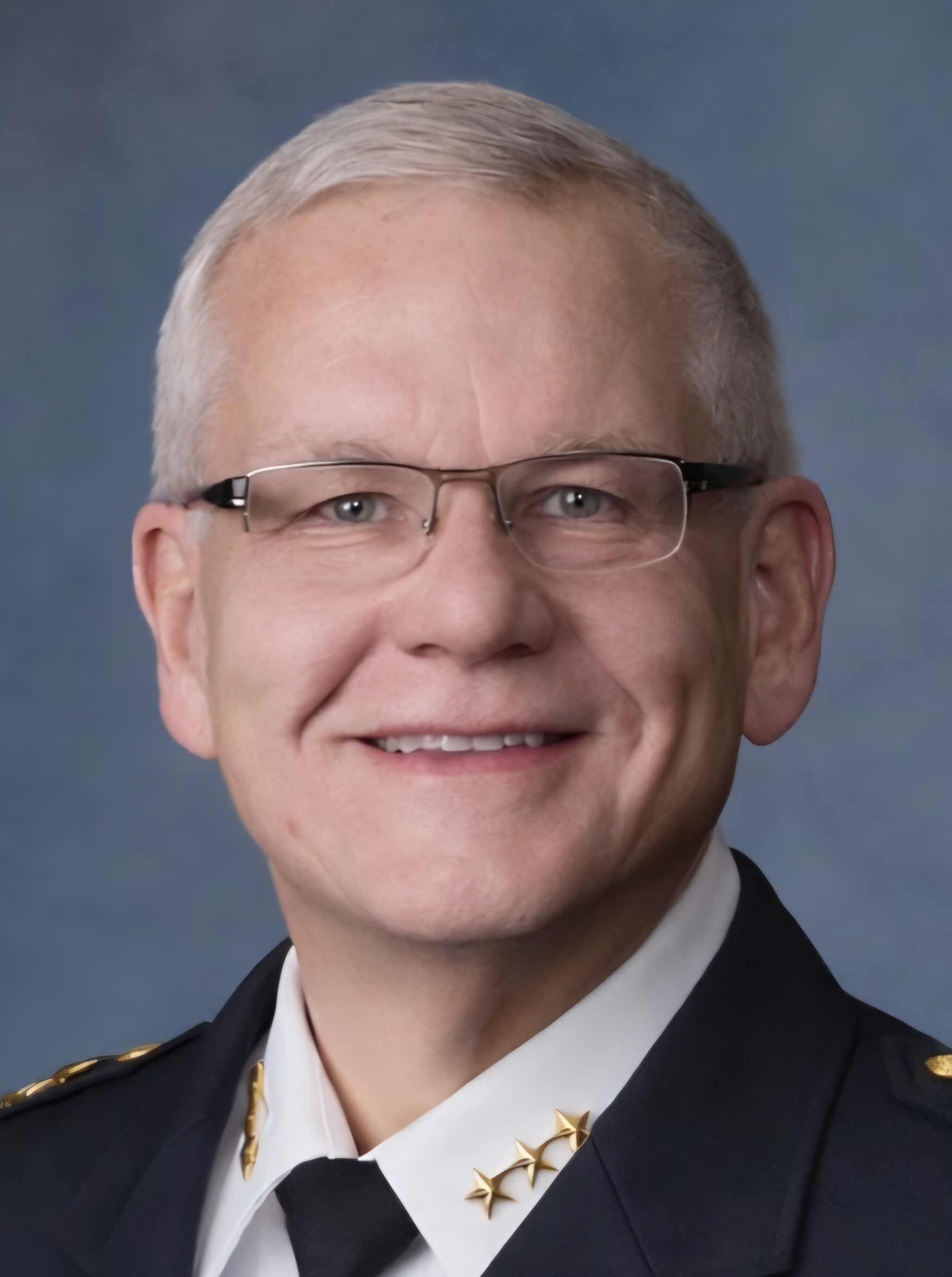
By Chief Phillip Arnold
Shorewood Police Department
In recent months, the Will County Board’s Public Works and Transportation Committee has been scrutinizing the renewal of several intergovernmental agreements (IGAs) that have allowed the placement of Automated License Plate Reader (ALPR) cameras for several years along Will County-owned portions of roadways within participating municipalities. The municipalities that participate in the IGAs in question utilize Flock Safety ALPR technology. The municipalities also pay for the technology; it is not an expense for the Will County Board.
The discussion has generated passionate opinions from both supporters and opponents of the technology. As someone who has spent four decades in law enforcement and has seen firsthand how technology can help protect communities, I believe it is important to separate facts from fears and examine what these systems actually do.
What Are ALPR Cameras?
Automated License Plate Reader cameras are fixed cameras that capture images of the back portion of passing vehicles and the state registration plates that are affixed to those vehicles, which are required to lawfully operate on the roadway.
The system also records identifying characteristics such as make, model, color, and other vehicle attributes that can assist investigators.
Contrary to some misconceptions, Flock Safety ALPR cameras do not employ facial recognition technology and are not designed to identify drivers or passengers. In fact, the cameras do not capture the passenger compartment of the vehicles, which further reduces any implication of biased investigations. Their purpose is to provide investigators with vehicle-based evidence when crimes occur.
Why ALPRs Matter
Every day, law enforcement agencies are tasked with solving crimes that cross municipal, county, and state boundaries.
Stolen vehicles, retail theft rings, burglaries, human trafficking investigations, missing persons cases, and violent crimes rarely remain confined to a single jurisdiction.
ALPR technology provides investigators with leads that often would not otherwise exist.
Whether it is an Amber Alert, a Silver Alert, a homicide investigation, or a suspect fleeing a violent crime, time matters.
A vehicle description entered into the system can generate alerts when a matching vehicle passes a camera, helping law enforcement quickly locate suspects, victims, or missing persons.
The technology has helped recover stolen vehicles, identify suspects in major criminal investigations, and connect cases that otherwise may never have been linked.
A Thoughtful Review Process
I do want to commend the members of the Will County Board and the Public Works and Transportation Committee for taking these concerns seriously and conducting thorough due diligence when they had questions about ALPR technology.
After all, public officials have an obligation to ask difficult questions when considering any technology that affects both public safety and individual privacy. The questions raised regarding data retention, privacy protections, auditing, transparency, and oversight were appropriate and deserving of thoughtful examination.
When the questions arose, I invited board members Kelly Hickey and Jacqueline Traynere to visit my office to see how the Flock system works firsthand. Rather than relying solely on presentations, reports, or public commentary, they actually took the time to observe how the platform actually functions in a real-world law enforcement environment.
During that nearly two-hour meeting, I was able to demonstrate many of the safeguards built into the Flock Safety system, including user accountability measures, audit trails, administrative oversight tools, transparency features, and the automated auditing capabilities designed to identify potential misuse. The board members were able to see firsthand how searches are documented, how access is controlled, and how the system helps ensure that both agency policies and legal requirements are followed.
These types of hands-on demonstrations are invaluable because they move the conversation beyond assumptions and allow decision makers to evaluate the technology based on facts and operational realities.
Whether one ultimately supports or opposes ALPR deployment, informed decision-making is always preferable to speculation. With so much misinformation being disseminated on social media outlets, the willingness of board members to personally review the technology, ask challenging questions, and seek a deeper understanding of the safeguards in place is exactly the kind of thoughtful governance that citizens should expect from their elected officials.
Addressing Privacy Concerns
During recent committee discussions, representatives of the ACLU of Illinois and several county board members expressed concerns regarding privacy, data retention, and government surveillance. These concerns deserve serious consideration. Public trust is essential whenever government uses technology.
What is often missing from the discussion, however, is the extensive framework of safeguards, oversight mechanisms, and legal protections already governing ALPR use in Illinois.
Illinois’ Significant Guardrails
Illinois has some of the most comprehensive restrictions on ALPR use in the nation. Agencies are required to establish policies governing access, use, dissemination, retention, and auditing of data. Access is limited to authorized personnel for legitimate law enforcement purposes, and misuse can result in disciplinary action, termination, civil liability, or criminal penalties.
These protections were established precisely to prevent abuse and ensure accountability.
Detecting Potential Misuse
One of the more innovative safeguards within the Flock platform is its automated auditing technology.
Rather than relying solely on periodic manual reviews, Flock’s system can automatically identify search patterns and activity that may indicate misuse or policy violations. When potentially concerning activity is detected, administrators are alerted and prompted to review the access.
This proactive approach is important because it shifts oversight from simply reviewing past activity to identifying potential problems in near-real time. In other words, the system itself helps police leaders monitor for improper use before it becomes a larger issue.
Why Retention Matters
Another topic raised during the committee discussion was data retention. Critics often argue that retaining data for weeks or months creates unnecessary privacy risks. From an investigative standpoint, however, retention frequently determines whether critical evidence remains available when a crime is finally reported.
Many crimes are not reported immediately. A victim may discover a burglary days later. Detectives may not identify a suspect vehicle until witness interviews are completed or surveillance video is reviewed.
Human trafficking investigations, financial crimes, and organized theft cases often develop over extended periods.
By the time investigators know what vehicle they are looking for, the incident may be weeks old. Historical vehicle data can provide the missing piece needed to establish timelines, identify suspects, locate witnesses, or connect related incidents occurring across multiple jurisdictions.
Retention is not about tracking citizens. It is about preserving evidence long enough for investigators to solve crimes and bring offenders to justice.
Exceeding Illinois Requirements
What many residents may not realize is that Flock Safety has implemented safeguards that exceed many statutory requirements.
One of the most significant is Flock’s Transparency Portal, which allows communities to publicly view information about how their local agency uses the system, including retention policies, access controls, audit practices, and privacy commitments. This level of transparency is uncommon among many law enforcement technologies and allows residents to better understand how the system operates in their community.
In addition, Flock maintains multiple layers of accountability:
• Every search is logged and attributed to a specific user.
• Agencies can conduct internal audits of user activity.
• External audits and reviews can be performed to verify compliance.
• Detailed audit trails ensure administrators know who accessed data, when it was accessed, and why.
Perhaps most importantly, Flock has developed automated auditing capabilities that go beyond what many agencies could reasonably accomplish on their own.
Continuous Improvement
Perhaps the most encouraging development to come from the recent discussions is that the process itself has already made the technology stronger and more accountable.
Several law enforcement agencies in Will County have voluntarily reviewed and adjusted their internal ALPR policies in response to concerns and recommendations expressed by members of the Will County Board. Chief Brian Benton of the Mokena PD and Chief Leanne Chelepis from Frankfort PD both presented at the last two committee meetings about modifications to their ALPR policy that address issues such as data sharing, auditing practices, retention, and administrative oversight.
These policy enhancements have become an important component of the ongoing discussions surrounding the renewal of the intergovernmental agreements (IGAs). Board members requested these revisions be implemented as the county moves toward considering these agreements again at the upcoming August committee meeting.
This can be viewed as government working as it should. Elected officials raised thoughtful concerns. Law enforcement agencies listened and gone above and beyond. Policies were reviewed and strengthened. The technology in question was demonstrated and showed the additional safeguards and accountability measures in place. Several Police Chiefs and other law enforcement representatives have taken the time to attend several committee meetings to answer questions. The result has been a more transparent and better-governed program.
This is not a story of technology advancing unchecked. It is a story of collaboration, oversight, and continuous improvement.
As someone who has spent a career balancing public safety with constitutional rights, I believe these discussions have reinforced an important point: technology is only as good as the policies governing it and the people entrusted to use it.
The willingness of Will County agencies to adapt their policies and the insistence of county board members that strong safeguards be in place should give residents confidence that this conversation was approached thoughtfully and responsibly.
Finding the Right Balance
Reasonable people can disagree about where the balance between privacy and public safety should be drawn. That debate is healthy and necessary.
But the discussion should be based on a complete understanding of the facts.
Today’s ALPR systems are not simply cameras collecting information. They are accompanied by legal safeguards, transparency measures, audit requirements, access controls, automated oversight tools, and community accountability mechanisms.
The reality is that Illinois law already imposes significant restrictions on ALPR use, and Flock Safety has layered additional protections on top of those requirements including transparency portals, comprehensive audit logs, external review capabilities, and automated auditing that can identify possible misuse and immediately alert administrators.
As Will County officials continue to evaluate future ALPR policy decisions, I hope the conversation remains focused on facts, transparency, accountability, and measurable public safety outcomes.
The goal should be one shared by everyone involved: protecting individual privacy while providing law enforcement with effective tools to safeguard the communities we all call home. After all, safety is a fundamental right we all share.
Phillip Arnold recently announced his retirement after 40 years in law enforcement, including over 27 years as a police chief. He currently serves as Chief of Police for the Village of Shorewood and has been actively involved in public safety technology and policy initiatives throughout his career.