Will County Loses 6 Solar Farm Lawsuits, Must Be Approved by April 17
By Nick Reiher
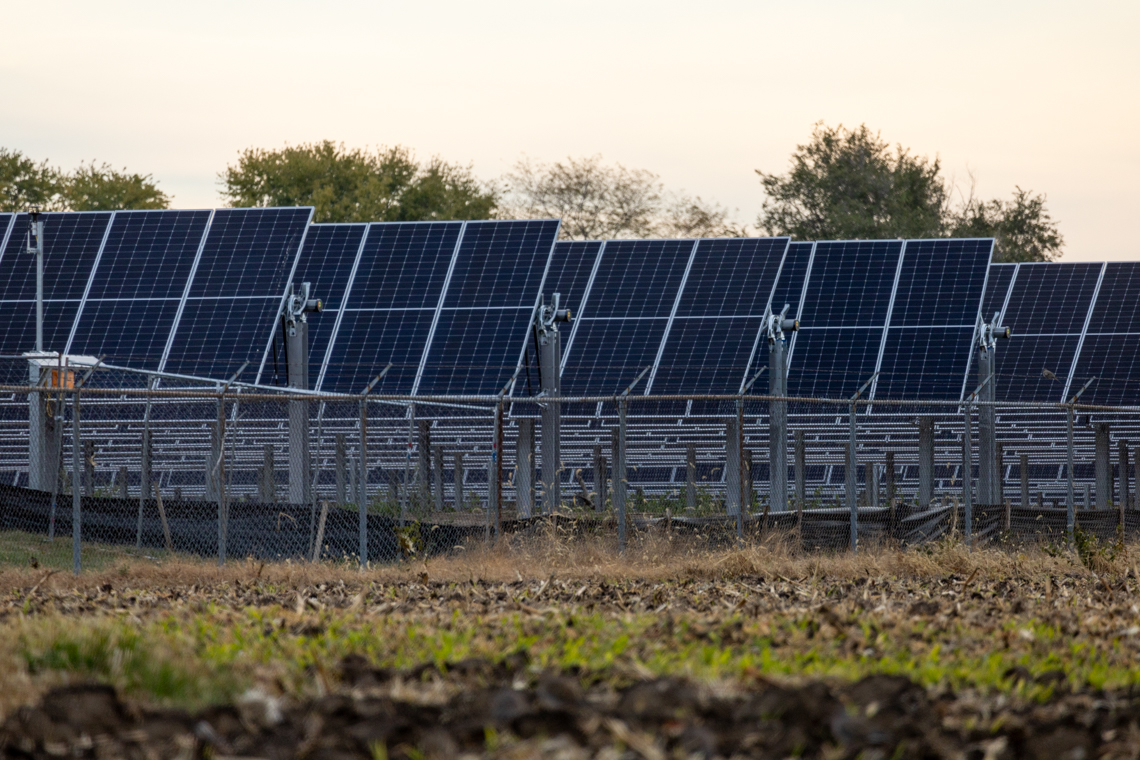
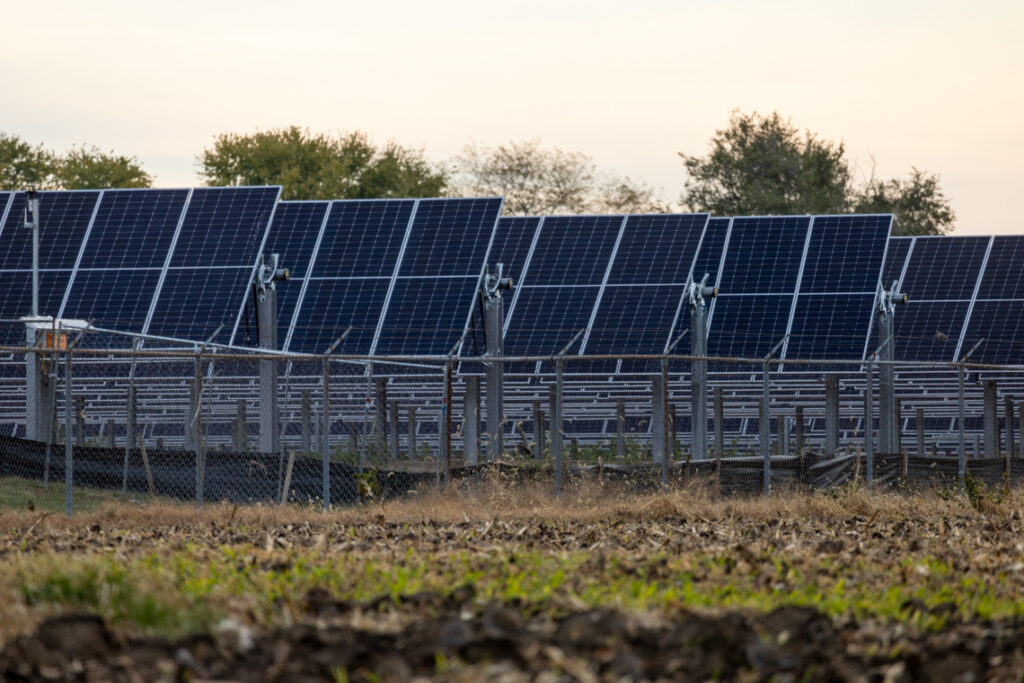
Will County’s hopes of having more control over solar farm proposals were dealt a heavy blow Wednesday, when Associate Judge Ben Braun ruled the County Board should not have turned down five such requests.
Braun combined lawsuits filed against the county by Channahon McKinley Woods, RPIL Solar 13, Florence Renewables LLC, NL Gougar Solar 1, Black Road Solar 1 and Black Road Solar 2.
In the long-awaited ruling, Braun ordered the county to approve all special use permits for the solar farm applications that had been denied by the board; many also by t9-10 he board’s Land Use Committee and Planning and Zoning Commission.
Braun ordered the county to comply by April 17, 2026, with a status hearing set for April 16. To do so, County Board leaders would have to put them on the agenda for its April 16 meeting.
The board’s Executive Committee — composed of board leadership and committee chairs — is set to meet tomorrow morning. They could add the ordered items during that meeting.
County Board Chief of Staff Charles Pelkie said the committee on April 9 voted to approve the draft agenda for the April 16 County Board meeting after a 2/ 1/2-hour closed session. The five solar farm applications Braun ordered to be approved were not on the agenda, but he expected Will County Board Speaker Joe VanDuyne to add them early next week.
“I support moving forward in a way that respects and reflects the voices of the community as the Will County Board considers this vote,” Van Duyne told Farmers Weekly Review.
“However, the court has limited our discretion, and we must act within those constraints.”
At its April 16 meeting, the County Board also is scheduled to vote on two solar farm applications by Earthrise Energy: Plum Valley, which is 2,400 acres, and Pride of the Prairie, which is nearly 6,100 acres.
The county Planning and Zoning Commission and the County Board’s Land Use Committee recommended approving the smaller Plum Valley plan, but both recommended denial for the Pride of the Prairie proposal.
Hearings for both plans drew large crowds, mostly in opposition. A large crowd also is expected at the April 16 County Board meeting, which has been moved to the Clarion Hotel at South Larkin Avenue and McDonough Street in Joliet.
Only a day before Braun’s ruling, the County Board’s Legislative Committee voted unanimously to ask the Illinois Legislature to withdraw or amend regulations passed in 2023 restricting counties’ ability to oversee solar farms applications.
“The General Assembly stripped local County Boards of the authority to regulate where solar energy facilities best fit into their communities,” said VanDuyne, who introduced the resolution.
“The Will County Board has proven time and again that it is not categorically opposed to solar projects. But government overreach by the State of Illinois completely upended our ability to partner and plan with our neighboring municipalities and townships for future developments.
“This resolution clearly spells out our dissatisfaction with the state and demands that local control over these projects is restored.”
Van Duyne has not commented on Braun’s rulings regarding the lawsuits. But Will County Executive Jennifer Bertino-Tarrant agreed state law on solar farms is too restrictive for counties.
“It is clear that the County Board is not given any discretion on solar siting regardless of local residents or municipal objections,” she said. “The county’s hands are tied. It is a flawed process.”
As of earlier this year, Will County had approved 54 solar applications during the past few years, turning down relatively few, including those they believed to be too close to homes.
The resolution says, in part …
… that the Will County Board urges the General Assembly to repeal or amend provisions of 55 ILCS 5/5-12020 and Public Act 104-0458 that limit its authority to review and approve commercial solar energy facilities. These include specifically, but are not limited to, the following sections:
- 55 ILCS 5/5-12020 (b) “A county may also regulate the siting of commercial solar energy facilities with standards that are not more restrictive than the requirements specified in this Section in unincorporated areas of the county that are outside of the zoning jurisdiction of a municipality.”
- 55 ILCS 5/5-12020 (g) “A county may not place any restriction on the installation or use of a commercial wind energy facility or a commercial solar energy facility unless it adopts an ordinance that complies with this Section. A county may not establish siting standards for supporting facilities that preclude development of commercial wind energy facilities or commercial solar energy facilities. A request for siting approval or a special use permit for a commercial wind energy facility or a commercial solar energy facility, or modification of an approved siting or special use permit, shall be approved if the request is in compliance with the standards and conditions imposed in this Act, the zoning ordinance adopted consistent with this Act Code, and the conditions imposed under State and federal statutes and regulations.”
- 55 ILCS 5/5-12020 (h) “A county may not adopt zoning regulations that disallow, permanently or temporarily, commercial wind energy facilities or commercial solar energy facilities from being developed or operated in any district zoned to allow agricultural or industrial uses.”
Nick Reiher is editor of Farmers Weekly Review.