County, Joliet Officials Again Considering Sharing Space
By Nick Reiher
Officials from Will County and the City of Joliet are once again discussing the possibility of sharing a new building on the site of the former Will County Courthouse in Downtown Joliet.
“We have a wonderful working relationship with the county, and we love the idea of a combined building with the county to provide a ‘one-stop shop’ for residents,” Joliet City Manager Beth Beatty told members of the County Board’s Capital Improvements Committee April 7.
County officials have been considering how to incorporate most of the county offices under one roof instead of leasing space elsewhere, including a new building just to the east of the new courthouse.
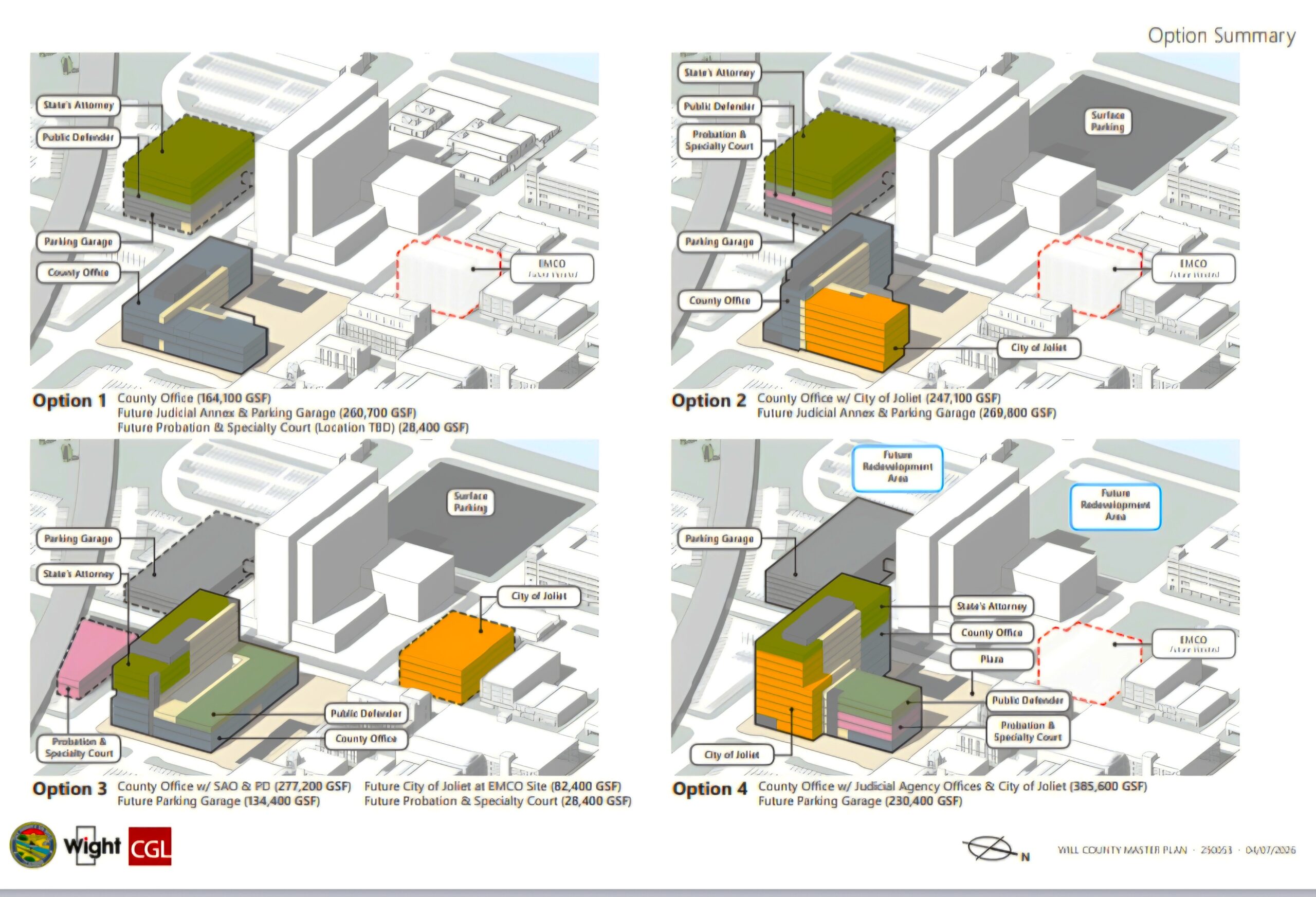
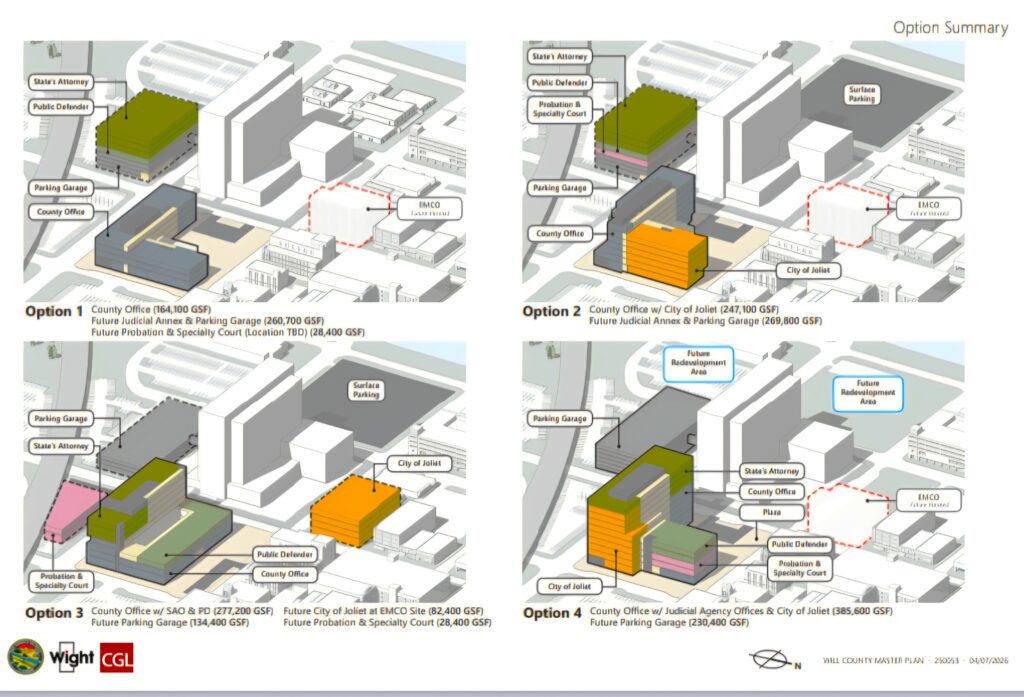
Jason Dwyer of Wight and Co. — the firm that helped develop plans for the new county courthouse, the sheriff’s department offices and the Health Department — presented four options for the committee.
Two of the four options have the county and Joliet sharing space in a new building. Beatty told the committee the city needs more space for its growing number of employees. They, too, have several offices away from the current City Hall to the west of the new courthouse.
Committee Member Julie Berkowicz, R-Naperville, said she preferred keeping county and city functions in separate buildings. She was concerned about the cost to non-Joliet residents in the county about construction and ongoing maintenance of a shared building.
But Committee Member David Oxley, R-Lockport, said if and when they get to that point, county and city officials could work out a plan of which entity would pay for what, including the cost of construction.
Michael Mahoney, Chief of Staff for County Executive Jennifer Bertino-Tarrant, said combining city and county functions under one roof has the potential to save a significant amount of money for taxpayers.
He noted Cook County and the City of Chicago share a building in Downtown Chicago, and split the various costs.
Committee Member Mark Revis, R-Plainfield, said he favored combining city and county offices in one building. He suggested setting up a meeting with Joliet officials to discuss plans going forward.
“We don’t know what Joliet will bring to the table,” he said.
That included how much the city would kick in toward a new, shared building. A plan presented months ago by Bertino-Tarrant fizzled when Joliet Mayor Terry D’Arcy said he wasn’t aware of the plan, though he was quoted in the press release issued by the county at that time.
As for the county, Mahoney at the April 7 meeting went over current and possible bonding scenarios that could provide funds for a new building and a parking structure, while maintaining the current debt service.
Committee Member Steve Balich, R-Homer Glen, believed Will County residents should have a say in a referendum, advisory or binding, if new bonds are issued as the current ones are paid off.
“If the bonds are paid off, residents’ should be paying less,” he said. “Otherwise, it’s a backdoor referendum.”
Asked for his opinion, Assistant State’s Attorney Dan McGrath said the county would not need to seek a referendum if they kept the debt service the same. Berkowicz wanted to know what the limit is that would trigger a required referendum.
As for other space needs, , wanted to know more about what the county could do with the former Pace building it had acquired from the city.
County Board Member Dan Butler, R-New Lenox, wanted Mahoney to see if there were any other buildings in Downtown Joliet that could accommodate new county offices, rather than build a new one.
Butler had been one of the main proponents of renovating the former courthouse for a new county building instead of tearing it down.
The issue, driven by a grassroots movement to save the old concrete and glass courthouse — an example of “Brutalist,” construction popular in the 1960s, lingered for months before the County Board voted to demolish the building and set up a green space until needed for a new structure.
Dwyer said he would focus on the two options combining city and county functions, and bring back the plans to the committee’s May meeting.
Nick Reiher is editor of Farmers Weekly Review.