‘Harvest of Hope’ United Way, Farmers Weekly Review, Teaming Up to Serve Neighbors in Need
By Nick Reiher
From buying a locally raised cow that will help feed dozens in a food desert, to providing counseling and emergency help for the homeless, United Way continues to support the more than 200,000 Will County residents who struggle each year to afford basic human needs.
This necessary support comes at a price, however, one that has grown tremendously even since last year, as other grant programs have ended.
That’s where all of us come in.
We at Farmers Weekly Review are honored United Way of Will County reached out to partner on a fall fundraising program we are calling “Harvest of Hope.”
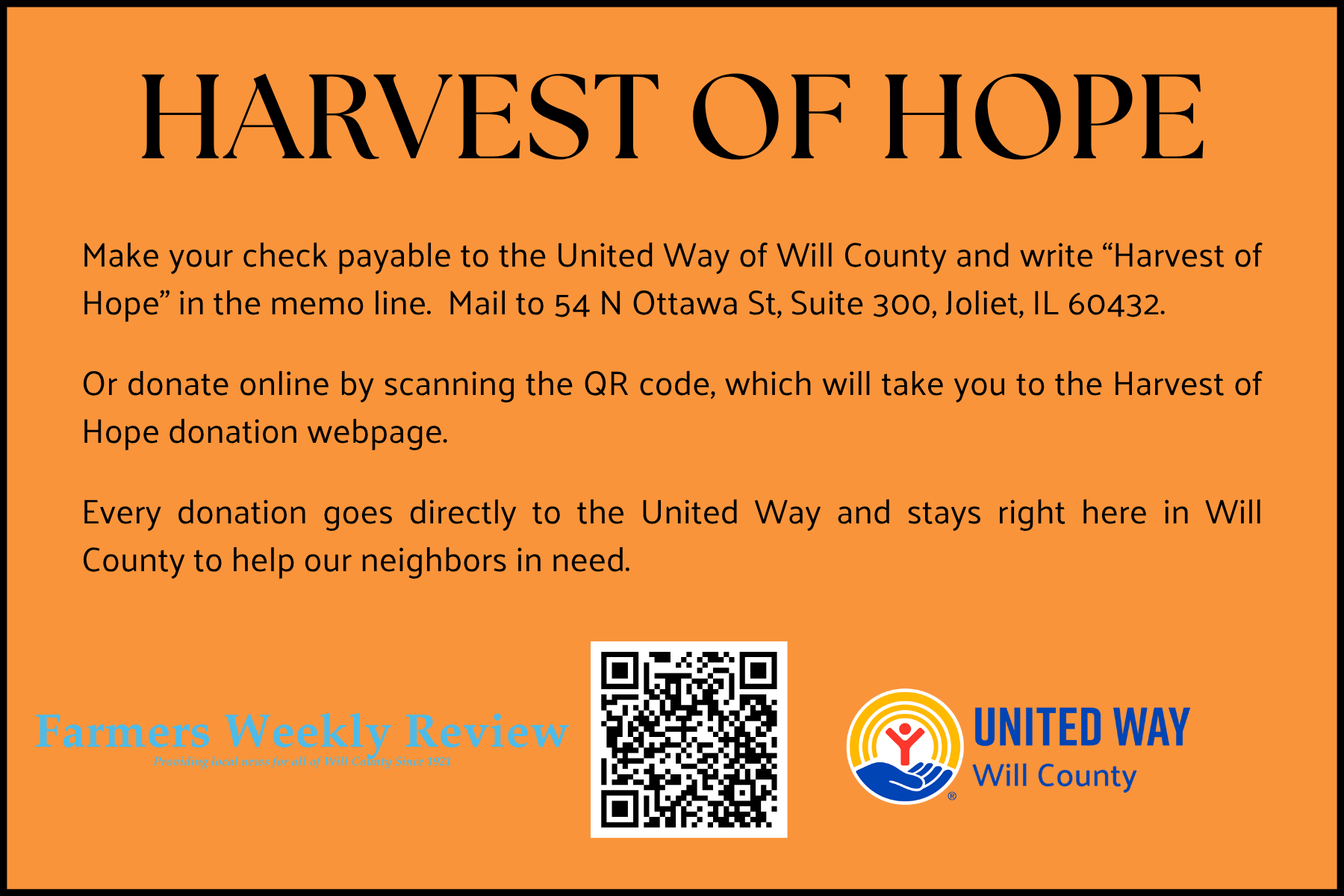
For the next month or so, you will see the graphic below as reminder of the need, and our humble request for any size donation to help the cause.
In Fiscal Year 2025 alone, programs facilitated or supported by United Way of Will County reached 157,927 people who are friends, families and neighbors right here in Will County. And the need was even greater this year.
“Harvest of Hope donations help United Way of Will County support 70 essential programs across 43 local nonprofits and sustain key initiatives like the 211 Helpline, connecting neighbors in need to community resources,” said Ken Guldenbecker, Development Director for United Way of Will County.
“Our community programs address many needs and span a wide range of services including youth summer and afterschool programs, housing and homeless shelters, food pantries, medical care to include physical, mental, and substance use disorder, advocacy for youth in the judicial system, life enriching programs for people with developmental and intellectual disabilities, mentorship and case management to help people find the path to a healthy and financially secure life, disaster relief such as major fires or flooding, safety initiatives, and more.”
“We thank the Farmers Weekly Review and donors of the Harvest of Hope drive. This campaign is a cultivation of compassion and helps realize services and relief to our neighbors across Will County.”
Let’s look at a few of the programs you can help United Way and Farmers Weekly support:
Trinity Services is well-known for its longtime community support services, and United Way has helped foster two programs especially, said Bonnie Hassan, Trinity’s Director of Outpatient Services.
One is support for people who suddenly find themselves homeless, she said, or who have been for a while.
United Way funds help those people with necessities, such as new clothes or work boots if someone should be getting a new job, items that other grants wouldn’t pay for.
“These people have a much more narrow margin when sudden expenses come up,” Hassan said. “They may have achieved some stability, but this could overshadow that.”
She added that homeless assistance usually is a “one and done” offering, where Trinity’s Counseling Center – the other Trinity program helped by United Way – can be longer term, depending on the need.
“Their grant allows us to offer services on a sliding-scale basis,” Hassan said, adding more and more people are losing access to their insurance.
“Obviously, if they have insurance, we use that first. And we also help them get on Medicaid. We don’t turn anyone away. We help them find the services they need.”
She said homelessness referrals come through the Will County Continuum of Care, another agency supported by United Way, as well as through other Trinity programs.
United Way grants, Hassan added, “help bridge the gaps” in necessary services.
Sweat equity
Navarro Farms in Frankfort has been the beneficiary of not only monetary help from United Way of Will County, but sweat equity as well.
“We have had United Way groups come in to help with various chores around the farm,” said Sherri Navarro, who runs the farm with her husband, Damion. The parents of a teen with Down Syndrome, Damion had the idea to turn 5 acres into a farm program that would cater to special needs children and adults, helping them develop social and work skills, as well as independence, while having fun doing it.
“We make a list of chores at the beginning of each year. I have 102 garden beds that need to be re-stained each year, a barn to be painted and picking vegetables from our garden for our farm stand.
“United Way volunteers have been a great help to us. And the money they have granted us has helped us become self-sufficient from our environmental business. We needed to take money from that for a few years to keep going.”
New program, New ideas
Janet Blue has been involved in the Monee area for years, including as a village trustee, the American Legion and the Monee Women’s Club.
So, when she was invited to become CEO of Elevate Hope, a group of volunteers celebrating their first year of serving the various needs of people in Eastern Will County, she jumped at the chance.
And the United Way grant they received earlier this year went to addressing what she called a “food desert” in that area … in a unique way.
“We bought a cow,” she said. “That has to be a first. We bought it from a local Peotone farmer. So, it’s going to be good.
“Pretty soon, we’ll have it processed into 1,000 pounds of ground beef to give away to the people in need.”
An acre of land donated to Elevate Hope has allowed them to grow vegetables they can give away at their monthly food pantries.
The United Way grant allowed them to buy a tiller, so they didn’t need to turn the ground by shovel, she said, and water barrels for irrigation, so they didn’t have to drag the neighbor’s hose over to the garden … with his permission.
The United Way grant has allowed them to keep up with the growing need, initially expected to be 400, but now is nearly 600 with no signs of slowing down.
“And that’s just in four hours,” she said.
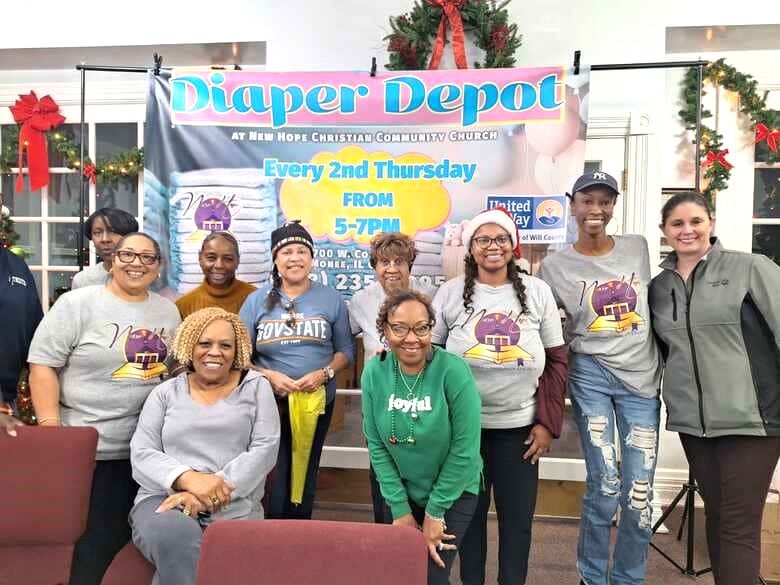
United Way also has donated 10,000 diapers a month to the group’s Diaper Depot program.
“Obviously, that’s more than we need at a time,” she said. “But it allows us to give away 25 diapers for each child in a family each month. We also can give them powders and lotions they’ll need.”
With United Way’s help, they’ll be able to put together special baskets for the holidays.
“Our families have to decide, ‘Do I pay bills, or feed the children? It all comes down to the children. And we help as many as we can.”
Nick Reiher is editor of Farmers Weekly Review.
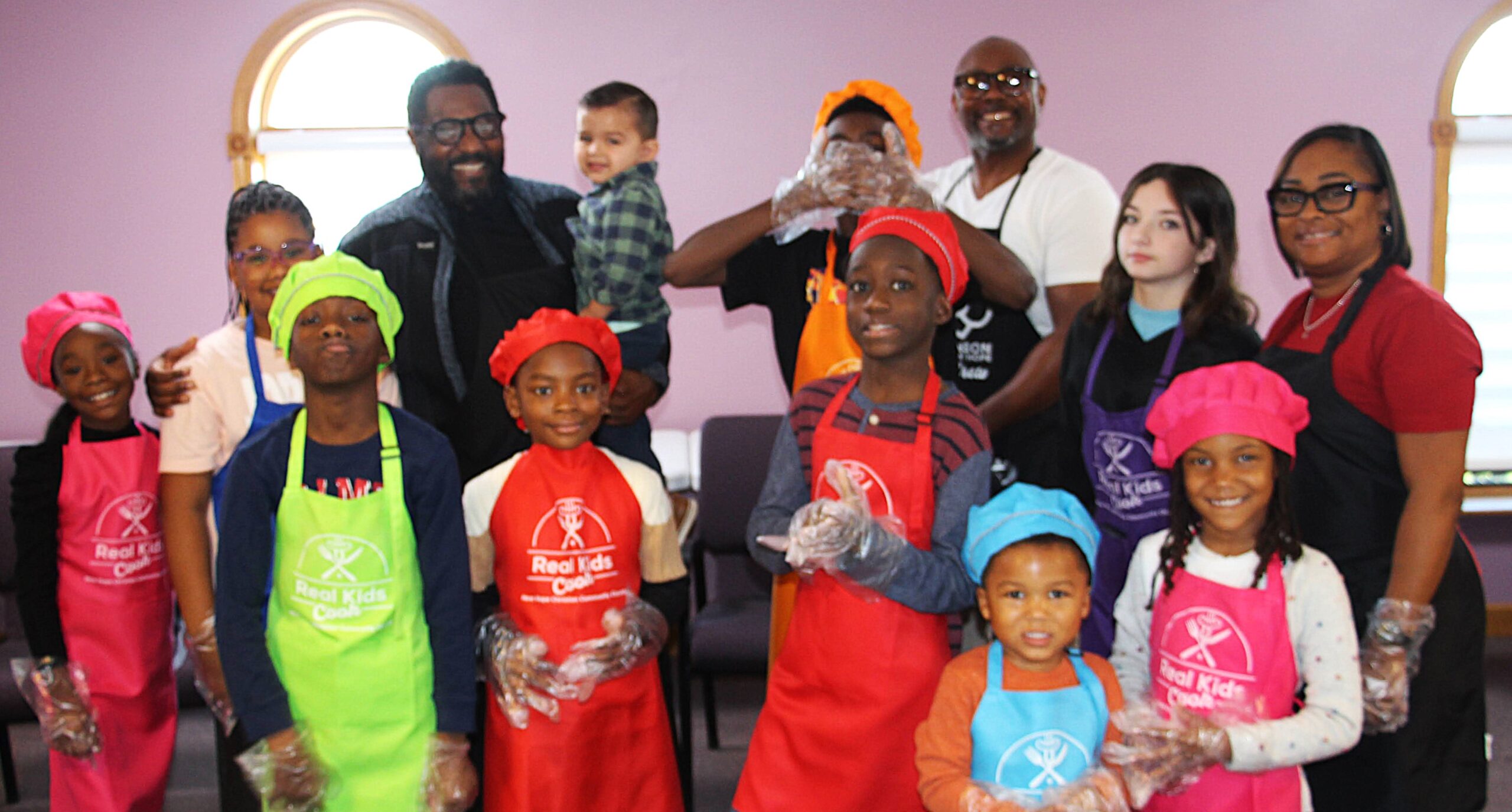
The kids in Elevate Hope’s brand-new kitchen are having a cooking lesson, using food they grew in their community garden. (Photo courtesy of Elevate Hope)
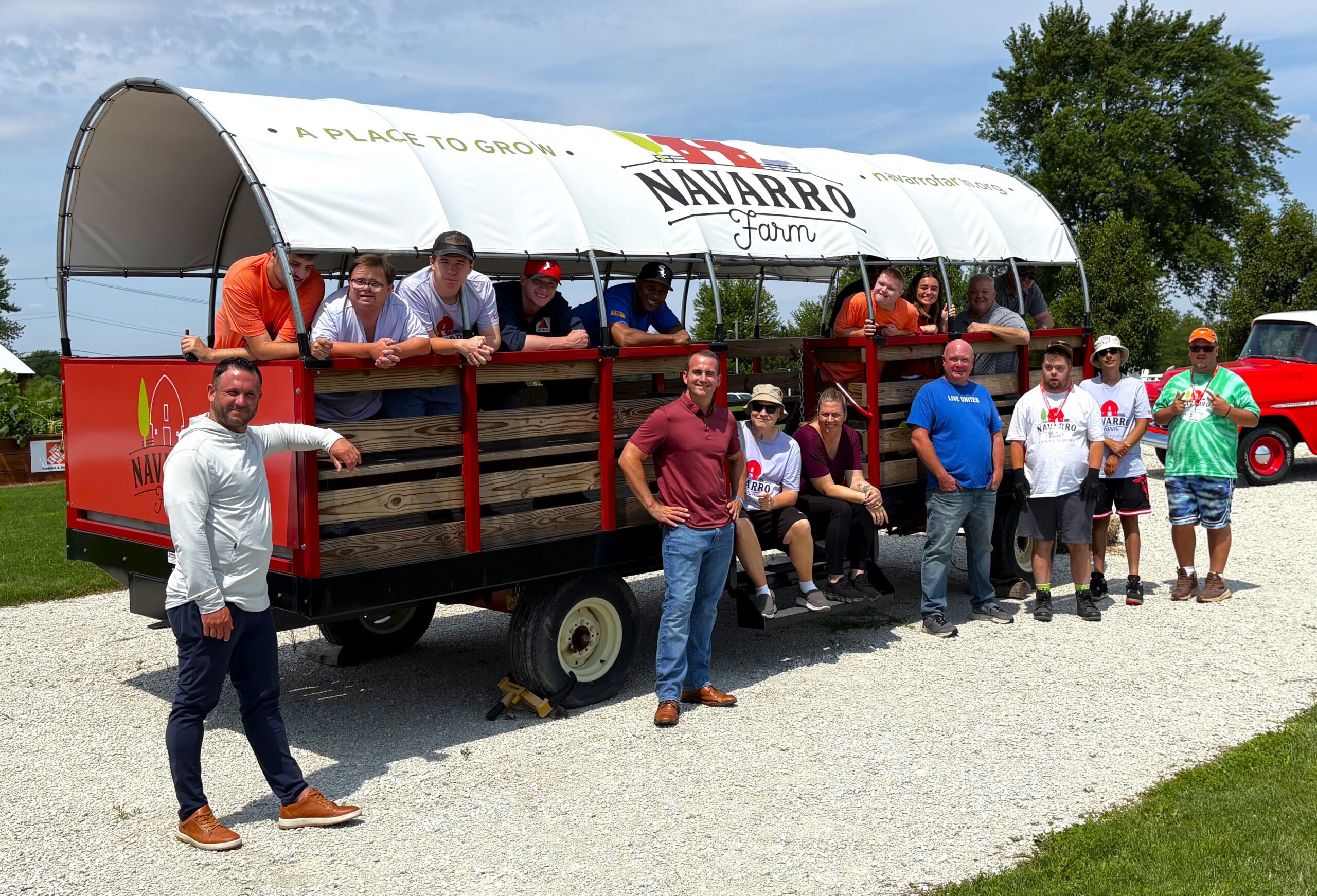
United Way sponsors workdays with its other partners. Here, employees from CITGO lend a hand at the Navarro Farm in Frankfort as one of their stops. (Photo courtesy of Navarro Farms)